RV Fuse Panel Replacement: A Safe Step-by-Step Guide
Learn how to perform an RV fuse panel replacement safely. This guide covers symptoms, panel compatibility, a detailed step-by-step process, tools, testing, and maintenance tips to keep your RV electrical system reliable on the road.


This guide helps you perform an RV fuse panel replacement by selecting a compatible panel, safely disconnecting power, and installing the new unit with correct wiring. You’ll identify symptoms, verify compatibility, and complete the replacement with proper safety steps, then test all circuits to confirm everything works. Expect the process to take 60–120 minutes depending on your RV model and your comfort level with basic electrical work.
Understanding RV fuse panels and why replacement might be necessary
RV fuse panels manage 12V DC circuits and some 120V AC circuits in motorhomes and travel trailers. They are typically mounted in cabinetry or under beds, secured by screws. Over time, vibration from road travel, humidity, and corrosion can loosen connections, leading to intermittent power, blown fuses, or scorching smells. In many RVs, the fuse panel also organizes separate circuits for appliances, lights, and self-contained systems. If you notice fuses blowing repeatedly, a panel that is hot to the touch, or if a certain circuit fails even with a new fuse, it may indicate an aging or damaged panel and the need for replacement. According to FuseBoxCheck, many RV fuse panels age out due to vibration and humidity, leading to loose connections that can pose fire hazards or equipment damage. Replacing the panel with a compatible unit can restore reliable power distribution and reduce future failure risk. Before you decide to replace, verify that the problem isn’t a simple blown fuse or a loose connection at a single fuse holder. Some symptoms are caused by downstream devices or wiring faults rather than the panel itself. A correct diagnosis saves time and reduces unnecessary work, which is especially valuable when you’re on the road.
Safety first: prerequisites and local codes
Electrical work on an RV is not routine home repair. Safety is the foundation of any fuse panel replacement. Start by turning off all power sources feeding the panel—shore power, generator, and battery disconnect if available. Use a non-contact voltage tester to confirm there is no live voltage on the panel before you touch any conductors. Wear safety glasses and insulated gloves, and keep the workspace dry and well-lit. If your RV has a large battery bank, disconnect the negative terminal and follow manufacturer instructions for battery safety to avoid arcing. After powering down, ensure you understand local regulations and any manufacturer recommendations for replacement parts. According to FuseBoxCheck, following standard safety practices reduces the risk of shock or fire and helps you identify issues that could be missed during testing. If you’re unsure about code compliance or component compatibility, consult the RV manufacturer’s documentation or a licensed professional. This phase also includes labeling wires and taking photos of the existing wiring before removal to guide your reassembly later.
Choosing the right replacement panel
The right RV fuse panel replacement depends on your vehicle’s electrical load, the number of circuits, and whether you use 12V DC or 120V AC devices. Start by counting circuits and noting amperage requirements for major appliances (refrigerator, water heater, furnace, outlets). Check the mounting footprint, screw hole spacing, and panel depth to fit your cabinet space. Look for a panel with the same or compatible bus bar arrangement, fuse type (blade fuses vs. circuit breakers), and labeling scheme. If you use a 50A service, ensure the new panel can safely distribute that load and that conductors are rated accordingly. Always choose UL-listed or RV-specific panels from reputable manufacturers to ensure durability against vibration and temperature changes. FuseBoxCheck Analysis, 2026 indicates that older RV panels are prone to corrosion and degraded contacts; selecting a modern, properly rated unit reduces the risk of future failures and improves reliability. Verify compatibility with your RV’s 12V and 120V circuits and confirm that replacement parts are intended for mobile use and meet any applicable safety standards. Don’t rush this step—an ill-suited panel can create more problems than it solves and may void warranties.
Tools and safety gear you need
A successful RV fuse panel replacement relies on having the right tools and protective gear at hand. Assemble a non-contact voltage tester, a multimeter, a set of insulated screwdrivers (Phillips and flat), a nut driver set, wire strippers/crimpers, electrical tape, and zip ties to organize wiring. You’ll also want a level or small square to ensure the new panel sits squarely, a drill with appropriate bits for mounting, and a scavenger list of replacement fuses or breakers. Keep a flashlight handy and use a work mat to protect surfaces. Use PPE such as safety glasses and gloves, and avoid wearing metal jewelry during the work. If you encounter unfamiliar wire colors or unfamiliar labeling, pause and consult the RV’s wiring diagram or a professional. This phase sets the foundation for neat, safe wiring and makes reassembly straightforward.
Step-by-step overview (high-level)
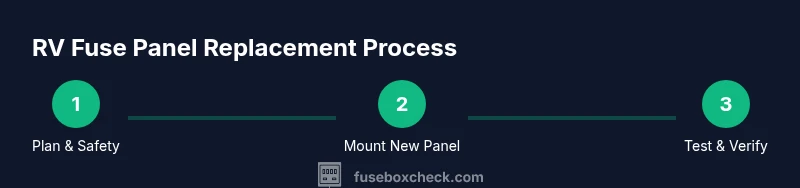
With the right panel in hand, you’ll plan the route for wiring, mount the new panel in the existing space, and transfer connections from the old unit to the new one. Label every wire as you disconnect, then reconnect them to the corresponding terminals on the new panel. After securing all wires, replace any covers and verify that all terminals are firmly tightened. Finally, you’ll restore power and test the circuits methodically to confirm that each branch operates correctly. This overview helps you stay organized and avoid miswiring, which could cause blown fuses or equipment damage. FuseBoxCheck recommends taking your time with labeling and documentation to facilitate future maintenance and troubleshooting.
Testing and verification after replacement
Once the new panel is installed, reattach ground connections and verify that each circuit connects properly. Begin by applying power from a safe source and checking the main feed. Use a multimeter to verify correct voltage at representative outlets and appliances, and confirm that fuses hold and do not heat excessively. Test each circuit individually, paying attention to lights, appliances, and critical systems like the emergency exit or propane detectors. If a circuit behaves unexpectedly (tripping repeatedly or showing abnormal readings), re-check wire connections and labeling. Document results for future reference. A thorough test helps ensure long-term reliability and reduces the chance of surprises on future trips. The process should be methodical, with careful observation and record-keeping to prevent overlooked issues.
Common mistakes and maintenance tips
Avoid common pitfalls such as mismatched amperage ratings, incorrect wire gauge, or skipping labeling. Duct tape or zip ties should not substitute for proper wire management; secure cables away from heat sources and moving parts. Regularly inspect the panel area for signs of moisture, corrosion, or loose connections, particularly after long trips or in humid climates. Periodic maintenance, such as cleaning contact surfaces and ensuring terminal screws remain tight, can extend panel life. If you notice burning odors, signs of arcing, or discoloration around terminals, shut down power immediately and consult a professional. Keeping a spare set of fuses or breakers, along with replacement labeling sheets, simplifies future maintenance and reduces downtime.
Tools & Materials
- Non-contact voltage tester(Essential to verify power is off before touching conductors)
- Multimeter(For voltage checks and continuity tests)
- Insulated screwdriver set (Phillips and flat)(For panel screws and terminals)
- Nut driver set(Common RV hardware sizes)
- Wire strippers/crimpers(Needed for trimming and securing wires)
- Electrical tape and zip ties(Cable management and insulation)
- Replacement fuse panel (RV-rated)(Match amperage, circuit count, and mounting footprint)
- Replacement fuses or circuit breakers(Stock the correct types for the new panel)
- Screws and mounting hardware(Keep the same screw size and thread type as the original)
- Camera or notebook for wiring documentation(Helpful for labeling and future reference)
Steps
Estimated time: 60-120 minutes
- 1
Power down and verify no voltage
Turn off shore power, disconnect the battery, and use a non-contact tester to confirm there is no live voltage at the panel. This prevents shock and arcing during removal.
Tip: Double-check that any generator or inverter is also off before touching wires. - 2
Document existing wiring
Take clear photos or sketches of the wiring layout and label each wire with its circuit designation. This helps you transfer connections accurately to the new panel.
Tip: Label every wire before disconnecting to avoid miswiring. - 3
Remove the old panel
Carefully loosen mounting screws and disconnect each conductor from its terminal. Keep track of ground wires and note any signs of heat damage or corrosion.
Tip: Do not yank wires; gently detach connectors to avoid damaging insulation. - 4
Mount the new panel
Position the new panel in the same footprint, align mounting holes, and secure it with the original hardware. Ensure the panel is square and accessible for wiring and future maintenance.
Tip: Leave a little slack on interior wires to allow panel movement for service later. - 5
Reconnect wires and ground
Transfer connections from the old panel to the corresponding terminals on the new unit, matching colors and circuit labels. Reconnect the grounding conductor first and snug all terminals evenly.
Tip: Use the labeling notes to ensure each wire lands on the correct terminal. - 6
Test the installation
Apply power in a controlled sequence and test representative circuits with a multimeter. Confirm there are no abnormal voltages or heat at terminals, and that all fuses or breakers hold.
Tip: Test critical systems first (lights, fridge, safety circuits) before normal operation.
Your Questions Answered
Do I need to disconnect the battery before starting?
Yes. Disconnect the battery and any shore power or generator before beginning work to prevent shock or arcing. Verify no voltage with a tester before touching conductors.
Yes—disconnect the battery and any power sources, then verify there’s no voltage before you touch anything.
Can I reuse an old panel if it looks okay?
Reusing an aged panel is not recommended. Look for signs of corrosion, heat damage, or loose connections. A modern RV-rated panel improves safety and reliability.
It's best not to reuse an old panel if it shows corrosion or heat damage; consider a replacement.
Is this safe to do myself, or should I hire a pro?
If you’re comfortable with basic electrical work and can safely disconnect power and label wiring, a careful DIY replacement is feasible. For uncertain situations, especially on 50A service or complex wiring, consult a licensed electrician.
If you’re unsure about any step, don’t hesitate to hire a pro.
How long does replacement typically take?
Most DIY replacements take about one to two hours, depending on panel access, labeling, and wiring complexity. Plan for an additional hour if you need to reconfigure mounting or address unexpected issues.
Most replacements take about one to two hours.
Where can I buy an RV-rated replacement panel?
RV supply stores, online retailers, and dealer parts departments carry RV-rated panels. Ensure the replacement matches your vehicle’s amperage, circuit count, and mounting footprint.
Buy from RV supply stores or reputable retailers; match amperage and layout.
Watch Video
Highlights
- Plan and label before touching wires.
- Use RV-rated panels compatible with your load.
- Test all circuits methodically after replacement.
- Prioritize safety: disconnect all power sources first.
- Keep documentation for future maintenance.