What causes fuse box to melt: urgent home safety guide
A practical, step-by-step guide to understanding what causes fuse box to melt, how to diagnose safely, and when to call a licensed electrician for repairs.


The most likely causes are overloaded circuits, loose connections, or faulty components inside the panel. If you notice melting insulation, a burnt smell, or scorch marks, shut off power at the main breaker and keep clear of the panel. Do not touch bare wires or metal parts. Then contact a licensed electrician immediately for a professional inspection and safe repairs.
what causes fuse box to melt
Understanding what causes fuse box to melt helps homeowners recognize dangerous signs before a fire starts. A fuse box is designed to carry your home’s electrical load, but heat builds up when a circuit is overloaded, connections are loose, or components are aging. In many homes, the risk compounds when an appliance draws more current than the circuit can safely handle, or when insulation around wires begins to break down. The result can be degraded plastics, burning smells, or visible scorch marks. If you ever notice any of these indicators, treat the situation as urgent and prioritize safety first. The FuseBoxCheck team emphasizes that immediate action, even before professional help, can prevent a catastrophe.
In this guide we walk through the most common causes, the safety steps you should take now, and practical prevention tips you can apply to reduce the risk of overheating in your fuse box.
Common causes and risk factors
There are several frequent culprits behind a melting fuse box. Overload is the top offender: running multiple high-wattage devices—space heaters, washers, dryers, ovens—on a single circuit forces wires to carry more current than they were designed to handle. Loose or corroded connections create resistance, which converts electrical energy to heat, accelerating insulation wear. Aging panels and breakers may no longer provide proper protection, especially when the panel is past its rated life. Moisture intrusion, improper wiring, and prior DIY hacks can also raise heat and arcing risks. Finally, damaged insulation or rodent activity can short wires and cause dangerous heating. Each factor can occur independently or in combination, especially in older homes or poorly maintained panels.
Safety first: immediate steps if you suspect melting
If you suspect melting, safety must come first. Do not touch the panel or any exposed conductors. If it is safe to access, shut off power at the main breaker to stop the electrical flow, then unplug nearby high-draw appliances one by one to reduce load. Move people and pets away from the area and avoid using water near electrical components. Call emergency services if you smell burning or see visible flames. Then contact a licensed electrician to assess, repair, and replace damaged components. Remember, attempting DIY fixes inside the panel is dangerous and often illegal; only a trained professional should perform repairs inside the enclosure.
Overload vs. short circuits: what's happening inside
Overload occurs when too many devices draw current through the same circuit or when a single device pulls more current than the circuit rating. Short circuits happen when a fault creates an unintended low-resistance path, causing a surge that can heat wires rapidly. Both scenarios can produce heat that melts insulation and damages the panel. Arc faults add another risk layer by creating high-energy discharges that may go unnoticed until heat damage becomes evident. Distinguishing between overload, short, and arc faults helps determine the right corrective action and the urgency of professional help.
Visual cues and safe inspection tips
Look for signs that indicate overheating or damage: melted plastic around breakers, discoloration or charring on the panel, a persistent burnt odor, buzzing or crackling noises, or a warm to hot surface when you touch nearby metal. Do not probe inside the panel with metal tools. If you must inspect from a safe distance, use a flashlight and observe for any loose connections, burnt-looking wires, or signs of moisture near the panel. If you see any of these cues, power down the main shut-off (only if safe) and contact an electrician. Document any signs you observe to share with the pro.
What not to do in a melt-risk situation
Do not ignore a melted fuse box or continuing heat, even if the panel seems stable after a moment. Do not attempt to tighten or replace connections inside the panel yourself unless you are a licensed electrician. Avoid using extension cords to bypass overloaded circuits, and do not attempt to run high-draw appliances on multiple circuits without professional load calculation. Do not spray water on electrical equipment, and avoid leaning over the panel during an overheating event. Prioritize getting expert assessment before any repairs.
How to plan for safe repairs and maintenance
Plan ahead by scheduling a full panel inspection with a licensed electrician, especially in homes over 20–30 years old. Ask about panel capacity, whether the service entrance is adequate for current loads, and if the panel requires replacement or upgrading to breakers. Maintain a current list of all major appliances and their wattage so the electrician can perform proper load calculations. Keep a safety plan for your household, including how to shut off power quickly and where to access the main disconnect. Regular inspections can catch wear before it escalates into heat or melting.
Prevention: reducing risk and prolonging fuse box life
To reduce risk, distribute heavy loads across multiple circuits and avoid daisy-chaining power strips from high-draw devices. Replace old or damaged panels and breakers with equipment rated for modern electrical demand, following local codes. Ensure proper grounding and a surge protection strategy for sensitive electronics. Keep the area around the panel clear of clutter and moisture, and schedule routine professional inspections. Small preventive steps—like tightening loose covers, repairing damaged insulation, and correcting improper wiring—can extend panel life and lower melt risk.
When to replace the panel and upgrade to breakers
A melted fuse box is a strong signal that the panel or its wiring is unsafe. If the panel is old, overloaded, or you notice recurring trips without an obvious cause, replacement or upgrading to a modern breaker system can provide better protection and reliability. An upgrade may involve assessing the home’s service capacity, upgrading service entrance cables, and ensuring compatibility with current electrical codes. All replacement work should be performed by a licensed electrician who can ensure proper installation and compliance.
The role of codes and licensed electricians
Electrical codes exist to protect people and property, and upgrades or replacements must meet current standards. A licensed electrician will verify conductor sizing, panel ratings, grounding, and proper clearances. They will also test for rogue circuits, ensure arc-fault and ground-fault protection where appropriate, and provide a detailed inspection report. Following code requirements reduces risk and improves safety across the home.
Quick reference checklist for home safety
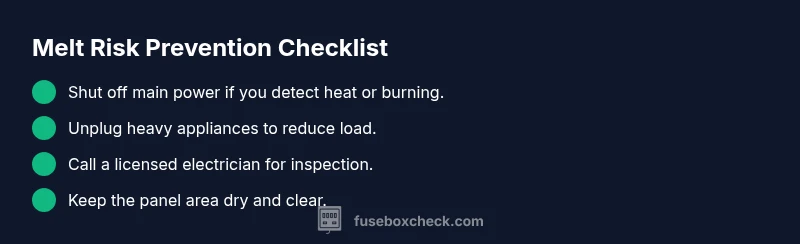
- Do not ignore heat, burning smells, or visible damage near the panel.
- If safe, shut off the main breaker and reduce load.
- Call a licensed electrician for an inspection and any repairs.
- Avoid DIY fixes on the panel and replace damaged components only with professional assistance.
- Keep water away from the electrical area and maintain a clear, dry space around the panel.
Steps
Estimated time: 1-2 hours
- 1
Prioritize safety and shut off power
If you suspect melting, do not touch the panel. If safe to reach, switch off the main breaker and keep a safe distance. This stops the flow of electricity and reduces immediate danger.
Tip: Keep others away from the panel and avoid water near electrical components. - 2
Evaluate visible signs from a distance
From a safe vantage point, look for melted plastic, scorch marks, or a burnt odor. Do not remove panel covers or touch wires while power is on.
Tip: Document signs with photos to share with an electrician. - 3
Redistribute loads safely
If you know which circuit feeds heavy loads, unplug devices on that circuit and move them to other circuits if possible.
Tip: Do not attempt to rewire circuits yourself. - 4
Call a licensed electrician
Schedule an urgent inspection. A pro will assess panel integrity, load distribution, and whether replacement is necessary.
Tip: Ask for a written assessment and an upfront repair plan. - 5
Avoid DIY interior panel work
Do not tighten interior terminal screws or replace components unless you are trained and licensed. Incorrect work can escalate risk.
Tip: Never bypass safety devices or use spray cleaners inside the panel. - 6
Plan preventive upgrades
If replacement is advised, prepare for service upgrades, proper grounding, and arc-fault protection according to code.
Tip: Consider increasing service capacity if your home load profile has changed.
Diagnosis: Fuses or circuit breakers trip repeatedly; panel shows signs of overheating or melting insulation
Possible Causes
- highOverloaded circuit or multiple high-draw appliances on a single branch
- highLoose or corroded connections causing resistance heating
- mediumAging or faulty breakers/panel components
- highShort circuit or ground fault due to damaged insulation or moisture
Fixes
- easyShut off the main breaker and unplug high-draw devices to redistribute load
- hardContact a licensed electrician to inspect, tighten connections, and replace damaged parts
- hardReplace aging or damaged fuses/breakers with properly rated components under professional supervision
- mediumInspect for moisture intrusion and fix any leaks before restoring power
Your Questions Answered
Is it safe to touch a fuse box that looks melted?
No. A melted fuse box can harbor shock and fire risks. Do not touch it. Shut off power if you can do so safely, and call a licensed electrician immediately.
No. Do not touch a melted fuse box. Shut off power if safe and call a licensed electrician right away.
Can a melted fuse box affect other appliances?
Yes. Excess heat can damage wiring and circuits feeding other devices, leading to more trips or faults. Have a professional inspect to prevent further damage.
Yes. Heat damage can affect other devices; get a professional inspection to prevent more problems.
How do I know if I need a panel replacement?
Recurring trips, burning smells, or visible damage after an overheating event are strong signs you may need to replace or upgrade the panel. A licensed electrician can confirm.
Recurring trips or visible damage means you should have the panel evaluated; replacement may be needed.
Is DIY allowed for fuse box work?
No. Inside-panel work is hazardous and typically requires a licensed electrician. You can perform outside safety checks, but avoid touching live parts.
No. Inside the panel, only a licensed electrician should work. You can do safety checks from outside.
What should I do immediately if I smell burning?
Shut off power at the main breaker if you can do so safely, evacuate the area, and call emergency services if fire is visible. Then contact an electrician urgently.
If you smell burning, turn off power if safe and call an electrician right away.
How long does a panel upgrade take?
Upgrade duration varies by home and scope, but expect scheduling time with a licensed electrician and a multi-hour on-site job.
Upgrade duration varies; a pro can give an estimate after inspecting your panel.
Watch Video
Highlights
- Identify overheating indicators early
- Prioritize safety: shut off power and call a pro
- Avoid DIY panel work; rely on licensed electricians
- Plan for upgrade if service is aging or overloaded
- Maintain a clear, dry space around the panel