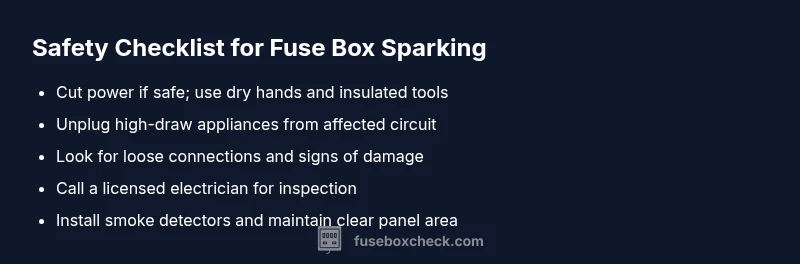
Why is My Fuse Box Sparking? A Homeowner's Troubleshooting Guide
If your fuse box sparks, there’s a real risk of fire or shock. This guide explains the common causes, urgent steps, and safe fixes homeowners can perform before contacting a licensed electrician.


Why is my fuse box sparking? Sparks or burning smells from the panel are a sign of a serious electrical fault. The quickest fix is to cut power if safe and limit use of the affected circuit, then call a licensed electrician. This guide walks you through safe steps, common causes, and how to avoid repeat sparking in the future.
What sparking at the fuse box means
Sparking from a fuse box is never normal. It usually signals an electrical fault that can escalate quickly if ignored. If you notice bright or frequent sparks, a crackling sound, or a burning smell near the panel, treat it as an emergency. Ignoring sparks can lead to insulation damage, electrical shock, or a panel fire. Understanding why this happens helps you act fast and stay safer. The question you’re asking, often phrased as "why is my fuse box sparking," is a sign you’re ready to take cautious, informed steps. In short: any panel sparking requires attention from a qualified professional, even if the sparks stop after a moment.
FuseBoxCheck recommends taking sparking seriously and avoiding DIY fixes that involve opening the panel unless you are a trained professional. The risk of shock, arc flash, or fire is real, and your safety comes first.
If you can observe the situation from a safe distance, note any correlated events (like heavy appliance use or a tripped breaker). This information helps a pro diagnose the issue more quickly and accurately.
titleTagCloseWithValue»:null,
Steps
Estimated time: 30-60 minutes
- 1
Power down safely
If you can reach the main breaker safely, switch it off to cut power to the entire panel. Use insulated gloves and stand on a dry surface. Do not touch metal parts. This is your first line of defense against shocks.
Tip: Never work on or near a live panel; treat it as energized until confirmed de-energized by a tester. - 2
Assess the immediate danger
Look for signs of melted insulation, scorch marks, or a burning smell. If you see these, evacuate the area and call emergency services if the scent intensifies or if you see visible flames.
Tip: If the area feels hot to the touch, leave it and call for help. - 3
Document the situation
Take a quick photo of the panel from a safe distance and note the time, symptoms, and any recent changes (new appliances, circuits added). This helps a pro understand what occurred.
Tip: Clear your calendar of heavy electrical work until a professional inspects the panel. - 4
Limit use and unplug loads
If you must test, unplug high-draw appliances (heaters, space heaters, iron, microwave) and avoid using multiple heavy loads at once.
Tip: Distribute the load across different circuits where possible. - 5
Contact a licensed electrician
Sparking in the panel is a red flag. Arrange a professional inspection promptly to prevent further damage or a potential fire.
Tip: Ask about a panel evaluation, safety upgrades, and load calculations for future prevention. - 6
Follow professional guidance
Adhere to the electrician’s recommendations for repairs, replacements, and safety upgrades. Do not bypass safety devices or install unlisted components.
Tip: Keep a written record of work performed and any warranty details.
Diagnosis: Flickering lights, buzzing, or visible sparks at the fuse box or main panel
Possible Causes
- highLoose or corroded connections at panel lugs or bus bars
- highOverloaded circuits or recent addition of high-draw appliances
- mediumFaulty breakers or damaged fuses
- lowMoisture intrusion or water exposure near the panel
Fixes
- easyTurn off the main breaker only if you can do so safely and you are not exposed to moisture or charged surfaces
- easyUnplug devices on the affected circuit and reduce load on other circuits to minimize risk
- mediumInspect for obvious damage around the panel and tighten any loose screws only if you are trained and the power is off
- hardSchedule a licensed electrician to test and replace faulty breakers, and to inspect for corrosion or burns
Your Questions Answered
Is it safe to touch a sparking fuse box?
No. A sparking fuse box can cause shock or fire. Do not touch the panel. If you can safely cut power, do so, then call a licensed electrician.
No. Sparks from the fuse box are dangerous, so avoid touching and contact a licensed electrician as soon as possible.
What should I do immediately if I see sparks?
Move away, turn off the main power if you can do so safely, and evacuate if you smell burning. Call emergency services if there is a fire risk.
Move away from the panel, cut power if safe, and call emergency services if you detect a fire risk.
Can sparking damage the home wiring permanently?
Yes, sustained sparking can damage conductors, insulation, and devices. A professional should inspect for heat damage and potential fire hazards.
Sparks can cause heat damage to wiring over time; a professional should assess for safety.
Do I need to replace the entire fuse box?
Not always. A pro will determine if only a component or breaker needs replacement or if panel replacement is warranted.
Sometimes only a component needs replacement, but a full panel check is essential to determine the right fix.
How can I prevent fuse box sparking in the future?
Regular electrical safety checks, avoid overloading circuits, and ensure panels are dry and free from corrosion or moisture.
Keep up with safety checks and avoid overloading circuits to reduce sparking risk.
Watch Video
Highlights
- Cut power safely if possible before inspecting.
- Sparking usually means a loose connection or overload.
- Only a licensed electrician should perform panel work or replacement.
- Prevent future sparking with sensible load management and regular panel checks.