Fuse Box Buzzing at Night: Safe Diagnosis and Fixes
Expert guidance to diagnose and safely fix a fuse box buzzing at night. Learn causes, immediate steps, when to call a pro, and how to prevent future buzzes in your home electrical panel.


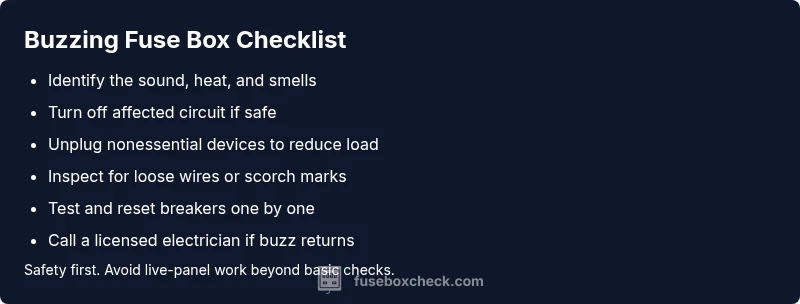
A buzzing fuse box at night is usually a sign of an overloaded circuit, loose connections, or a failing breaker. First, turn off the affected circuit if safe, unplug nonessential devices, and reset the breaker. If buzzing persists, stop and call a licensed electrician immediately.
Understanding the warning signs of a buzzing fuse box
Seeing a fuse box buzz at night is more than a nuisance; it's a potential safety risk. According to FuseBoxCheck, a fuse box buzzing at night often signals electrical stress or a developing fault that should not be ignored. The FuseBoxCheck team found that many homeowners underestimate the danger, especially when there is no obvious burning smell. Buzzing can originate from loose connections, overloaded circuits, arcing, or failing breakers, and it can escalate quickly into a fire risk if ignored. In this section, we unpack the signs you should watch for, how to gauge severity, and what to do immediately. Remember: never assume a hum is normal—nighttime buzzing deserves a careful check and a plan to reduce risk.
- Warmth around the panel and a tingle when you touch the cover can indicate overheating.
- A persistent buzz that changes with load implies a loose lug or faulty breaker.
- Discoloration, melted insulation, or a burnt odor are urgent red flags requiring immediate action.
If you notice any of these, treat the situation as potentially dangerous and proceed with caution.
Immediate safety steps you can take now
Your first move is safety. If safe, switch off the main breaker or the affected circuit from a dry location. Do not touch the panel if your hands are wet or the area is damp. Keep children and pets away. Use a fire extinguisher rated for electrical fires if you suspect a fire risk. Do not attempt to spray water on electrical components. After turning off power, unplug nonessential devices on the same circuit to reduce load and monitor for continued buzzing. If you cannot access the panel safely or you notice heat, burn smell, or smoke, evacuate and call emergency services.
- If safe, shut off the affected circuit first, then unplug devices on that circuit.
- Stand at a safe distance; never touch live conductors.
- Keep exits clear and have a charged phone ready to call for help.
Common causes of a buzzing fuse box
Buzzing is not a mystery symptom; it points to several likely causes. Overloaded circuits every now and then light up a panel, but persistent buzzing suggests a more serious fault. Loose connections or worn breakers can create small arcs that you hear as buzzing. A damaged insulation or arcing inside a breaker can also generate audible buzzing. A tired transformer or service entrance component might hum, but that should be evaluated by a pro. Finally, utility-side issues—though less common—can cause unusual sounds in the service panel. Understanding these potential causes helps you prioritize fixes and decide when to call for professional service.
- Overloaded circuits can cause bus bars to vibrate and buzz.
- Loose connections or worn breakers produce intermittent buzz and heat.
- Arcing due to damaged wiring is a fire hazard and requires immediate action.
- Faulty breaker or fuse may buzz as it struggles under load.
- Transformer or service-entrance hum can resemble a soft buzz but should be evaluated if intense.
How to distinguish buzzing from normal electrical hum
Not every hum is dangerous. A quiet, steady transformer hum behind the panel is common in many homes and often harmless. However, buzzing that fluctuates with load, feels warm to the touch, or is accompanied by a burning odor or flickering lights warrants concern. If the buzz changes when you switch on/off devices or when seasonal loads shift (air conditioner in summer, heater in winter), take it as a cue that a panel issue is present. When in doubt, treat it as a potentially dangerous condition and proceed with caution, prioritizing safety over expedience.
- Normal transformer hum is steady and low in volume.
- Buzzing that changes with load indicates a connection or breaker issue.
- Any heat, ozone smell, or scorch marks demands professional assessment.
What to do if the buzzing continues
If the buzzing persists after basic checks, do not delay. Stop using the affected circuit, then call a licensed electrician to inspect the panel, tighten connections, and test breakers. If you smell burning or see smoke, evacuate immediately and call emergency services. Do not attempt to repair or bypass safety devices. A professional inspection helps determine whether a panel upgrade, component replacement, or service-entrance work is required.
- Document observed symptoms (sound, heat, smell) before the visit.
- Do not bypass safety devices or replace a breaker with an improvised part.
- Schedule a full panel assessment if your home is older than 20–30 years.
Prevention tips to reduce future buzzing
Prevention focuses on proactive maintenance and load management. Schedule periodic panel inspections by a licensed electrician, especially in older homes. Balance loads across circuits and avoid overloading any single breaker. Consider upgrading an undersized or aging panel and installing surge protection to minimize stress. Regular inspections catch loose connections before they become dangerous, and upgrading to newer, safer components reduces buzzing risks over time.
- Schedule annual or biennial panel checks with a pro.
- Distribute loads to avoid overloading a single circuit.
- Upgrade aging panels before issues arise.
- Install a whole-house surge protector for added safety.
Steps
Estimated time: 60-90 minutes
- 1
Power down safely
Locate the main disconnect and switch off the entire panel if you can do so safely from a dry, non-conductive area. This minimizes the risk of shock while you assess the situation.
Tip: Use dry hands and wear insulated gloves if available; never touch live components. - 2
Inspect the panel exterior
Look for signs of overheating, scorch marks, or melted insulation around the breakers and bus bars. Do not open the panel if you cannot safely access it from a distance.
Tip: If you spot heat or odor, stop and call a professional—do not proceed with further checks. - 3
Check for loose connections
With the power off, remove the panel cover only if you are confident and qualified. Gently feel for loose or protruding lug screws and ensure they are snug (not over-tight).
Tip: Loose connections are the leading cause of arcing; avoid forcing screws or wires. - 4
Test and reset breakers
Reapply power and methodically switch breakers off and on one by one. Watch for any that refuse to reset or feel warm to the touch.
Tip: If a breaker trips repeatedly, there is likely a fault that requires investigation by a professional. - 5
Observe after reboot
After restoring power, monitor the panel for any returning buzz, heat, or unusual smells over the next 30–60 minutes.
Tip: Do not operate high-load appliances during this observation window. - 6
Call a professional if needed
If the buzz returns or you detect heat, burning odor, or sparking, contact a licensed electrician promptly. A panel upgrade or service-entrance work may be necessary.
Tip: Document symptoms and the steps you took to help the electrician diagnose faster.
Diagnosis: Fuse box buzzing at night
Possible Causes
- highOverloaded circuits
- highLoose connections or bus bar in panel
- highArcing due to damaged wiring or loose lugs
- mediumFailing breaker or fuse
- lowTransformer hum on the service entrance
Fixes
- easyTurn off power to the affected circuit and unplug nonessential devices to reduce load; then reset the breaker
- mediumPower down the main disconnect and have a licensed electrician inspect and tighten panel connections
- easyReplace a faulty breaker or fuse with the correct type under supervision or by a professional
- hardIf arcing is suspected, evacuate and call emergency electrical repair services immediately
- hardSchedule a full panel upgrade if the panel is old or undersized
Your Questions Answered
Is a buzzing fuse box dangerous?
Yes. Buzzing can indicate arcing or overheating, which creates a fire risk. Treat it as a safety warning and take appropriate precautions.
Buzzing can be dangerous; treat it as a fire risk and proceed with caution.
Should I turn off the main breaker?
If you can safely reach the main breaker, turning off power reduces risk. Do not attempt if you are unsure or if it requires you to touch live components.
If safe, switch off the main breaker to cut power.
Can I fix a buzzing fuse box myself?
Minor load checks are possible, but most fixes require a licensed electrician due to safety risks and code requirements.
Electrical panels are dangerous to DIY; get a pro.
When should I call a professional?
Call a pro if buzzing returns after resetting, if you smell burning, or see signs of damage like scorch marks or melted insulation.
If buzzing continues or you smell burning, call a pro now.
What causes buzzing at night?
Common causes include overloaded circuits, loose connections, arcing, aging breakers, and occasional transformer hum on the service entrance.
Overloads and loose connections are frequent culprits.
Watch Video
Highlights
- Turn off power safely when in doubt
- Buzzing can indicate arcing and overheating
- Do not ignore persistent or escalating buzz
- Call a licensed electrician for diagnosis and fixes