How to Troubleshoot a Humming Fuse Box Safely
Diagnose a humming fuse box safely with this practical guide. FuseBoxCheck outlines common causes, a clear diagnostic flow, and when to call a licensed electrician.


Most humming fuse boxes point to a loose connection, an overloaded circuit, or a failing component. Immediately switch the main off if you smell burning or hear crackling, then avoid touching live parts. If the hum continues, call a licensed electrician for a full inspection today safely.
What a humming fuse box could mean
A fuse box is humming when current flows through a panel that is not producing a quiet electrical hum. If you notice a low-frequency buzz or high-pitched whine, your panel may be signaling a problem that could escalate. According to FuseBoxCheck, most humming sounds from residential panels stem from loose connections, overloaded circuits, or aging components. While occasional, soft hums might be harmless, a persistent or louder vibration warrants a careful check. A humming panel should never be ignored: heat can build, insulation can degrade, and the risk of an electrical fire increases with time. The first step is to ensure you and your family are safe. Do not open the panel if you’re unsure. If you must inspect, switch off the main at the exterior disconnect, and use a non-contact voltage tester only to verify that parts are de-energized before touching anything. In this guide, we walk through safe, practical checks for homeowners and when to bring in a pro. The FuseBoxCheck team found that most DIY-friendly checks involve basic load assessment and visual inspection rather than component replacement.
Key takeaway: Treat a hum as a safety signal, not a minor annoyance. If in doubt, prioritize safety and professional assessment.
Common causes of humming in a fuse box
Humming is commonly caused by issues at or near the service equipment. Understanding the likely culprits helps you prioritize safety and next steps. Here are the most frequent contributors:
- Loose or arcing connections at breakers or bus bars. A loose connection can vibrate and produce a noticeable hum, especially under load.
- Overloaded circuits that pull more current than the panel was designed to safely handle. This condition stresses components and creates noise along with heat.
- Worn breaker contacts or aging components that no longer seat firmly or conduct cleanly, which can cause buzzing as heat builds during operation.
- Service entrance or neutral issues where the main cable or neutral path is compromised, leading to a constant electrical hum.
If you’re noticing any burning smell, sparks, or rapid heat buildup, stop and call a professional immediately.
Safety essentials before you troubleshoot
Before you touch anything, review these safety fundamentals. The goal is to reduce risk while you gather information or perform light checks:
- Always locate and confirm the main power switch is accessible and functional. If you smell burning or see smoke, evacuate and call emergency services.
- Do not work inside the panel while power is on. If you must inspect, shut the main off and verify de-energization with a non-contact tester before touching any conductors.
- Wear non-slip footwear and use insulated tools if you insist on minimal checks. Keep water away from electrical sources.
- Never attempt to bypass safety features or replace a main disconnect yourself. When in doubt, contact a licensed electrician.
These precautions protect you while you diagnose or observe an expert when needed.
Diagnostic flow to isolate the sound (overview)
Use a methodical flow to understand where the hum originates and what it implies. Start with the simplest checks and move toward more involved steps. This approach minimizes risk and keeps you aligned with best practices:
- Symptom check: Note whether the hum is constant or varies with load. If it changes with appliances, it may point to a specific circuit.
- Origin trace: Listen at the panel and nearby devices to identify whether the sound is panel-wide or localized to a single breaker.
- Basic safety check: Look for heat, discoloration, or a burning smell near the panel. Do not touch anything that appears damaged.
- Load assessment: If safe, identify heavy-load devices and determine if balancing loads or reducing peak usage affects the hum.
- Professional escalation: If the hum persists after basic checks, schedule a professional inspection.
Despite the intent to DIY safely, complex faults—especially service entrance issues—require licensed electricians.
Step-by-step: most common fixes you can do safely (non-technical overview)
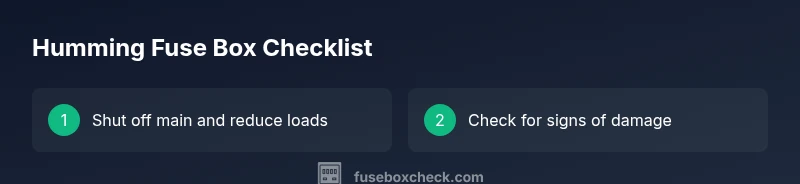
- Power down and verify de-energization. Ensure the main disconnect is off before any inspection. Tip: Wear PPE and keep a clear exit path.
- Visually inspect the panel for signs of damage. Look for discoloration or a burnt smell. Tip: Do not prod or poke inside the panel.
- Check for loose breakers and reseat them if you have safe, power-off access. Tip: If screws are loose, tighten gently with the correct screwdriver.
- Balance and reduce loads on heavily used circuits. Unplug nonessential devices temporarily. Tip: Note which circuits were active when the hum appeared.
- Test the main and a few branch breakers after re-energizing in stages. Tip: Do not force components that resist seating.
- If the hum returns or persists, call a licensed electrician for a thorough inspection. Tip: Share your observations, load patterns, and any smells with the pro.
- Document changes and outcomes. Tip: Keep a simple log for future reference or maintenance.
Estimated total time: 40-60 minutes (non-destructive checks).
Tips & warnings
- Pro tip: Keep a running log of when the hum occurs, loads in use, and any smells or heat you notice.
- Warning: If you see melted insulation, sparking, or a burning odor, evacuate and call emergency services. Do not re-energize the panel.
- Note: Regular maintenance and periodic professional inspections reduce risk and help catch failing components early.
Safety reminders and prevention tips
- Schedule annual inspections of the main panel and service entrance by a licensed electrician.
- Keep loads balanced across circuits to prevent overheating.
- Replace outdated or damaged panels and breakers through professional service only.
- Use high-quality devices and avoid plugging multiple high-draw appliances into a single outlet or multi-tap adapter near the panel area.
- Maintain clean, dry surroundings around the fuse box to prevent moisture-related hazards.
Steps
Estimated time: 40-60 minutes
- 1
Power down and verify de-energization
Open the exterior disconnect or main panel and switch off the main breaker. Use a non-contact tester to confirm no live voltage within the panel area before touching any conductors.
Tip: Always assume parts may be energized until proven otherwise. - 2
Inspect the panel exterior for heat or damage
Look for warm surfaces, melted insulation, discoloration, or a burning odor around the panel and breakers. Do not touch if you detect heat or smell something suspicious.
Tip: If anything looks abnormal, stop and call a pro immediately. - 3
Check for loose breakers and reseat if safe
With power off, gently wiggle breakers to see if any feel loose. If you’re comfortable, reseat the suspected breaker or replace a visibly loose one.
Tip: Only tighten screws to snug — never force a stuck breaker. - 4
Balance loads across circuits
Identify heavily loaded circuits and unplug nonessential devices. Consider redistributing loads to other breakers to reduce peak draw.
Tip: Keep a log of which devices were on during the hum. - 5
Test the system after re-energizing in stages
Close the main and test a subset of circuits to observe whether the hum recurs. Do not run high-draw appliances all at once.
Tip: If the hum reappears, stop and plan professional service. - 6
Document observations for the pro
Note any sounds, smells, heat, or flickering indicators. Record the time of day and loads in use when the hum occurs.
Tip: Accurate notes help the electrician diagnose faster. - 7
Know when to call a professional
If the hum persists after safe checks, or you notice burning odors, call a licensed electrician without delay.
Tip: Do not attempt complex wiring repairs yourself. - 8
Follow up after service
Ask the electrician for a written assessment and a plan for future maintenance or parts replacement.
Tip: Schedule a follow-up check to prevent recurrence.
Diagnosis: Fuse box hums or buzzes when circuits are loaded
Possible Causes
- highLoose or arcing connections at a breaker or bus bar
- highOverloaded circuits or an undersized panel
- mediumWorn breaker contacts or aging components
- lowDamaged service entrance or neutral connections
Fixes
- easyShut off the main breaker and safely redistribute loads to reduce stress on the panel
- easyTighten or reseat any obviously loose breakers (with power off and PPE)
- mediumReplace a faulty breaker or worn contact if you are qualified to do so
- easySchedule a professional inspection to evaluate service entrance, neutrals, and bus bars
Your Questions Answered
What does a humming fuse box mean?
A hum often signals a loose connection, overload, or aging components. It’s not something to ignore, especially if paired with heat, burning smells, or sparks.
A hum usually means a loose connection or overload. Don’t ignore it, especially if you notice heat or smells.
Is it safe to open the fuse box myself?
Only if you’re trained and the power is off. Most repairs should be done by a licensed electrician to avoid serious injury.
Only if you’re trained and the power is off. Otherwise, call a pro.
When should I call a professional?
If the hum persists after basic safety checks, if you smell burning, or if there are signs of damage, contact a licensed electrician promptly.
Call a professional if the hum continues or you notice heat or smells.
Can a humming fuse box cause a fire?
Yes, prolonged arcing or overheating can lead to a fire risk. Do not delay professional inspection if you suspect serious issues.
Yes, it can be a fire risk. Get it checked by a pro promptly.
How can I prevent fuse box problems?
Schedule regular inspections, balance loads across circuits, replace aging components, and avoid overloading outlets or extension cords near the panel.
Get regular inspections and balance loads to prevent issues.
Watch Video
Highlights
- Identify safety first: shut off power when in doubt.
- Hums usually mean loose connections or overload.
- Balanced loads reduce panel stress and risk.
- Call a licensed electrician for persistent issues.