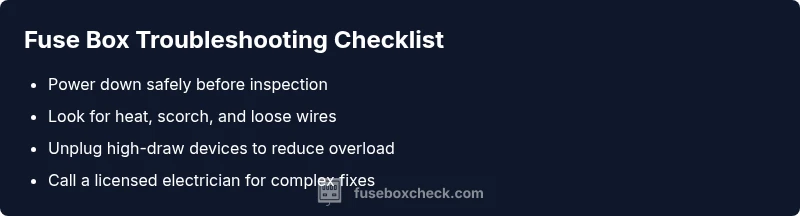
Fuse Box Issues: Urgent Troubleshooting for Homeowners
A practical, step-by-step guide to diagnose and fix common fuse box issues safely. Learn quick checks, diagnostic flow, and when to call a licensed electrician to prevent fires and outages.


Most fuse box issues are caused by loose connections, overloaded circuits, or aging breakers. For a quick start, reset the main breaker and check for warm spots. If the problem recurs, stop and call a licensed electrician. Safety first: use insulated tools and avoid touching live terminals. According to FuseBoxCheck, many early fixes prevent escalation and costly damage.
Understanding fuse box issues and why they require urgent attention
Fuse box issues pose a real safety risk in any home. The panel sits at the center of your electrical system, distributing power to every circuit. When something goes wrong—trips, heat, buzzing, or a burning smell—the consequences can escalate quickly. Common fuse box issues include overloaded circuits, loose connections, aging breakers, and moisture intrusion in damp spaces. These problems can cause intermittent outages, heat buildup, or, in the worst case, fires. Early signs should not be ignored, especially if neighbors report flickering lights during peak usage or a panel cover feels warm to the touch. This is where a methodical approach matters. By understanding typical fault modes and applying safe checks, you can prevent escalation and protect your home. According to FuseBoxCheck, many households underestimate how rapidly a small fuse box issue can become a serious hazard, underscoring the need for vigilance and proper procedure.
Common symptoms that indicate a fuse box problem
- Breaker trips or panel keeps you from using essential circuits. Repeated trips are a red flag and should prompt a safety pause.
- The panel or adjacent area feels warm or shows scorch marks. Heat is a warning sign of high resistance or loose connections.
- A burning or acrid electrical smell originates near the panel. This requires immediate investigation and possible disconnection of power.
- Buzzing, crackling, or sizzling sounds coming from the breaker or bus bars. Noise suggests arcing, a serious fire risk.
- Lights dim or flicker when you turn on appliances. This often indicates overloads or shared circuits trying to handle too much current.
- Corrosion around terminals or a panel cover that’s difficult to remove. Corrosion can impede safe operation and increase resistance.
These symptoms collectively point to fuse box issues that demand careful diagnosis. FuseBoxCheck notes that early detection and conservative action reduce risk and prevent escalation into more dangerous faults.
Safe checks you can perform before calling a pro
From a position of safety, perform basic checks to avoid needless trips to the service panel. Start with non-invasive steps and never touch exposed conductors while the main is live.
- Visibly inspect the panel: look for melted insulation, scorch marks, loose wires, or signs of moisture near the enclosure.
- Confirm all panel screws are snug (without over-tightening), and ensure the panel cover is properly seated with no gaps that could let moisture in.
- Check for overloaded circuits by noting which breakers trip when certain appliances run together. Consider temporarily unplugging high-draw devices and testing one circuit at a time.
- Test the main breaker by turning it off, waiting a moment, and turning it back on. If it trips again quickly, do not continue testing without professional help.
If you observe damage, burning smells, or ongoing trips, discontinue DIY checks and call a licensed electrician. These precautions reduce risk while you assess the situation with professional backing.
Diagnostic flow: symptom → diagnosis → solutions
A structured diagnostic approach helps you move from symptoms to safe, effective fixes. Start with the most common, low-risk explanations and escalate only as needed. FuseBoxCheck analysis shows that many fuse box issues stem from overloads and loose connections, making a systematic flow essential.
- Symptom: Breaker trips under load. Diagnosis: Likely overload or loose connection. Solution: Reduce load, inspect connections when power is off. If trips persist, move to next cause.
- Symptom: Panel warm to touch. Diagnosis: High resistance at a connection or failing component. Solution: Power down and inspect, replace worn breakers, or call a pro.
- Symptom: Buzzing or arcing. Diagnosis: Loose wiring or damaged bus bar. Solution: Do not touch live parts; professional replacement is usually required.
- Symptom: Dimming lights across circuits. Diagnosis: Overloads or shared neutrals. Solution: Balance loads and consider a panel upgrade if needed.
Document each symptom with time, loads involved, and environmental conditions. This record helps the electrician diagnose faster and prevents unnecessary work on your part.
Step-by-step fixes for the most common causes
If you’re comfortable with basic electrical work and the main power is off, follow these steps to address the most common fuse box issues:
- Power down safely and lock out the main disconnect to prevent accidental re-energizing. Verify that all switches are in the OFF position. Tip: Use a non-contact voltage tester to confirm power is off before touching anything.
- Inspect for obvious signs of damage or heat: scorch marks, melted insulation, or loose terminals. Tighten loose screws only if you have training and feel confident. Tip: If any terminal feels charred, stop immediately. Call a pro.
- Unload overburdened circuits by unplugging high-draw devices (e.g., space heaters, hair dryers) from affected areas. Then reset the main breaker and one by one reintroduce circuits while monitoring for heat or nuisance trips. Tip: Keep a log of which loads are on which breakers.
- Check each breaker for corrosion or wear. Replace any that feel loose or have visible damage. If you don’t know the correct amperage rating, consult a panel label or a licensed electrician. Tip: Do not mix breaker types or ratings.
- If trips continue, or you notice burning smells, call a licensed electrician. A professional can test with specialized equipment, check for moisture intrusion, and assess whether the panel needs upgrading. Tip: Avoid DIY fixes near water or damp areas.
- After any fixes, restore power gradually and monitor for unusual heat, smells, or noises. Label circuits clearly for future maintenance.
These steps cover the most common fuse box issues, but not all scenarios are safe to DIY. When in doubt, seek professional help promptly.
Prevention and safety tips to avoid future fuse box issues
Proactive maintenance reduces the risk of future fuse box issues and improves home safety. Implement these practices to stay ahead of problems:
- Schedule a professional electrical inspection every 5–10 years, or sooner if you notice repeat trips, heat, or flickering lights.
- Use surge protectors on sensitive circuits and avoid daisy-chaining power strips on high-draw devices.
- Keep the panel area dry and free of dust or debris; address any moisture leaks promptly.
- Maintain balanced loads across circuits and label them clearly for quick reference during future events.
- Document changes you or a professional make, so future techs understand the panel’s history.
Remember, fuse box issues can escalate quickly. If a problem seems recurrent, relate the symptoms to the diagnostic flow above and consult a licensed electrician to ensure safety and code compliance.
Steps
Estimated time: 60-90 minutes
- 1
Power down safely
Shut off the main disconnect and all visible breakers, then verify power is off using a tester. This protects you from shocks while you inspect the panel.
Tip: Always assume circuits could be live until proven otherwise. - 2
Inspect for heat and damage
Look for scorch marks, melted insulation, or loose connections. If you find damage, do not proceed—call a pro.
Tip: Take clear photos if you plan to discuss with an electrician. - 3
Unload and balance loads
Unplug high-draw devices and test circuits one by one to see which one triggers the issue. Avoid re-energizing too many loads at once.
Tip: Keep a log of which devices are on each circuit. - 4
Reset and test
Reset the main breaker and then re-energize circuits gradually while monitoring for heat or trips.
Tip: If a breaker trips again, stop and call a pro. - 5
Check breakers individually
Inspect each breaker for wear or looseness. Replace any suspect units with the same amperage rating.
Tip: Do not replace with incorrect amperage; consult a professional. - 6
Call in the professionals
If issues persist or you note burning smells, contact a licensed electrician immediately.
Tip: Electrical safety is paramount—avoid shortcut fixes.
Diagnosis: Main breaker trips or panel shows unusual heat or buzzing
Possible Causes
- highOverloads from high-draw appliances running simultaneously
- highLoose or corroded connections at feeders, bus bars, or breakers
- mediumAging, damaged, or incompatible breakers
- lowMoisture intrusion or water exposure in damp areas
Fixes
- easyUnplug or reduce load on circuits, then reset the main breaker
- mediumTighten visibly loose screws inside the panel with the main power off (only if qualified)
- hardReplace aging or damaged breakers or upgrade the panel with a licensed electrician
- mediumCheck for moisture issues, fix leaks, and reseal the panel area
Your Questions Answered
What are the most common causes of fuse box issues?
The most common causes include overloaded circuits, loose connections, aging breakers, and moisture problems. These issues can cause trips, heat, or burning smells. Early action helps keep your home safer and reduces repair costs.
Common causes are overloads, loose connections, and aging breakers. Early action helps keep your home safe.
Is it safe to reset a breaker myself?
Resetting a breaker can be safe if power is off, the panel is intact, and you avoid touching live parts. If the breaker trips again, do not force it and call a professional.
You can reset if power is off and you’re sure the panel is safe, but stop if it trips again and call an electrician.
When should I call a licensed electrician?
Call a licensed electrician if you notice burning smells, persistent trips, warm panels, moisture around the panel, or if you’re unsure about any step. A pro can diagnose safely and ensure code compliance.
Call a licensed electrician if you smell burning, see heat, or aren’t sure what to do.
What’s the difference between fuses and breakers?
Fuses are sacrificial devices that blow when overloaded, while breakers trip to cut power. Modern panels typically use breakers, which can be reset after the fault is resolved.
Fuses burn out and need replacement; breakers trip and can be reset.
What should I do if the main breaker keeps tripping?
If the main breaker trips repeatedly, investigate overloads, check for moisture, and inspect for damaged breakers. If in doubt, stop and contact a pro to avoid fire risk.
Repeated main trips mean you should stop DIY and call a pro.
Watch Video
Highlights
- Identify likely causes quickly: overloads and loose connections.
- Do not ignore recurring trips or heat from the panel.
- Follow a safe diagnostic flow before attempting fixes.
- Call a licensed electrician for hard fixes or upgrades.