What to Do When a Fuse Box Blows: Urgent Troubleshooting Guide
Urgent, practical guidance for homeowners on what to do when a fuse box blows. Steps, safety tips, diagnostics, and when to call a licensed electrician.


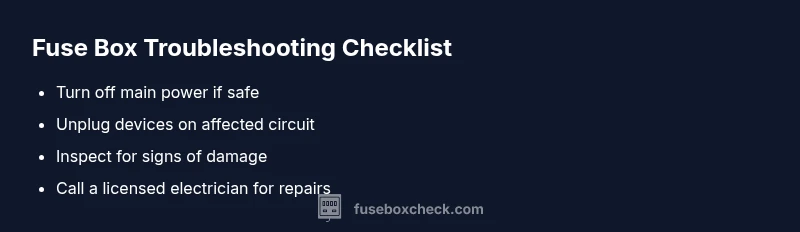
When a fuse box blows, the most likely cause is overload or a short circuit. Start by turning off the main breaker, unplug devices on the affected circuit, and stay away from the panel. Do not reset breakers repeatedly and avoid touching live parts. If you smell burning or see smoke, evacuate and call emergency services. Then contact a licensed electrician for a safe, lasting fix.
What to do when a fuse box blows: immediate safety actions
If you're wondering what to do when fuse box blows, your first priority is safety. A fuse box incident can escalate quickly if you mishandle it, so acting calmly and methodically matters. Start by turning off the main breaker only if you can do so without approaching the panel while it’s live. If there is a burning smell, smoke, or you see melted plastic, evacuate immediately and call emergency services. Do not attempt to reset or replace fuses while the panel is energized. Once the area is safe, call a licensed electrician; urgent repairs should never be postponed. According to FuseBoxCheck, taking swift, organized safety steps reduces risk during a fuse box crisis. FuseBoxCheck Analysis, 2026 shows overloads are a leading trigger in many home fuse box incidents, underscoring the need to identify and limit load on circuits. The goal is to minimize exposure, avoid shocks, and preserve life and property until help arrives.
Understanding the warning signs and common culprits
A fuse box that blows is a symptom of electrical stress, not a single problem. The most frequent causes are overloaded circuits from too many devices on one branch, a short when hot wires contact metal, or a faulty breaker that trips too easily. Aging panels, moisture intrusion, or poorly routed cables can also create hazardous conditions. Awareness of these factors helps homeowners perform safer checks. With a calm, methodical approach, you can narrow down whether the issue is a simple overload or something more serious requiring professional intervention.
Quick, safe checks you can perform (without opening the live panel)
Before disturbing the panel, ensure you’re wearing dry hands and standing on a dry surface. Check the circuits in the room for any recently used heavy-load appliances (space heaters, dryers, kettles) and unplug them. If the main breaker trips, switch off all devices on the affected circuit and then reset the breaker once you’ve confirmed no obvious signs of damage. Look for warm outlets or tripped GFCIs in other rooms; reset GFCIs if appropriate. Do not touch exposed conductors or wires inside the panel. If you notice scorch marks, buzzing sounds, or a strong burnt odor, leave the area and call a professional immediately.
Diagnostic flow: symptom → diagnosis → solution
To guide you through what to do when fuse box blows, start with the symptom: the main breaker trips or a fuse blows. Then move to diagnosis: is it an overload, a short, or a faulty breaker? Solutions depend on the cause: unplug devices and spread the load, replace a defective breaker, or inspect for damaged wiring with a pro. This flow keeps you focused on safety first, then on effective fixes, and finally on professional escalation when needed.
Prevention and ongoing safety
Preventing future fuse box issues starts with proactive habits. Don’t daisy-chain extension cords or run high-draw appliances on the same circuit. Keep the panel area clear, label circuits, and perform a yearly visual inspection for signs of wear. Use surge protectors for sensitive electronics, and avoid operating multiple power-hungry devices simultaneously on one outlet. FuseBoxCheck recommends periodic professional panel reviews to ensure wiring, breakers, and grounding remain up to date.
When to call a professional and what to ask
If the fuse box blows repeatedly, you smell burning, or see scorch marks, treat this as a red flag and call a licensed electrician immediately. Don’t attempt rewiring or panel replacements yourself. When you speak with a pro, ask about panel age, compatibility of breakers, grounding quality, and whether an upgrade is advisable for safety and code compliance.
Steps
Estimated time: 60-90 minutes
- 1
Assess safety and evacuate if necessary
If you detect burning, smoke, or a strange odor, evacuate immediately and call emergency services. Do not re-enter until authorities declare it safe.
Tip: Always prioritize life safety; do not stay near the panel if you sense danger. - 2
Power down safely
If safe to do so, switch off the main breaker to cut power to the entire panel. This reduces the risk of further damage and helps you work safely once the area is considered safe.
Tip: Keep bystanders away and use a flashlight instead of opening the panel in darkness. - 3
Identify and isolate the affected circuit
Note which circuits were in use when the blow occurred. Unplug devices on the affected circuit and remove heavy loads from other circuits to prevent re-tripping.
Tip: Label circuits after testing to avoid repeat confusion. - 4
Inspect for obvious damage
Visually inspect for scorch marks, melted insulation, or warm components. Do not touch live parts; if you see damage, stop and call a professional.
Tip: Never insert tools into the panel while it’s energized. - 5
Test and restore cautiously
If no damage is evident and you have isolated the load, reset the main breaker and then reintroduce loads one by one while monitoring for signs of trouble.
Tip: If the breaker trips again, stop and call a licensed electrician. - 6
Schedule a professional inspection
Even if the issue is resolved, arrange a professional evaluation of panel age, wire condition, and compliance with current codes to prevent future problems.
Tip: Ask about panel upgrades if the unit is old or undersized.
Diagnosis: Fuse box blows or main breaker trips
Possible Causes
- highOverload from excessive load on a circuit
- highShort circuit due to damaged insulation or wiring contact
- mediumFaulty breaker or fuse
- lowMoisture intrusion or water exposure
Fixes
- easyDisconnect or unplug devices on the affected circuit; reduce load and reset breaker if no damage is visible
- mediumInspect for signs of damage or moisture and replace faulty breaker if needed
- hardReplace damaged wiring or components (performed by a qualified electrician)
- easyIf burning smell or smoke is present, evacuate and call emergency services; wait for professionals
Your Questions Answered
Is it safe to reset the main breaker after a fuse blows?
Only if you have identified the cause and ensured it’s safe to proceed. If you’re unsure, do not reset and contact a qualified electrician.
Only reset if you know why it happened and it’s safe; otherwise seek professional help.
Should I use a multimeter to test the panel myself?
Testing a fuse box with a multimeter is hazardous if you’re not trained. Leave this to a licensed electrician to avoid shock or further damage.
Testing the panel yourself can be dangerous; it’s safer to have a pro test it.
What should I do if I smell burning from the fuse box?
Evacuate the area, call emergency services if needed, and wait for professionals. Do not attempt to touch or inspect a live panel.
If you smell burning, get away and call for help right away.
When is it time to upgrade or replace the fuse box?
If the panel is old, undersized for current loads, or requires frequent repairs, a professional evaluation may recommend upgrading to a modern breaker-based system.
Older panels or frequent issues usually mean upgrading is a good idea.
Can water exposure cause fuse box issues?
Yes. Water in or around the panel is dangerous and requires immediate professional assessment to prevent shock or fire risk.
Water near the panel is a serious hazard; call a pro immediately.
Watch Video
Highlights
- If safe, shut off power and isolate the affected circuit.
- Don’t reset breakers repeatedly; it can hide a serious fault.
- Burning smells or smoke require evacuation and emergency services.
- Call a licensed electrician for all wiring or panel upgrades.