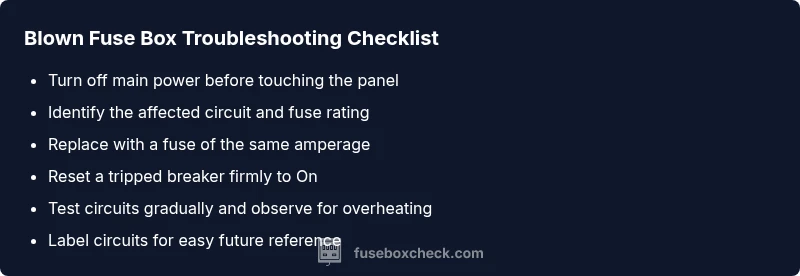
Blown Fuse Box Troubleshooting Guide
Diagnose and safely fix a blown fuse box with step-by-step checks, safety tips, and guidance on when to call a licensed electrician for lasting protection.


Most likely a blown fuse or a tripped breaker cutting power to the affected circuits. Start by safely turning off the main and any affected breakers, then inspect fuse indicators or use a meter to confirm. Replace blown fuses with the correct amperage, and label circuits. If the issue recurs, reduce load, check for loose wires, and call a licensed electrician promptly.
What causes a blown fuse box and why it matters
A blown fuse box is more than a simple outage; it’s a signal that something in your electrical system isn’t behaving safely. In older homes, fuses burn out as metal filaments wear, while modern homes rely on circuit breakers that trip when a circuit is overloaded or a fault occurs. A blown fuse or a tripped breaker doesn’t just cut power to a room—it protects wiring from overheating and potential fires. Repeated events usually indicate an underlying issue such as an overloaded circuit, deteriorating connections, damaged insulation, or a failing panel. Addressing the root cause early reduces the risk of electrical fires and extends the life of appliances. FuseBoxCheck emphasizes thorough diagnosis before any replacement, to prevent recurring outages and ensure your family’s safety.
In this guide, you’ll learn how to perform safe checks, which components are most likely at fault, typical failure patterns, and how to decide when professional help is necessary.
Quick symptoms to recognize a blown fuse box and what they imply
Several telltale signs point to a blown fuse box or related electrical faults. If a single circuit goes dark while others remain on, that’s a classic indication of a blown fuse or a tripped breaker. Burning smells, warm panels, or discoloration around the fuse box are serious red flags that warrant immediate shutdown of power at the main and a professional inspection. Flickering lights, dimming when appliances start, or buzzing noises from the panel also signal voltage or connection issues. Note what wasn’t working when the outage happened—this helps isolate the affected circuit and guides your inspection. If you can safely identify a specific circuit, you’ll know where to focus your checks without opening up the entire panel constantly.
Remember: never ignore burning smells or exposed wires. These hazards require urgent attention.
Immediate safety steps you must take before testing anything
Safety is the first priority when dealing with a blown fuse box. Before you touch the panel, power down the main disconnect to cut power to the entire house. Do not attempt to handle live wires or touch metal parts with damp hands. If you must work near the panel, wear dry, non-conductive gloves and use insulated tools. Keep a clear area around the fuse box, and never bypass safety devices in a desperate attempt to restore power. If you smell burning, see scorch marks, or notice melted insulation, evacue the area and call emergency services if the odor is strong or the panel feels hot. When in doubt, call a licensed electrician instead of taking unnecessary risks.
Document circuit labels for later reference, so you know which circuits to test when power is restored.
Diagnostic approach before replacing components: how to think through the problem
A practical diagnostic flow starts with symptom recognition, followed by a quick physical check and then a measurement-based confirmation. Confirm whether a fuse has visibly blown or a breaker has tripped. Check for signs of arcing, loose connections, or overheating at the panel. Use a multimeter to verify circuit continuity and voltage on unaffected circuits. If the fuse box is old or the panel shows corrosion or is subject to moisture, those are red flags. In many cases, the culprit is a single overloaded circuit; in others, it’s a failing panel that needs replacement. Document findings as you go to share with a professional if needed.
Step-by-step: how to safely replace a fuse with the correct amperage
- Turn off the main power and test to confirm the circuit is dead. 2) Identify the affected fuse and remove it using insulated pliers. 3) Check the fuse rating (amperage) to ensure you replace with the same specification. 4) Insert a new fuse of identical rating, making sure the metal ends seat firmly. 5) Restore power at the main and test the circuit by turning on the appliances gradually. 6) If the fuse blows again, stop and reassess the load distribution across other circuits. 7) Inspect for signs of overheating in the area around the fuse holder. 8) Keep a written log of replaced fuses and circuits. 9) Consider an inspection of the entire panel if this occurs frequently.
Pro tip: Always use the exact fuse rating—oversizing can be dangerous and void warranties.
Step-by-step: how to safely reset a tripped breaker
- Turn off all devices on the affected circuit and switch the breaker fully to Off. 2) Flip the breaker to the On position, then restore power to the circuit gradually by turning on devices one by one. 3) If the breaker trips again, unplug the most power-hungry device and retry. 4) Note if other breakers are also tripping, which may indicate a broader overload. 5) If the problem recurs after reseating breakers, schedule an inspection of the panel.
Pro tip: Don’t force a breaker that feels stiff; a stiff breaker can indicate a faulty mechanism and should be evaluated by a professional.
Common mistakes and how to avoid them
Common mistakes include replacing a fuse with a higher amperage rating, bypassing a load, and opening the panel with wet hands. These actions increase fire risk and can cause serious injury. Always verify your fuse ratings and never substitute a fuse with a wire or tape. Avoid repeatedly resetting a breaker after it trips; this is a sign that a larger electrical issue exists. Take photos or notes of the panel layout to assist any electrician who visits your home.
If you’re unsure how to proceed, stop and call a professional. Safety comes first.
Maintenance tips to prevent future fuse box problems
Preventive maintenance reduces the chance of future outages. Regularly inspect the panel for corrosion, signs of moisture, or loose wires. Keep the area clean and dry and ensure that the panel cover is secure. Schedule a professional inspection if you have an older home or recently experienced a major electrical event such as a storm or flood. Use surge protectors for sensitive electronics and avoid running multiple high-draw devices on a single circuit. Record all changes to your fuse box and update your home electrical map as circuits are added or moved. A well-maintained fuse box reduces trip frequency and improves overall safety.
When to call a licensed electrician: knowing the limits of DIY
If you live in a home older than 40 years, have frequent fuse or breaker trips, notice burning smells, or see melted plastic, discoloration, or corrosion around the panel, stop DIY work and contact a licensed electrician. Complex issues like water exposure, signs of arcing, or panel replacement require professional handling due to serious safety risks. If any repair involves the main service entrance or you’re uncertain about wire conditions, professional help is essential. FuseBoxCheck recommends a professional evaluation for persistent problems or uncertain conditions to ensure safety and code compliance.
Steps
Estimated time: 60-90 minutes
- 1
Power down safely
Shut off the main disconnect to cut power to the entire home. Use dry hands and insulated tools if you must work near the panel.
Tip: Stand to the side when opening the panel to avoid a sudden arc. - 2
Identify affected circuit
Check the labeling on the panel to locate the circuit that lost power. If you have no label, note appliances that were running before the outage.
Tip: Label the circuit for future reference to simplify testing. - 3
Check fuse/breaker status
Look for a blown fuse or a tripped breaker. Visually inspect the fuse and test with a meter if available.
Tip: Never touch exposed conductors. - 4
Replace fuse or reset breaker
Install a new fuse with the same amperage rating or reset the breaker firmly to the On position.
Tip: If the fuse blows or breaker trips again, stop and check the load. - 5
Test the circuit
Gradually re-energize the circuit by turning on devices one by one to identify the overload.
Tip: If a single device causes the trip, the device or its circuit may be faulty. - 6
Inspect for overheating
Feel the panel area after testing for heat. Any warmth or smell indicates a potential fault.
Tip: Do not touch overheated components; shut power and call a professional. - 7
Label and document
Record the replaced fuse/breaker and the devices on that circuit to simplify future maintenance.
Tip: Maintain an up-to-date electrical map. - 8
Plan preventive steps
Consider upgrading aging panels or distributing load more evenly to prevent future trips.
Tip: Discuss panel health with a licensed electrician. - 9
Know when to call a professional
If you’re unsure or the problem persists, contact a licensed electrician promptly.
Tip: Safety first—professional evaluation ensures code compliance.
Diagnosis: Partial or total power loss with or without a buzzing panel after a storm or heavy load
Possible Causes
- highBlown fuse or tripped breaker
- mediumOverloaded circuit
- lowLoose connections within the panel
- lowMain service issue or panel aging
Fixes
- easyTurn off main, identify affected circuit, replace fuse or reset breaker
- easyDistribute load or unplug high-draw devices on affected circuit
- mediumInspect panel for loose wires; tighten connections with proper tools (power off)
- hardIf main service issue is suspected, contact utility or licensed electrician immediately
Your Questions Answered
What is a blown fuse box and how can I tell?
A blown fuse box occurs when a fuse melts or a breaker trips, cutting power to a circuit. Look for a visible blown fuse or a tripped breaker, and note any burning smells or heat near the panel.
A blown fuse box happens when a fuse melts or a breaker trips, cutting power. Check for a blown fuse or a tripped breaker and be aware of heat or burning smells near the panel.
Can I fix it myself, or should I hire a pro?
Basic fuses and breakers can be handled by a confident homeowner with the right ratings and safety precautions. Replacing aged components or diagnosing persistent trips should be done by a licensed electrician to ensure safety and code compliance.
You can handle basic fuse and breaker changes if you know the ratings, but persistent trips should be done by a licensed electrician.
Why would a fuse box blow during a storm?
Storms can cause voltage surges, moisture ingress, or downed lines that stress the electrical system. Surges may blow fuses or trip breakers to protect wiring and appliances.
Storms can surge voltage and moisture, triggering fuses or breakers to protect the system.
What should I do if the main fuse box trips repeatedly?
Repeated main trips indicate a broader overload or a panel issue. Reduce overall load, check for faulty devices, and seek a professional assessment to prevent fire risk.
If the main keeps tripping, cut back on load and get a professional assessment.
Is it safe to work on a fuse box at night?
Working on a fuse box at night is riskier due to limited visibility. If you must, ensure the area is dry, use proper lighting, and avoid touching live components.
Night work is riskier. If you must, stay dry, illuminate the area, and avoid live components.
How can I prevent fuse box problems in the future?
Regular panel maintenance, proper load distribution, upgrading aging panels, and using surge protectors for sensitive devices reduces trips and improves safety.
Prevent by maintaining the panel, balancing loads, upgrading aging hardware, and using surge protectors.
Watch Video
Highlights
- Prioritize safety before testing; shut off power at the main.
- Identify the affected circuit and use the correct fuse rating.
- If fuses repeatedly blow or breakers trip, stop and seek professional help.
- Document changes to aid future maintenance and code compliance.
- Regular panel maintenance reduces future outages and fire risk.