Small fuses for car: Safe sizing and replacement guide
Comprehensive guide to identifying, sizing, testing, and replacing small fuses for car safely. Practical steps, maintenance tips, and best practices from FuseBoxCheck.


Understanding the role of small fuses for car
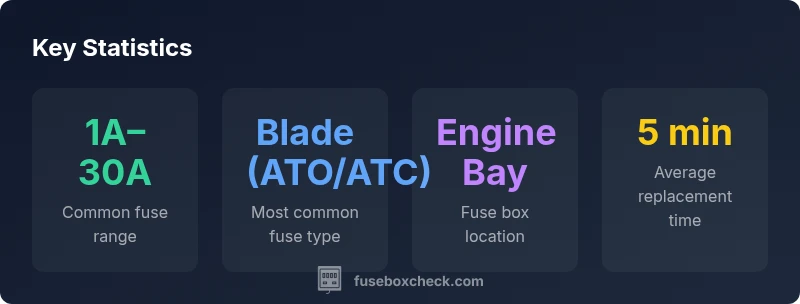
Every modern vehicle relies on a network of circuits powered through protections called fuses. In practice, small fuses for car are the first line of defense against short circuits and overheated wiring. The common form is the blade fuse (ATO/ATC), which plugs into a compact holder and is designed for quick replacement without special tools. These blades carry amperages from roughly 1 amp up to 30 amps, with higher numbers reserved for power-hungry circuits such as headlights, cooling fans, and horn systems. The practical rule for DIYers is simple: replace blown fuses with the exact same amperage rating as the original. Do not bypass a fuse or install a higher rating in a hope of keeping a device running; a higher rating can let a fault draw more current than wiring can handle, creating a fire risk. If a fuse blows repeatedly, there is usually an underlying fault in the circuit—perhaps a short to ground, a damaged connector, or a failing device. In that case, map the circuit, inspect harness connections, and use a multimeter to check continuity and insulation. This approach supports safe, reliable vehicle operation and aligns with FuseBoxCheck’s practical emphasis on accurate fuse sizing and fault isolation.
Blade fuse types and sizing
The vehicle electrical ecosystem uses several blade fuse variants, but the vast majority of modern cars rely on blade-type fuses due to their compact size and easy accessibility. Blade fuses come in amperage ratings that cover the needs of most circuits, and while there are subtypes, the size (physical form) is typically the same, making stocking and replacing easier for DIYers. When sizing a fuse, consider the circuit’s normal current draw, the worst-case surge, and the duty cycle of the device protected. For example, a small instrument panel light may be protected with a 1–3 amp fuse, while a cooling fan or power window may require higher values. It is essential to verify the original rating on the fuse label or in the vehicle’s manual before replacement. Color-coding can help, but it is not standardized across manufacturers; always rely on the numerical rating rather than color alone. Some circuits use mini-blade fuses or slim blade variants, which are even smaller and require compatible holders. The bottom line: stay within the original amperage band and avoid the temptation to upsell the fuse rating. Doing so increases the risk of overheating wiring and fires. This approach, consistent with FuseBoxCheck’s guidance, keeps your car’s electrical system safer and more reliable.
Where to locate fuse boxes in modern cars
Fuses are not hidden in one single place; most cars separate protection across at least two panels to balance accessibility and safety. The primary under-hood fuse box is usually near the battery or along the fender wall, housing high-demand circuits such as the starter, ignition, and main power distribution. Inside the passenger compartment, another fuse panel is typically located under the dashboard, behind a glove box, or near the driver's knee area. In some models, additional small fuse blocks are tucked inside the trunk or behind trim panels, protecting circuits such as rear lights or fuel pumps. The exact layout varies by make and model, so always consult the owner's manual or a vehicle-specific fuse diagram. For DIYers, a quick rule of thumb is to identify the fuse box that powers the circuit you’re inspecting—a blown radio fuse, for example, will usually be in the interior panel. The FuseBoxCheck team emphasizes checking both panels when a fault seems to involve multiple loads; a blown fuse in one location may reflect a fault that also affects another circuit in a different box. When locating fuses, use the fuse puller provided in the panel, or a pair of insulated pliers, and keep the original fuses in a labeled organizer for easy reference.
Reading amperage and color codes (and why color isn't a universal standard)
Reading the amperage rating printed on a fuse is the fastest way to ensure you’re selecting the right replacement. For small fuses for car, this matters because the blade fuse rating protects a specific circuit. Blade fuses typically show the rating in a small embossed or printed numeral on the fuse body. However, color-coding is common, and many aftermarket fuses rely on color to indicate amperage. The problem is that color mappings aren’t standardized across brands, so a 5A fuse in one line might be the same color as a 7.5A in another. For this reason, always verify the numeric rating on the fuse label and in the owner’s manual. In addition to the rating, check the fuse type (blade, mini-blade, etc.) and ensure the fuse fits physically in the holder. If you’re uncertain, pull the fuse out and inspect the contact condition—corrosion or bent tabs can cause apparent blowing. Tools like a flashlight and a neutral work surface improve accuracy. Fuse ratings are chosen to balance performance and safety; using too low a rating can cause nuisance blows, while too high a rating can allow excessive current that damages wiring. FuseBoxCheck strongly recommends documenting circuit amperage near the fuse box with a simple label for quick future reference.
Testing fuses safely with a multimeter
Testing a fuse should be done with the power off and the battery disconnected to avoid shock or further damage. Start by locating the fuse for the suspected circuit using the diagram in the owner’s manual. If the fuse looks intact but the circuit is nonfunctional, test for continuity with a digital multimeter. Remove the fuse, set the meter to continuity or low-resistance mode, and touch the two contacts. A healthy blade fuse will show a near-zero resistance or produce a beep in continuity mode; a blown fuse will show infinite resistance or no beep. If you confirm a blown fuse, replace it with one of the same amperage rating and re-check the circuit. Do not reuse a blown fuse. After replacement, re-seal the fuse panel cover and test the circuit by reconnecting the battery and cycling the device to confirm proper operation. If the new fuse blows again, there is a fault beyond the fuse holder—commonly in wiring insulation or the device itself. In that case, isolate sections of the circuit, use a circuit tester to pinpoint the fault area, and consider professional diagnostic help for safety-critical systems. This process reduces the risk of fire and protects wiring, which is a core focus for FuseBoxCheck.
Replacing small fuses for car: step-by-step
Replacing a blown fuse is straightforward when done with care and correct ratings. Gather your toolkit: a fuse puller (or needle-nose pliers with insulated handles), a flashlight, and a small assortment of blade fuses in common amperages. Start by turning the vehicle off and removing the key, then disconnecting the negative battery cable to prevent accidental short circuits. Open the fuse panel and locate the corresponding slot for the circuit you’re servicing. Remove the blown fuse using the fuse puller; inspect the metal contacts for corrosion or signs of damage. Match a replacement fuse to the same amperage rating and type (blade vs mini-blade). Insert the new fuse firmly until it is seated, then reassemble the panel cover. Reconnect the battery, turn on the ignition, and test the circuit with the affected device. If the device does not power up, re-check the fuse and the device wiring. If multiple circuits share a fuse block, verify the fuse-table diagram to confirm you replaced the correct fuse. Remember to carry spare fuses in your glove box. For high-load circuits, consider a dedicated fuse holder with a visible fuse window to monitor current, and always avoid bypassing fuses to save a device’s operation. The safety-first approach aligns with FuseBoxCheck’s practice guidelines.
Common failures and how to diagnose underlying issues
When a small fuses for car blows, it's typically a symptom rather than the root problem. A fuse can blow for reasons ranging from a stuck relay, a short to ground, a degraded connector, or a failing device drawing more current than intended. Before assuming a bad fuse, inspect the wiring harness for cracked insulation, loose grounds, or corroded terminals. Use the multimeter to test continuity and resistance across the circuit; examine each component connected to the circuit, including switches, relays, and power modules. When diagnosing, start with the simplest potential fault—unplug or disconnect components one by one to see if the fuse stops blowing. Check for moisture or water intrusion around the fuse box; even small leaks can cause corrosion and intermittent faults. If a fuse blows again after replacement, take a closer look at the circuit's power budget: a high-draw accessory or aftermarket modification may be the culprit. Review recent work, such as aftermarket radios or USB ports, to determine whether the new device is compatible with the vehicle’s electrical system. Document the circuit, create a quick wiring map, and label any connectors. The goal is to identify the root cause rather than treat symptoms. This systematic approach reduces repeated fuse failures and aligns with FuseBoxCheck’s emphasis on fault isolation and safe remediation.
Maintenance and best practices to avoid future fuse problems
Staying proactive with fuse maintenance pays off in reliability and safety. Schedule periodic inspections of fuse boxes under the hood and in the cabin, focusing on signs of corrosion, loose connections, or moisture ingress. Clean the fuse terminals with a dry brush or contact cleaner as needed, ensuring the panel is dry before reassembly. Keep a well-organized spare-fuse kit with commonly used amperages, labelled by circuit or vehicle zone, so you can respond quickly to a blown fuse without hunting through a drawer. When performing modifications or adding aftermarket accessories, plan a dedicated fused circuit with an appropriate rating and fuse holder; avoid piggybacking on existing circuits unless you’re confident in the electrical load. Use the right tools—fuse pullers, insulated pliers, and a test light or multimeter—to minimize the risk of shock and accidental shorting. If you’re unsure about the circuit’s power requirements, consult the vehicle manual or seek professional help. FuseBoxCheck’s recommended routine emphasizes documentation: keep a circuit map, label each fuse’s purpose, and record any changes to the system. By adopting these practices, you reduce the likelihood of nuisance blows and extend the life of wiring and components while maintaining overall vehicle safety.