How to Fix a Fuse Box: Safe Step-by-Step Guide for Homeowners
Learn to safely diagnose and fix common fuse box issues at home with practical steps, safety tips, and when to call an electrician from FuseBoxCheck.


By following this guide, you will safely diagnose and fix common fuse box issues in your home. Start by powering down the main disconnect, then inspect fuses and breakers, replace blown fuses, and label circuits. If you notice burning smells, buzzing, or repeated trips, shut down power and call a licensed electrician.
Understanding Fuse Boxes and the Club Penguin Keyword
A fuse box is the central hub that protects your home’s electrical circuits. It houses fuses or circuit breakers that interrupt power when a fault occurs. If you arrived here while searching for how to fix fuse box club penguin, you’re not alone—many people encounter odd search terms and still want practical, safe guidance. This article stays rooted in real-world electrical safety and straightforward fixes that homeowners can perform with caution. According to FuseBoxCheck, most fuse box problems stem from simple issues like a blown fuse, a tripped breaker, loose connections, or outdated components that no longer meet current loads. Understanding the difference between fuses and breakers, and knowing where to locate the panel, will save you time and reduce the risk of shock or fire. This foundation sets the stage for the step-by-step process below, which walks you through identification, verification, replacement of components, and how to re-seal the panel after the work is done.
Many households rely on the fuse box as a daily power gatekeeper. A basic grasp of its layout—where the main disconnect sits, how circuits are grouped, and what labels mean—helps you approach fixes methodically rather than guessing. FuseBoxCheck emphasizes staying within your comfort zone and stopping work if anything feels unsafe, especially around damp floors or exposed wiring. Throughout this guide you’ll see practical, non-technical language paired with clear safety checks to help homeowners complete a repair without compromising safety.
Safety First: Before You Start
Safety is non-negotiable when dealing with electrical panels. Before touching any components, power down at the main disconnect or generator transfer switch if you have one. Verify there is no voltage present with a non-contact voltage tester, and keep a dry, insulated workspace. Use insulated gloves and eye protection, and avoid touching metal parts with bare hands. If the panel is hot to the touch, if you smell burning, or if you hear buzzing, stop immediately and call a licensed electrician. FuseBoxCheck stresses that working on live panels is dangerous and may violate local codes if performed improperly. This section outlines the precautions you should follow every time you approach the fuse box, including the importance of dry hands, proper footwear, and keeping children away from the work area.
Remember: working with the main supply carries risk, and the safest option is often professional help for complex issues or aging infrastructure. When in doubt, opt for professional assessment rather than risk.
Common Causes of Fuse Box Problems
Fuse boxes fail for a handful of predictable reasons. A blown fuse, a tripped circuit breaker, loose connections, corroded terminals, or aging components can disrupt power and create heat buildup. Overloaded circuits are a frequent culprit; adding heavy loads to a single circuit can cause fuses to fail or breakers to trip. Some homes also suffer from improper wire sizing, antiquated panels, or DIY modifications that do not meet current electrical codes. Understanding these common causes helps you diagnose more efficiently and prevents unnecessary replacements or risky improvisations. FuseBoxCheck notes that many problems are symptom-driven rather than root-cause failures, so a calm, methodical approach yields safer, longer-lasting results.
In addition to technical causes, environmental factors like moisture, dust, and poor panel labeling can complicate repairs. A well-labeled panel makes it easier to identify which circuit controls which room or appliance, speeding up troubleshooting and reducing the chance of accidentally pulling the wrong fuse.
Tools and Materials You’ll Use
Before you begin, gather the essential tools and materials to minimize interruptions. A basic toolset should include a non-contact voltage tester, a multimeter, insulated screwdrivers (Phillips and flat-head), needle-nose pliers, a flashlight, wire strippers, replacement fuses (with the correct amperage rating), and a spare circuit breaker if applicable. Keep a heat-resistant mat or thick cardboard to work on, and use electrical tape to label wires cleanly. If you’re working on an older panel, you may need a torque driver to tighten terminal screws to the manufacturer’s specification. Non-essential items like a power drill or heavy rubber gloves can be helpful but are not required for most routine checks. FuseBoxCheck highlights that using the right tool not only makes the job safer but also reduces the chance of damaging the panel.
Step-by-Step Troubleshooting Overview
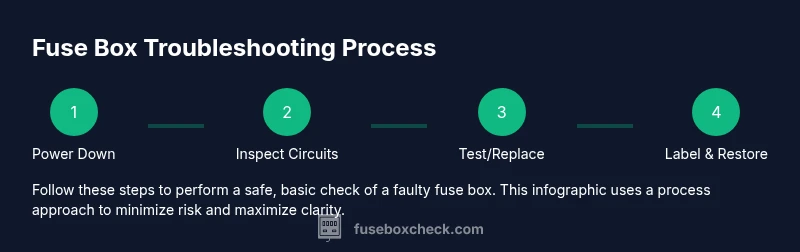
A structured approach helps you identify and fix problems without missing steps. Start with safety checks, then visually inspect for obvious signs of damage, test components for continuity, and replace faulty parts with the correct ratings. After replacements, restore power and verify that each circuit operates as expected. This overview sets the stage for detailed, step-by-step actions that follow. It’s important to document what you find, which helps future maintenance and makes it easier to discuss with a licensed electrician if needed.
How to Inspect and Replace a Blown Fuse (if applicable)
For panels that still use fuses, a blown fuse is often easy to spot: a blown fuse inside the glass cylinder can appear dark or white, and the metal strip may be broken. Remove the fuse using insulated pliers, take note of the amperage rating on the fuse, and replace it with a new fuse of the same rating. Do not replace with a higher amperage unless you’ve confirmed the circuit’s actual load and wiring is rated accordingly. After replacement, test the circuit with a tester to ensure power returns to the associated outlets or lights. If the fuse keeps blowing, there is typically an overload or a short somewhere downstream, which requires more thorough diagnosis.
Always ensure the panel cover is off only while the main power is off and never touch live conductors. Replace the cover before restoring power to protect against accidental contact and arc faults.
Safety Actions After Any Work
After performing fixes, securely reattach the panel cover, re‑label any circuits if needed, and clean up your work area. Turn the main power back on and verify each circuit functions by turning on lights and testing outlets in the affected areas. If the main breaker trips again, or if you notice scorch marks or a burning odor, shut off power and call a licensed professional immediately. It’s wise to keep a home electrical safety checklist on hand for routine inspection, especially in older homes where panels may be near the end of their service life.
What Not To Do: Common Mistakes to Avoid
Avoid bypassing safety devices, over-tightening terminal screws, or using makeshift connectors. Never work on a panel when the area is wet or when you’re standing on a damp surface. Do not attempt to upgrade or modify the panel without following local electrical codes, as improper modification can create fire hazards and void warranties. If a circuit repeatedly trips, or if you see signs of arcing, sweating, or overheating, don’t continue diagnosing—call a licensed electrician for a professional evaluation.
Maintenance for Long-Term Safety
Regular maintenance is key to preventing fuse box problems. Schedule periodic inspections, ensure circuits are not overloaded, and replace aging components before they fail. Keep a log of work performed, including the date, parts used, and any recommendations from professionals. A clean, dry, well-lit panel area reduces the risk of accidental contact and moisture intrusion. FuseBoxCheck recommends checking for corrosion, loose connections, and test points at least once a year, with a professional check every few years depending on your home’s age and electrical demand.
Tools & Materials
- Non-contact voltage tester(Verify zero voltage before touching components)
- Multimeter(For continuity and resistance checks)
- Insulated screwdriver set (Phillips & flat-head)(Use insulated handles for safety)
- Replacement fuses (correct amperage)(Keep spare fuses matching panel rating)
- Spare circuit breakers (if applicable)(Only for panels that use breakers)
- Flashlight(Ensure good visibility inside panel)
- Insulated gloves and eye protection(Personal protective equipment)
- Wire strippers(Useful for minor wire work)
- Electrical tape(Label wires and secure connections)
- Dry work surface, mat or cardboard(Prevent grounding and moisture contact)
Steps
Estimated time: 45-60 minutes
- 1
Power Down the Main Disconnect
Locate the main shutoff and switch it to the off position. Use a non-contact tester to confirm that no panel terminals are live before you touch anything. This step reduces the risk of shock and arc flash.
Tip: Always verify zero voltage even if the switch seems clearly off. - 2
Identify the Tripped Circuit
Look at the position of each breaker or fuse indicator. A tripped breaker sits midway between on and off, while a blown fuse shows an open circuit. Note the circuit's label to know which area it serves.
Tip: Label the affected circuit if it isn’t already labeled. - 3
Inspect for Visual Damage
Carefully examine fuses for a broken element or signs of scorching. Check for loose terminal screws or corroded contacts. Do not force components; if something looks damaged, skip to replacement.
Tip: Use a flashlight to spot subtle discoloration. - 4
Test or Replace the Affected Component
If a fuse is blown, replace with a fuse of the same amperage rating. If a breaker has tripped, reset it gently but avoid repeated trips. For persistent issues, avoid further testing and seek professional help.
Tip: Never assume a higher rating fuse is safe. - 5
Check Downstream Wiring
If the new fuse trips again, inspect outlets and appliances on that circuit for signs of fault. A shorted device can overload the circuit and cause repeated failures.
Tip: Unplug devices and re-test after replacement. - 6
Label Circuits Clearly
Update or create a clear circuit directory on the inside of the panel cover. This makes future troubleshooting faster and safer for any homeowner or technician.
Tip: Include room names or major appliances in labels. - 7
Restore Power and Verify
Turn the main disconnect back on, then reset individual breakers one by one. Check lights, outlets, and major appliances to confirm normal operation.
Tip: Observe for any heat or smell as you restore power.
Your Questions Answered
Is it safe to fix a fuse box myself?
Basic checks and small replacements can be safe when you follow strict safety rules and power is completely off. For complex failures, aging panels, or if you detect burning odor, hire a licensed electrician.
You can do simple checks when power is off, but call a pro for complex issues or signs of damage.
What is the difference between a fuse and a breaker?
A fuse contains a metal link that melts when overloaded, stopping current. A breaker trips to interrupt current and can be reset. Modern homes mostly use breakers; older homes may have fuses.
A fuse melts to stop power; a breaker trips and can be reset.
Can a fuse box be repaired in one day?
Many minor fixes can be done in a day, but replacement panels or major wiring work may require scheduling and inspection. Always ensure work complies with local codes.
Simple fixes can be done in a day; complex work may require more time and a permit.
What amperage replacements are safe?
Only replace with the same amperage rating as the original fuse or breaker. Using a higher rating on a faulty circuit can cause overheating and fire risk.
Stick to the original amperage rating when replacing components.
What should I do if the main panel smells burnt?
Shut off power at the main breaker if safe to do so and call a licensed electrician immediately. Don’t use the panel until inspected.
If you smell burning, turn off power and call a pro right away.
Do older homes require panel upgrades?
Older homes often benefit from an electrical system assessment to ensure the panel size matches current loads and wiring is up to code. Upgrades may improve safety and reliability.
Older homes often need an assessment to determine if a panel upgrade is beneficial.
Watch Video
Highlights
- Power down before touching the panel.
- Identify the tripped circuit first for quicker fixes.
- Use the correct fuse rating and avoid improvising parts.
- Label circuits to simplify future maintenance.
- Call a professional for persistent trips or complex faults.