Broken Fuse Box Phasmophobia: Urgent Troubleshooting Guide
Urgent troubleshooting guide for the phrase broken fuse box phasmophobia. Learn safety steps, common causes, a diagnostic flow, and when to call a licensed electrician.


Most likely a tripped breaker or blown fuse is causing the fuse box to fail. Start by turning off the main power, then locate and reset the affected breaker or replace the fuse. If the problem recurs or you notice burning smells, halt work and call a licensed electrician immediately.
What "broken fuse box phasmophobia" really means in real life and gaming
In online forums and gaming communities you might hear the phrase broken fuse box phasmophobia used to describe a panel that suddenly stops working during a tense moment. In the real world, this phrase highlights a serious safety issue: a panel that won’t respond to normal controls can indicate an overload, moisture ingress, or aging equipment. FuseBoxCheck has found that homeowners often confuse a simple breaker reset with a larger panel problem, which can delay essential safety steps. Treat the situation with urgency, and always prioritize personal safety first. In short, the term links a chaotic moment from a game-like scenario to a concrete home electrical risk, reminding you to act deliberately and safely as soon as you notice a malfunction.
If you’ve heard a reference to broken fuse box phasmophobia, think of it as a warning sign rather than entertainment. The right approach is to cut power at the main disconnect, stop any risky actions, and assess whether a simple reset will restore service or if a licensed professional is needed.
According to FuseBoxCheck Analysis, 2026, most home fuse box problems stem from overloads and aging components. The goal of this guide is to translate that data into practical steps you can follow today, keeping you and your family safe while you troubleshoot.
Key takeaway: remain calm, power down safely, and proceed with the process below.
Steps
Estimated time: 45-60 minutes
- 1
Power down safely at the main
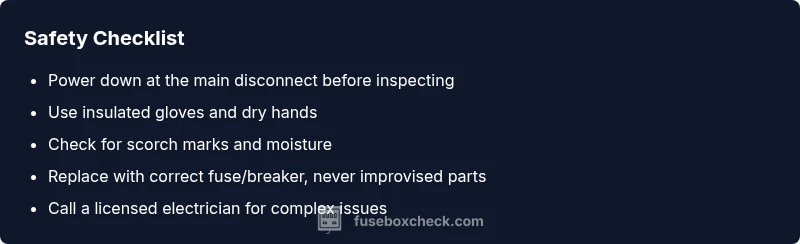
From the main disconnect, switch off the main breaker to cut power to the entire home. This reduces the risk of shock or arc flash as you inspect the panel. Use dry hands and stand on a dry surface.
Tip: If you must reach the panel, use insulated tools and wear rubber-soled shoes. - 2
Identify the affected circuit
Look for a breaker that is fully in the OFF position or a fuse that looks burnt or melted. In a slot with a fuse, remove carefully to inspect for damage.
Tip: Note which circuit controls high-draw appliances like HVAC or space heaters to plan load redistribution. - 3
Reset or replace the fuse/breaker
For a tripped breaker, flip it fully to OFF, then back to ON. For a blown fuse, replace with a fuse of the same amperage rating and ensure the fuse holder is clean.
Tip: Do not tighten a loose fuse or use an improvised fuse—replace with the correct rated device. - 4
Inspect for damage or moisture
Check for scorch marks, melted plastic, or damp areas around the panel. If you spot any of these, stop and address moisture or damage before powering up again.
Tip: Moisture issues require professional assessment and may need panel replacement. - 5
Restore power and monitor
Turn the main back on and observe whether all circuits function normally. If the breaker trips again, or you notice heat, buzzing, or burning smells, shut down and call a professional.
Tip: Keep a log of symptoms to share with an electrician if you need one.
Diagnosis: Fuse box trips, fuses blow, or panel is unresponsive after a suspected fault
Possible Causes
- highCircuit overload from multiple devices on a single circuit
- mediumLoose or corroded connections inside the panel
- lowMoisture ingress or water exposure in the panel
Fixes
- easyPower down at the main disconnect and unplug nonessential devices from affected circuits
- mediumTighten or reposition breaker connections and replace a visibly degraded fuse/breaker
- hardDry and inspect for moisture, address any water source, and call a professional if corrosion or damage is present
Your Questions Answered
What causes a fuse box to trip repeatedly?
Recurrent trips are commonly caused by overloads, short circuits, or a failing breaker. A persistent trip may indicate a worsening issue such as degraded wiring or moisture intrusion. Always start with a safety check and consider professional inspection for recurring trips.
Repeated trips usually come from overloads or a faulty breaker. If the problem keeps happening, expect wiring or moisture issues and call a professional.
Is it safe to reset a tripped breaker myself?
Resetting a tripped breaker is often safe if there are no signs of damage or burning smells. If the breaker trips again, stop and call a licensed electrician to investigate underlying causes.
You can reset once if there’s no damage, but if it trips again, get a professional to look at it.
Can I replace a blown fuse myself?
If you have the correct fuse type and know the circuit, you can replace a blown fuse. If you’re unsure, don’t proceed—seek professional help to avoid fire risk.
Only replace a fuse if you know the amperage and have the right fuse. When in doubt, call a pro.
What should I do if I smell burning from the panel?
A burning smell means overheating or arcing. Turn off power at the main immediately and call emergency services if the smell persists or you see signs of damage.
If you smell burning, power down now and get help right away.
Do I need permits to upgrade my panel?
Panel upgrades typically require local electrical permits and a licensed electrician. Check your municipal codes to confirm requirements.
Panel upgrades usually need a permit and a licensed electrician; check local rules.
How is 'broken fuse box phasmophobia' different from real life?
In real life, failures are hazards requiring safety-first practice and professional assessment, while in games they may be simulated for effect. Treat real-world issues with caution and follow safety steps.
In real life, treat fuse box problems as serious safety hazards, not as in-game moments.
Watch Video
Highlights
- Power down safely before any inspection
- Identify whether overload or a wiring issue is at fault
- Don’t bypass safety devices; replace with proper parts
- Call a licensed electrician if you detect damage or recurring trips
- Regular maintenance prevents future outages