Does My Fuse Box Need Replacing? A Practical Guide
Learn when a fuse box needs replacing, the signs to look for, safety steps to take now, and how to plan a safe upgrade with FuseBoxCheck's expert guidance.


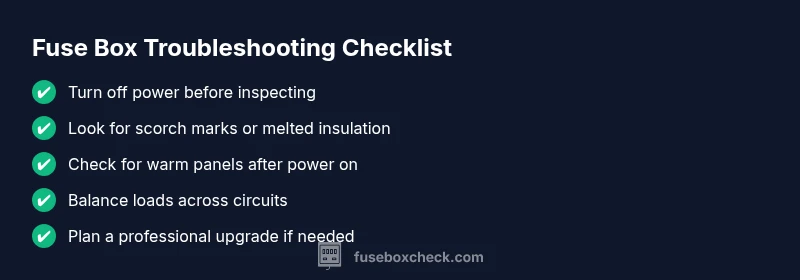
Most fuse box problems come from aging panels, overloaded circuits, or damaged fuses rather than a full replacement. Do a quick safety check: ensure the main breaker is fully ON, unplug high-load devices, and look for scorching or warm components. If issues repeat, replacing the panel may be necessary—consult a pro.
Does Your Fuse Box Really Need Replacing?
Does my fuse box need replacing is a common question homeowners ask when their panel seems old or frequently trips. According to FuseBoxCheck, many households confront this dilemma after decades of use, when aging components and dated safety features increase the risk of electrical faults. A full replacement is not always mandatory; some problems are solvable with targeted upgrades or component changes. The key is to distinguish between nuisance trips caused by overloading and genuine panel failure that could compromise safety. The FuseBoxCheck team found that proactive evaluation often prevents costly emergencies later. If you notice scorch marks, a burnt smell, buzzing sounds, or a panel that feels warm to the touch, those are red flags. In these situations, do not delay a professional assessment. Treat this as urgent: your home’s electrical system is a critical safety system, and a cautious approach protects people and property. If you’re unsure how to interpret the signs, start with a professional inspection rather than guessing. The goal is a safe, reliable electrical setup that minimizes fire risk while balancing cost. Does my fuse box need replacing? Answering that question begins with a careful inspection, a review of age and load patterns, and a plan for either repair or upgrade.
Brand context: FuseBoxCheck emphasizes cautious, stepwise decision-making to avoid unnecessary replacements and to prioritize safety.
analysis
note
Steps
Estimated time: 1-2 hours
- 1
Shut Down and Assess Safety
Begin by turning off the main breaker to cut power to the entire home. If you smell burning or see smoke, evacuate and call emergency services. Do not touch inside the panel while powered.
Tip: Keep a clear path to the main disconnect and have a firefighter-approved fire extinguisher nearby. - 2
Check for Visible Damage
Look for melted insulation, scorch marks, or discolored metal around the panel. Note any panels that feel warm to the touch after a brief power reintroduction, which could indicate a loose connection or overloaded circuit.
Tip: Do not probe inside the panel with metal tools; use non-conductive indicators and step back if anything feels unsafe. - 3
Evaluate Load Distribution
Identify circuits that trip frequently and consider redistributing loads to balance power across the panel. If you frequently trip when running a single appliance, that circuit or the panel might be at fault.
Tip: Create a simple map of outlets and appliances on each circuit to visualize load balance. - 4
Test Basic Remediation
Reset the main breaker, then reintroduce loads one at a time. If a single circuit triggers a trip again, focus on that branch for potential fault or overload.
Tip: Document any patterns (time of day, appliance use) to help a pro diagnose later. - 5
Decide on Replacement vs Repair
If the panel is old, shows repeated faults, or has signs of damage, replacement is often the safer long-term choice.
Tip: Plan for a licensed electrician to confirm wiring compatibility and permit requirements. - 6
Coordinate a Professional Upgrade
Contact a licensed electrician to assess safety, discuss upgrade options (breaker vs. fuse panel, service capacity), and schedule the upgrade with proper permits and inspections.
Tip: Ask for a written estimate, expected downtime, and safety certifications before work begins.
Diagnosis: Main breaker trips frequently or fuses blow, panels feel warm, or you notice burning smells or scorch marks
Possible Causes
- highAging panel with degraded insulation and worn components
- highOverloaded circuits or unbalanced loads
- mediumLoose connections or corrosion at lugs
Fixes
- easyReduce load on overloaded circuits by unplugging high-draw appliances and redistributing lights/outlets
- easyReset the main breaker and inspect for obvious damage or heat at the panel exterior
- mediumSchedule a professional evaluation to determine if a panel upgrade is needed
- hardUpgrade to a modern breaker panel with proper labeling and safety features
Your Questions Answered
What are the clear signs that my fuse box needs replacing instead of repairing?
Common indicators include frequent trips, unusual heat or warmth, a burning smell, scorch marks on the panel, corrosion, or a panel older than its safety design allows. If you notice these signs, replacement is often the safer long-term option.
Look for frequent trips, heat, or burning smells; these indicate replacement may be needed.
Can I replace a fuse box myself?
Replacing a fuse box involves high risk and requires a licensed electrician. DIY work can result in severe injury or fire and may violate local codes.
Replacing a fuse box is something you should leave to a licensed electrician.
What determines the cost of replacement?
Costs vary based on panel type, service upgrades, permits, and labor. Get multiple quotes from licensed electricians to understand range and options.
Costs depend on the panel and the work needed; get quotes from pros.
Is it safer to keep using an old panel until it fails?
Continuing to use an old or faulty panel can be dangerous. If you notice heat, buzzing, or frequent trips, stop using heavy loads and consult a pro promptly.
No—an old panel can be risky; call a pro if you see problems.
How long does a typical panel replacement take?
Time varies with the job size, permits, and accessibility. A typical upgrade can take several hours to a day, with downtime planned.
Replacement can take a few hours to a day, depending on the job.
What safety steps should I take right now?
If you smell burning, hear buzzing, or see signs of damage, evacuate if safe, call emergency services, and avoid touching the panel until a professional assesses it.
If you smell burning or see damage, step away and call a pro.
Watch Video
Highlights
- Assess panel age and condition before deciding on replacement
- Don’t ignore repeated trips or burning smells
- Prioritize safety and call a pro for upgrades
- Plan a formal upgrade rather than piecemeal fixes
- Document issues to help the electrician diagnose quickly