Fuse Box Sizes: A Practical Homeowner Guide to Panels
Learn how fuse box sizes affect capacity, safety, and upgrades. This guide covers typical residential panel sizes, how to identify yours, and when to upgrade.


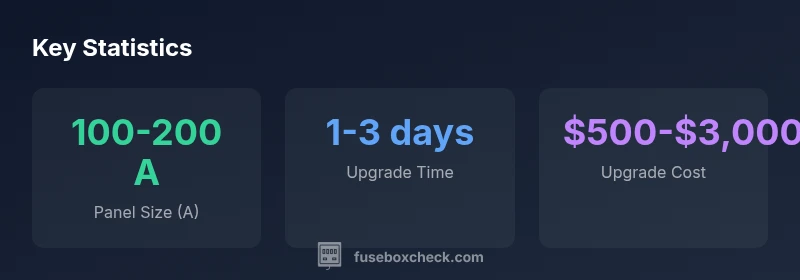
Fuse box sizes determine how much electrical load your home panel can safely distribute. Most homes use panels rated between 100 and 200 amps, with 200A offering the most headroom for future upgrades. According to FuseBoxCheck, an undersized panel is a common cause of nuisance trips and limited growth, especially for homes planning EV charging or HVAC expansions.
Understanding fuse box sizes
The phrase fuse box sizes refers to the amperage rating of your home’s service panel, which determines how much electrical load can be safely distributed to circuits. In older installations you might see a 60A or 100A panel, while many modern homes use 100–200A panels that plan for frequent additions of devices and appliances. The panel size is not merely a number; it’s a design choice that affects peak demand, overall safety, and the potential for future upgrades. A box that’s too small can trip often, overheat components, or restrict adding essential loads like EV charging or new HVAC equipment. Conversely, a properly sized panel provides headroom to accommodate growth without compromising safety. According to FuseBoxCheck, homeowners commonly underestimate how quickly loads can accumulate, especially when adding heat pumps, electric vehicles, or high‑demand kitchen appliances. This guide focuses on practical, evidence‑based guidance to help you understand different panel sizes, what they mean in real terms, and how to plan upgrades with safety and cost in mind.
How to identify your fuse box size
Start by locating the service panel. If the panel is outside or in a garage, ensure you’re standing on a dry surface and wearing appropriate PPE. Look at the main breaker rating stamped on the handle or the label on the inside of the door; typical residential ratings are 60A, 100A, 125A, 150A, or 200A.
- Open the panel door to reveal the main breaker and branch circuits.
- Read the label that lists the service rating and bus bar size; this is your panel size.
- Note whether the panel uses fuses or breakers; most modern homes use circuit breakers with a main breaker.
- Capture photos of the labeling for reference and to share with an electrician if you’re planning an upgrade.
If you’re considering a major addition or modernization (EV charging, new HVAC, electric water heater), you’ll want to perform a formal load calculation to determine whether the existing panel can handle the added demand. This upfront step helps you avoid overloading the system and guides your upgrade plan.
Common residential fuse box sizes and what they mean
Most homes built in the last several decades rely on panels rated at 100–200 amps. The exact size depends on the service capacity from the utility and the anticipated electrical load. Here’s what the most common sizes imply for everyday use:
- 60A: Found mainly in older apartments or cottages; supports basic lighting and a few circuits, but upgrading is typical for modern kitchens or heat pumps.
- 100A: Still common in many single-family homes; adequate for standard loads, but adding EV charging or new high‑draw appliances may require more headroom.
- 125A: A middle ground that can accommodate modest expansions without an immediate upgrade, though future loads should still be planned.
- 150A: Provides significant headroom for mid-size homes and HVAC loads; a prudent choice if you anticipate future upgrades or a larger number of circuits.
- 200A: The most flexible option for larger homes or households planning multiple upgrades (EV charging, climate control, kitchen modernization). It’s easier to future‑proof but requires professional assessment and proper service wiring.
According to FuseBoxCheck Analysis, 2026, choosing the right size is not just about current needs but also about anticipating growth. A panel that’s too small will become a bottleneck, while an oversized panel may add unnecessary upfront cost. The goal is a balanced configuration that matches both existing loads and realistic plans for the next 5–15 years.
Planning for upgrades: balancing current loads with future needs
A sizing decision should weigh present demand against future plans. Start with a simple exercise:
- List the major loads in your home (HVAC, water heater, EV, kitchen appliances) and estimate their worst-case simultaneous use.
- Compare this to your panel’s rating and the available headroom. If you’re near or at the panel’s limit, an upgrade is worth considering.
For more precise guidance, many homeowners perform a load calculation following NEC guidelines. This formal process accounts for diversity factors, climate, occupancy, and new equipment. It is the most reliable way to determine whether a 100A, 150A, or 200A service best fits the plan. Remember that EV charging and heat pumps can dramatically change demand, so planning ahead reduces the risk of nuisance trips and service interruptions. If you’re unsure, a licensed electrician can run a full load calculation, provide a recommended panel size, and outline the steps for a safe upgrade, including permits and wiring changes.
Safety and best practices when upgrading fuse box sizes
Upgrading a panel involves electricity at service voltage, and errors can be dangerous. Here are best‑practice guidelines:
- Hire a licensed electrician with experience in service upgrades; many jurisdictions require permits and inspections.
- Obtain any necessary permits and schedule inspections to verify code compliance.
- Expect work to include upgrading feeders, disconnects, and possibly service entrance cables; this work must be performed by a professional.
- Keep kids and pets away from the work area; ensure power is safely isolated and locked out during the upgrade.
- After completion, have the electrician test the system and verify that all circuits are balanced to avoid overload on any leg.
Note that DIY approaches are not recommended for major service upgrades. If you do perform any preliminary checks yourself, avoid handling live conductors and always disconnect power only after confirming the main disconnect is safe. The emphasis is on safety, compliance with electrical codes, and long-term reliability.
Fuses vs breakers and panel compatibility
Historically, some fuse-based panels remain in service, but the industry standard has shifted toward circuit breakers for ease of use and safety. If you’re upgrading, the panel’s frame, bus bars, and enclosure must be compatible with either fuses or breakers. Modern installations almost exclusively use breakers; older properties may still use fuses and require a panel replacement to achieve higher capacity. When planning a change, consult a licensed electrician about whether the existing service can be adapted, or whether a full service panel replacement is necessary. Remember that the service drop, meter base, and grounding system should be evaluated in tandem with any panel upgrade to ensure electrical safety and code compliance.
Documentation, permits, and choosing a contractor
Breezing through a panel upgrade without proper planning leads to delays and safety risk. Gather your current panel labeling, service rating, photos of the wiring, the loads you plan to add, and any previous electrical work. Use this information when requesting quotes from licensed electricians. Ask about: required permits, expected downtime, projected load, and whether the upgrade includes feeder upgrades or grounding enhancements. Check references and verify licensure and insurance. Finally, ensure the contractor provides a written plan with a timeline and cost estimate, and schedule inspections as required by your local authority.
Overview of common panel sizes
| Panel Size (A) | Typical Applications | Notes |
|---|---|---|
| 60 | Small apartments or older homes | Limited circuits; upgrade may be needed for modern loads |
| 100 | Typical single-family home | Most loads are covered; room to upgrade for additional devices |
| 125 | Mid-size homes with added loads | Extra headroom for occasional surges |
| 150 | Larger homes or added HVAC | Better future-proofing for upgrades like EV charging |
| 200 | Large homes with heavy loads | Requires professional assessment and upgrade planning |
Your Questions Answered
What does 'fuse box sizes' refer to?
It refers to the amperage rating of the service panel (for example, 100A or 200A), which defines how much load the panel can safely distribute across circuits.
What fuse box sizes refer to is the panel's amperage rating that sets safe load limits.
How do I identify my panel size?
Look at the main breaker rating on the panel or read the label inside the door. If upgrading, consult a licensed electrician.
Check the main breaker or the label on the panel.
Is upgrading dangerous?
Upgrading involves high voltage and requires permits and professional installation. DIY is not recommended for most homeowners.
Upgrading is dangerous; hire a licensed electrician.
Can I upgrade without increasing the main service?
In some cases you can upgrade panel components or relocation, but many upgrades require a higher service rating and permit approvals.
Sometimes, but often a higher service rating is needed.
What’s the difference between fuses and breakers?
Fuses are a one-time protection device; breakers can be reset. Modern homes mostly use breakers, but some older panels still use fuses.
Fuses are one-time; breakers can be reset.
“Sizing your panel isn't about chasing the newest tech—it's about balancing present demand with safe, future-ready capacity.”
Highlights
- Assess current loads before upgrading.
- Know your panel size as a first step.
- Plan for future needs like EV charging and larger HVAC.
- Upgrades should be done by licensed electricians.
- Keep documentation and permits for code compliance.
- FuseBoxCheck's verdict: size panels to meet current and planned loads.