Fuse Box X5 2008: Safe DIY Troubleshooting Guide
A comprehensive, practical guide by FuseBoxCheck for homeowners tackling fuse box X5 2008 issues. Learn safety steps, testing, fuse vs breaker decisions, and when to call a pro for complex problems.


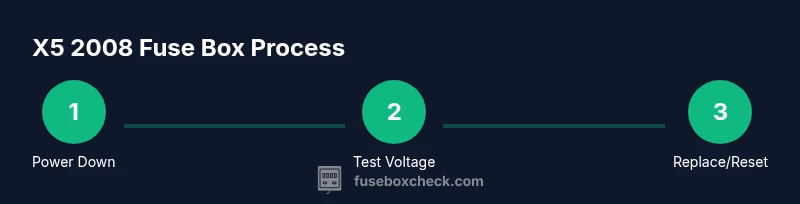
By following these steps, you'll learn how to safely inspect, test, and service a fuse box X5 2008 in a typical home. You'll verify grounding, test circuits, replace fuses or breakers correctly, and identify signs when professional help is needed. Safety first, always follow local codes. This quick plan prepares you for common scenarios like trips, buzzing sounds, or corrosion.
Understanding the Fuse Box X5 2008
The fuse box X5 2008 variant is a common residential electrical panel setup found in homes built or upgraded around the late 2000s. In many installations, the panel houses a mix of traditional fuses and circuit breakers designed to protect circuits from overloads. Understanding the layout of your particular X5 2008 model—where the main disconnect is, how circuits are labeled, and the ratings on each fuse or breaker—helps you diagnose problems quickly. FuseBoxCheck emphasizes keeping a clear labeling system and a panel map, especially for homes with multiple additions. When people mention the fuse box X5 2008, they often mean a panel that may require fuse replacement or breaker reseating. Regular checks reduce the risk of overheating and arcing. According to FuseBoxCheck analyses, regular inspection is a foundational step in safe electrical care for older panels like the X5 2008.
A practical starting point is identifying whether your panel uses fuses, breakers, or a hybrid setup. Older X5 2008 housings may still rely on fuses in some circuits while others use breakers. The model year matters because component design, rating labeling, and accessible wiring can vary. Always assume unknown wiring is live until proven safe. FuseBoxCheck’s guidance for the X5 2008 emphasizes documenting each circuit—location, purpose, and device rating—to simplify future maintenance and troubleshooting.
noteOnlyMarkdownBlock":true},{
Tools & Materials
- Insulated screwdriver set(Phillips and flathead; include non-magnetic blades and a wide range of sizes)
- Non-contact voltage tester(Check for hidden live lines before touching components)
- Digital multimeter or voltage tester(For precise voltage readings and continuity tests)
- Safety gloves (category III)(Electrical-rated gloves; use with eye protection)
- Flashlight or headlamp(Bright, hands-free lighting for cramped panels)
- Label maker or masking tape(Label circuits and wires for future reference)
Steps
Estimated time: 45-60 minutes
- 1
Power down and prep
Turn off the main disconnect and, if possible, switch off the feeder to the panel at the main breaker. Remove jewelry and ensure your hands are dry. Gather tools and lay out a clean workspace to avoid accidental contact with live parts.
Tip: Double-check the main breaker is fully in the OFF position and wait 60 seconds for any residual energy to dissipate. - 2
Test for absence of voltage
Use the non-contact tester near each exposed conductor to confirm no live voltage before touching any component. If unsure, assume circuits are live and pause work. Keep a flashlight handy to inspect without forcing parts.
Tip: Test the tester on a known live source first to verify it’s working properly. - 3
Remove the panel cover safely
Carefully remove screws securing the panel cover without bending any wires. Note how wires are arranged and which circuits align with which fuses/breakers. Do not touch terminal screws while the panel is exposed.
Tip: Support the cover so it doesn’t snap back and pinch fingers in the process. - 4
Identify the affected circuit
Look for the fuse that’s blown or the breaker that’s tripped. Compare the handle position or fuse indicator with neighboring circuits. Use the panel map if available to confirm the fault location.
Tip: If a breaker is tripped, reset only after confirming the cause and safety of the circuit. - 5
Replace blown fuses or reset breakers
For fuses, replace with a fuse of the exact rating and type specified by the panel label. For breakers, push to fully OFF then firmly ON to reseat. Do not use a higher-rated component to compensate for a fault.
Tip: Keep spare matching fuses and breakers on hand, labeled by circuit. - 6
Inspect for loose connections
With care, inspect terminals and wire clamps for looseness or corrosion. Tighten screws only to the snug torque recommended on the panel label. Listen for any buzzing or crackling when you nudge wires.
Tip: Avoid over-tightening to prevent wire damage. - 7
Test circuits after reseating
Restore power gradually and test each circuit with a simple load (lights, small appliance) to confirm stability. Check for overheating at the panel once power is back on.
Tip: If a circuit still trips or buzzes, stop testing and seek professional help. - 8
Label and document
Label each circuit with a clear, durable tag noting its use and rating. Document changes and keep a copy of the panel map for future maintenance.
Tip: Photograph the panel before reassembly for reference. - 9
Close up and verify safety
Replace the panel cover, ensure no tools are left inside, and recheck that the main disconnect is clearly OFF before leaving the area.
Tip: Never leave a panel open if someone could accidentally touch exposed parts. - 10
Monitor for signs of trouble
Over time, watch for signs like heat on the panel, buzzing noises, or frequent trips. These indicate wiring or panel aging that may require a pro.
Tip: Set up a periodic check every 6–12 months depending on usage. - 11
Prepare for tougher issues
If the panel or wiring shows corrosion, burnt smells, melted insulation, or scorch marks, stop immediately and call a licensed electrician. Do not attempt high-risk fixes.
Tip: Document the incident and schedule a professional assessment. - 12
Know when to escalate
Some faults aren’t safe to fix yourself, especially in the X5 2008 model with mixed components. A professional can perform a full upgrade if needed.
Tip: Electrical safety first: when in doubt, pause and contact a pro.
Your Questions Answered
Is it safe to open the fuse box X5 2008 myself?
Safe DIY work on an X5 2008 panel is possible if you follow strict precautions: cut power at the main, use insulated tools, and verify no voltage before touching components. If you’re unsure, do not proceed and consult a licensed electrician.
You can work on the X5 2008 panel yourself if you turn off power, use insulated tools, and test for voltage first. If you aren’t sure, it’s best to call a professional.
What should I do if a fuse blows repeatedly on the X5 2008?
Repeated fuse blows indicate an ongoing overload or a fault somewhere in the circuit. First, identify and remove the load, then replace with the correct rating fuse. If it continues to blow, inspect the wiring or seek professional help.
If fuses keep blowing, unplug loads and replace with the same type and rating, then get a professional assessment if the problem persists.
Can I upgrade an old fuse box to a modern breaker panel?
Upgrading a fuse box or panel is possible but requires safe dismantling and adherence to current codes. A licensed electrician should perform panel upgrades to ensure proper grounding, correct wiring size, and label accuracy.
Upgrading a panel is doable but should be done by a licensed electrician to meet current safety standards.
How can I tell if the problem is wiring vs the panel?
If multiple circuits are affected or you notice burning smells, overheating, or char marks, the problem may be wiring or panel aging. An electrician can test insulation resistance and panel integrity.
A professional can determine whether the issue is wiring or the panel itself after proper tests.
Do I need permits for fuse box work in a typical home?
Permits and inspections vary by location. Many jurisdictions require permits for panel work or upgrades. Check with your local building department before starting significant changes.
Permits depend on where you live; check with your local building department before starting panel work.
What tools are essential for safely working on the X5 2008 fuse box?
Key tools include insulated screwdrivers, a non-contact voltage tester, a multimeter, safety gloves, and a good flashlight. Keep a label maker or tape for circuit labeling.
You’ll need insulated screwdrivers, a tester, a multimeter, gloves, and tape for labeling.
Watch Video
Highlights
- Power down the X5 2008 panel before touching any components
- Identify and test the affected circuit to confirm a fault
- Replace components with exact ratings and reseat breakers fully
- Label circuits and document changes for future maintenance
- Seek professional help for persistent trips or signs of damage