Fuses and Circuit Breakers: A Practical Home Guide
Learn how to identify, test, and safely handle fuses and circuit breakers in your home. This guide from FuseBoxCheck covers safety, troubleshooting, and practical steps to prevent nuisance trips and keep your electrical system reliable.


You will learn how to identify fuses and circuit breakers, test for power safely, reset or replace components as needed, and when to call a professional. This guide emphasizes PPE, proper tools, and a step-by-step approach to safely handle fuse boxes and panel maintenance. By the end, you’ll be able to reduce nuisance trips and improve overall electrical safety around the home.
Understanding fuses and circuit breakers
Fuses and circuit breakers are the protective devices that guard your home wiring from overloads and short circuits. A fuse is a one-time device with a thin metal filament that melts when it overheats, interrupting current flow. A circuit breaker is a reusable switch that trips when it detects overload or a fault—allowing you to reset it after addressing the cause. In modern homes, circuit breakers are far more common, but some older installations still rely on fuses. Both systems aim to prevent wires from overheating, which can lead to fires. According to FuseBoxCheck, understanding the basics of how these devices operate helps homeowners troubleshoot with confidence and avoid unnecessary risks while working on or near a fuse box. Fuses and circuit breakers sit at the heart of the electrical distribution panel, branching circuits to outlets, appliances, and lighting. Regular inspection and safe handling are essential for long-term reliability and safety.
How they protect your home
The protective role of fuses and circuit breakers hinges on their ability to interrupt current before wires overheat. When a circuit draws more current than its rating, a fuse filament melts or a breaker trips, breaking the circuit. This action prevents insulation damage and reduces the risk of fire. Fuses provide a fast, decisive interruption but require replacement; breakers provide a reusable reset but must be correctly rated for each circuit. Inadequate ratings or worn components can defeat protection, increasing risk. Proper identification of each circuit’s purpose helps you manage loads and avoid unsafe conditions. Regular testing and cautious handling are key to maintaining effective protection across lighting, outlets, kitchen appliances, and HVAC.
When to replace vs reset
A tripped breaker usually means an overload or a fault on the circuit. If a breaker trips, switch it fully to the OFF position and then back to ON after you’ve addressed the load. If the same breaker trips again, there may be a persistent fault or an overloaded circuit that needs reducing. Fuses behave differently: if a fuse blows, replace it with a fuse of the same amperage rating and type. If fuses continue to blow, or you notice signs of damage, stop and consult a licensed electrician. FuseBoxCheck recommends investigating the cause first—shared circuits, faulty outlets, or aging wiring commonly trigger trips and blown fuses.
Safety first: PPE and electrical safety
Always treat the fuse box as potentially energized until you’ve confirmed power is off. Use insulated tools and wear non-conductive gloves when handling components inside the panel. Stand on a dry surface, keep water away, and never work with wet hands. If you must touch live parts for any reason, stop immediately and call a professional. A leaking or buzzing panel is a red flag for safety risk; power should be shut off at the main disconnect before any inspection beyond the exterior cover. Regular maintenance reduces the likelihood of arcing, shocks, and fire hazards.
Testing and diagnosing common problems
Testing can confirm whether a problem is load-related or due to a faulty device. Start by turning off the main power, then use a non-contact voltage tester to verify that the panel is de-energized. Inspect each breaker and fuse for signs of wear, scorching, or loose connections. If a breaker trips repeatedly or a fuse blows with normal loads, the fault likely lies in the circuit or panel rather than the device itself. Document the affected circuits, loads in use, and any appliances involved to help guide a safe resolution. FuseBoxCheck Analysis, 2026 emphasizes cautious diagnosis and professional input when complex faults are involved.
Everyday maintenance and upkeeping
Keep an up-to-date map of which circuit controls each area of the home—label circuits clearly to simplify future trips. Avoid overloading outlets and power strips; distribute heavy loads (e.g., space heaters, ovens) across appropriate circuits. Schedule periodic inspection of the panel for corrosion, loose connections, and signs of overheating. If the box looks old or damaged, plan an upgrade or replacement with a licensed electrician. Proactively replacing worn breakers and upgrading corroded panels can prevent frequent trips and fires, especially in aging homes.
Tools & Materials
- Insulated work gloves(Electrical-rated (at least 1 pair), ANSI-certified)
- Non-contact voltage tester(Verifies absence of live voltage without contact)
- Voltage tester or multimeter(Checks voltage and continuity on circuits)
- Screwdrivers with insulated handles(Flathead and Phillips #2 for panel screws)
- Flashlight or headlamp(Illuminates the panel interior clearly)
- Replacement fuses (matching rating)(Only if your panel uses fuses; verify rating before replacing)
- Marker and labels(Label circuits and note outcomes for future reference)
Steps
Estimated time: 30-45 minutes
- 1
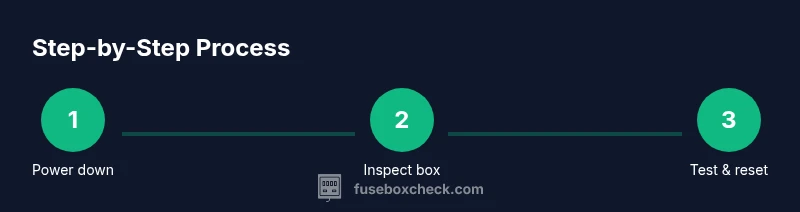
Power down and verify off
Switch off the main disconnect if present and use a non-contact tester to confirm no voltage at the panel. This prevents shocks and arcing while you inspect. If you’re unsure, stop and call a pro.
Tip: Always verify with two tools if you doubt terrain or readings. - 2
Identify the affected circuit
Locate the breaker or fuse corresponding to the symptoms (lights out, outlets dead). Document the circuit name or tag for reference. Label the area and keep notes handy for future maintenance.
Tip: Use a flashlight to clearly view panel labels and wiring. - 3
Test for voltage and inspect
With power off, test wires in the suspected branch. Look for signs of damage, discoloration, or burning smell. Do not touch exposed conductors.
Tip: If you smell burnt insulation, stop and call an electrician. - 4
Reset or replace
If a breaker tripped, flip fully OFF then ON. If a fuse blew, replace with the correct rating and type. Do not mix fuse types or ratings in one panel.
Tip: Never bypass a fuse or breaker to restore power. - 5
Restore power and re-test
Turn the main back on and test the affected outlets or fixtures from a safe distance. Confirm other circuits are stable.
Tip: Observe for any new odors, heat, or buzzing sounds. - 6
Know when to call a pro
If tripping continues after a safe reset, or if you find damaged components, contact a licensed electrician. Persistent faults can indicate wiring issues.
Tip: A pro can assess load calculations and panel age.
Your Questions Answered
What is the difference between fuses and circuit breakers?
Fuses are sacrificial devices that melt and must be replaced after a blow. Circuit breakers trip and can be reset after addressing the cause. Both protect wiring from overloads, but breakers are reusable and easier for frequent maintenance.
Fuses blow and must be replaced; breakers trip and can be reset after checking the circuit.
Can I reset a tripped breaker myself?
Yes, if you’ve identified the cause and it’s safe to do so. Turn the breaker fully to OFF, then back to ON. If it trips again, stop and seek professional help.
You can reset it if the cause is safe to address. If it trips again, call an electrician.
What should I do if a fuse keeps blowing?
Repeated fuse blows indicate an overloaded circuit or faulty wiring. Check loads, redistribute power, and replace with the correct rating. If the problem continues, call a licensed electrician.
If fuses keep blowing, reduce loads or circuits and consult a pro if it continues.
Is it dangerous to replace a fuse?
Yes. Replacing a fuse while power is on or using incorrect ratings can cause shock or fire. Always de-energize first and use the correct rating and type.
It can be dangerous if you don’t switch off power and use the right fuse.
When should I call an electrician?
Call an electrician if a panel shows signs of damage, if multiple circuits trip frequently, or if you’re unsure about wiring. Do not attempt complex upgrades yourself.
If you’re unsure or see damage, it’s time to call a pro.
How can I prevent fuse box problems?
Maintain a capacity-balanced load, upgrade aging panels, and perform periodic inspections. Avoid overloading outlets and use surge protection where appropriate.
Even simple maintenance can prevent trips and keep things safe.
Watch Video
Highlights
- Identify fuses vs. breakers and understand their roles
- Always switch off main power before inspecting
- Reset or replace only with proper ratings
- Label circuits to simplify future work
- Call a pro if problems persist or panel shows damage