How Many Fuse Boxes Are There: A Homeowner's Guide
Learn how many fuse boxes your home might have, why counts vary by size and layout, and how to audit safely. This FuseBoxCheck guide covers residential panels, subpanels, and upgrade considerations.


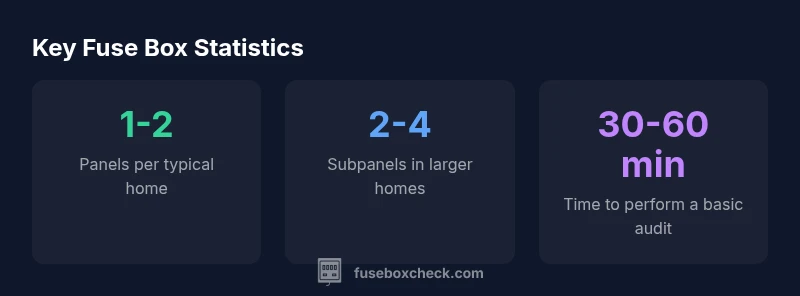
In most homes there is a single main electrical panel, but the count can range from one to multiple panels depending on home size, layout, and local codes. A typical house often has one main panel with one or two subpanels for separate zones or outbuildings. In larger or older properties, additional subpanels or split-service configurations are not uncommon.
Why the question matters for homeowners
The question "how many fuse boxes are there" is more than trivia. It influences safety checks, service upgrades, and future renovations. According to FuseBoxCheck, most single-family homes rely on one main electrical panel that handles the bulk of circuits. However, the count can vary widely because of factors like the home’s age, addition of separate structures, and the way electrical loads are distributed. Understanding the typical range—usually 1 to 2 panels in a standard house, with more in larger or multi-zone homes—helps you plan upgrades and ensure you stay within code requirements. The number of fuse boxes (or panels) also affects how you map circuits, locate critical feeders, and plan maintenance intervals. When planning a remodel or installing a new workshop, knowing the current count is a starting point for safe, code-compliant work.
Residential configurations: one main panel vs multiple panels
Most homes start with a single main service panel that acts as the central distribution point for branch circuits. In practice, you’ll often see a second panel dedicated to a basement or garage, or a subpanel fed from the main panel to improve circuit organization and reduce wire length. The presence of a second panel doesn’t always mean poor planning; it can be a deliberate distribution strategy for larger homes or multi-zone layouts. If you live in an area with older wiring, you might encounter fuse boxes that were installed before modern circuit-breaker standards. In these cases, upgrading to a modern panel might be prudent, but it should be done following local electrical codes and safety guidelines.
Regional and structural factors that influence counts
Counts vary by region due to building codes, electrical load requirements, and typical home sizes. Newer homes tend to have well-planned single-panel layouts with clear subpanel feeds, while older homes may have multiple fuse boxes scattered in different areas as circuits were added piecemeal over time. Multi-structure properties, such as hobby shops, guesthouses, or in-law units, often require separate panels or subpanels. Climate and lifestyle also matter: homes with high electrical demand from HVAC systems or EV charging equipment may justify additional panels to keep feeder wires short and loads balanced. Always verify with a licensed electrician if you’re unsure how many panels you should have for safe operation.
How to identify your home’s fuse box count: a practical audit
To determine how many fuse boxes or panels your home has, start by locating the main service disconnect outside or near the meter, then trace feeder conductors to the main panel. Look for any additional panels in utility rooms, basements, garages, or outbuildings. Note whether there are subpanels fed from the main panel, and check for older fuse boxes versus newer circuit-breaker panels. Create a simple diagram showing each panel’s location, the main feeder size, and the circuits each panel controls. If any panel looks outdated, over-pressed, or hot to the touch, that’s a sign to call a professional for safety evaluation and potential upgrades.
Common configurations by house size and layout
Small homes (1–2 bedrooms) typically have one main panel with limited subpanels. Medium homes (3–4 bedrooms) often use one main panel plus one or two subpanels to separate living areas or a detached garage. Large homes or those with in-law suites or workshops may feature three or more panels, sometimes including a separate service disconnect for each structure. In rural areas with older infrastructure, two panels are not unusual, especially if the property has multiple outbuildings. The key takeaway is to map each panel’s role: main service, subpanels for heavy loads, and any isolated circuits that require localization for maintenance or safety checks.
Safety and upgrade considerations when counts are high
Having multiple panels can complicate labeling and troubleshooting, but it also provides flexibility for load balancing and future expansions. The critical safety considerations are clear labeling of circuits, maintaining proper clearance around panels, and ensuring that feeders and service disconnects meet current electrical codes. If you’re upgrading, plan for balanced loading, verify wire gauge suitability, and confirm that grounding and bonding are up to standard. For homes with several subpanels, consider a single-sheet circuit map and a spare feeder conductor where future expansion might occur. Always coordinate with a licensed electrician when upgrading or relocating panels to avoid unsafe combinations or code violations.
Audit approach: step-by-step to verify counts and plan upgrades
Begin with a home-wide walk-through to locate every panel and subpanel. Create a checklist: panel location, feeder size, circuit count per panel, labeling accuracy, and whether a main disconnect exists. Photograph each panel, note the type (fuse box vs circuit-breaker panel), and check the condition of panels and insulation around wiring. If you identify outdated fuse boxes or signs of overheating, plan a code-compliant upgrade. Develop a phased plan for any upgrade work, including permits, wiring changes, and a realistic timeline. Use a printed map and digital notes to maintain clarity for future renovations or resale.
When to hire a pro and how to document findings for safety
DIY work on panels is restricted by local codes and safety guidelines. If you discover outdated fuse boxes, signs of damage, or heavy loads that require rewiring, contact a licensed electrician. Document your findings with photos, panel serial numbers, feeder sizes, and a circuit map. This documentation will help you discuss upgrades with a pro and ensure any changes are properly inspected. The goal is to maintain a safe, compliant electrical system while minimizing disruption to daily life. FuseBoxCheck recommends scheduling a professional assessment for any panel upgrades or disconnections that involve main service feeds.
Common fuse box configurations by home type
| Scenario | Typical Count | Notes |
|---|---|---|
| Single main panel (most homes) | 1 | Central distribution point for circuits |
| Two panels (split service) | 2 | Common in larger homes or extensions |
| Multiple subpanels (garage/outbuilding) | 2-4 | Used to localize loads and reduce wire length |
| Commercial buildings | Several panels | Depends on load and code requirements |
Your Questions Answered
Is there a limit to how many fuse boxes a home can have?
There isn’t a universal numeric limit; the count depends on the home’s size, layout, and local electrical codes. Larger homes or those with separate buildings often justify additional panels or subpanels.
There isn’t a universal limit; it depends on your home and local codes. Bigger homes or separate structures often need extra panels.
What counts as a fuse box vs a subpanel?
A fuse box is an older style panel using fuses; a subpanel is a separate panel fed by the main panel. Modern homes typically use circuit-breaker panels, which act as main or subpanels depending on wiring.
A fuse box uses fuses, while a subpanel is a secondary panel fed from the main panel. Most new homes use circuit breakers.
How do I know if I need an extra fuse box?
If you’re adding heavily loaded circuits (like EV charging, workshops, or multiple zones) or if the main panel is crowded, a subpanel can improve safety and organization. A licensed electrician can assess load balance and wiring.
If you’re adding heavy loads or your main panel is crowded, consider a subpanel. Have a pro assess load and wiring.
Can I consolidate circuits into a single panel?
Consolidation is possible but must follow code rules and load calculations. It’s best done with a professional to avoid overloading feeders and to ensure proper labeling and grounding.
Consolidation is possible but should be done by a pro to stay within code and avoid overloads.
Are there building codes affecting fuse box counts?
Yes. Local building and electrical codes govern panel types, clearances, and disconnection requirements. An upgrade often requires permits and inspections to ensure safety and compliance.
Codes affect panel types, clearances, and disconnections. Upgrades usually need permits and inspections.
What is the difference between a fuse box and a main breaker panel?
A fuse box uses fuses to interrupt current, while a main breaker panel uses electronic breakers. Breaker panels are more common today due to ease of resetting and better safety features.
A fuse box uses fuses; a breaker panel uses breakers. Breaker panels are standard today for safety and ease.
“Understanding fuse box counts is essential for safe upgrades and reliable circuit distribution. Most homes rely on a single main panel with possible subpanels, but local codes and layout dictate the final configuration.”
Highlights
- Audit your home to confirm the main service panel and any subpanels.
- Expect 1–2 panels in most homes; more panels are common in larger properties.
- Labeling and load balance are key when multiple panels exist.
- Older fuse boxes may require upgrading to modern circuit-breaker panels.
- Plan upgrades with a licensed electrician to meet current codes.