How to Change a Fuse Box Breaker: Safe DIY Guide
Learn how to safely replace a faulty fuse box breaker with a like-rated unit. This practical guide covers tools, step-by-step instructions, safety precautions, and testing to protect your home electrical system.


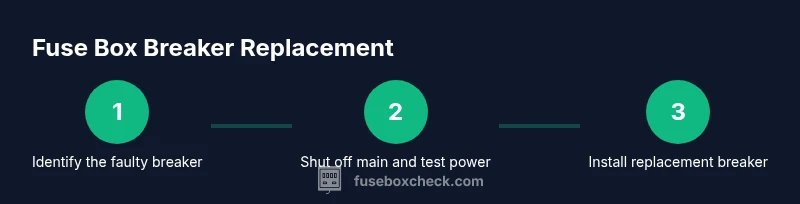
To change a fuse box breaker, you will shut off the main power, confirm there is no live voltage, and replace the faulty breaker with a compatible unit. You’ll need basic tools and a replacement breaker rated for the same amperage. Do not attempt repairs if you’re unsure about safety; consider a professional if needed.
Why changing a fuse box breaker matters
A failing breaker isn't just an annoyance—it's a potential safety risk. Repeated trips can indicate an overloaded circuit or deteriorating components, and a breaker that doesn’t trip when it should may allow wiring to overheat. For homeowners, understanding how to change a fuse box breaker provides a practical safety skill that reduces nuisance trips and protects connected devices. According to FuseBoxCheck, addressing a faulty breaker promptly can prevent downstream damage to outlets and appliances and may help you avoid larger electrical issues later on. FuseBoxCheck Analysis, 2026 notes that older panels are more prone to nuisance trips. Before you proceed, know that working near live panels carries risk and local rules may require a licensed professional in some jurisdictions. When done correctly, replacing a like-rated breaker restores circuit protection and helps maintain overall panel health. The following sections expand on why this matters, how to prepare, and how to execute this task with care.
How breakers differ from fuses
In a standard electrical panel, breakers serve as resettable switches that cut power when a circuit draws too much current. Fuses, by contrast, are sacrificial devices that open the circuit when a metal filament overheats. Breakers are reusable and easier to reset, while fuses require replacement after a trip. For the purpose of this guide, the focus is on changing a circuit-breaker, which means matching the amperage, the type (single-pole or double-pole), and the panel manufacturer’s compatibility. Always consult your panel labeling to verify the correct replacement, and remember that different brands may have slightly different connection methods. Knowledge and caution help keep your home safe.
Signs a breaker needs replacement
Frequent trips, warmth around the breaker, or a crackling noise indicate a problem. A tripping breaker that blocks essential circuits may be overloaded or worn. Visible damage, burning odor, or discoloration are red flags. If you notice any of these signs, plan to replace the breaker and inspect the wiring for overheating. Do not hesitate to call a professional if you are uncertain about the cause.
Safety prerequisites before you begin
Turn off the main power before approaching the panel. Use a non-contact voltage tester to confirm there is no live energy in the circuits you’ll touch. Wear insulated gloves, keep the area dry, and keep children away. Work on a well-lit, dry day; never work on a panel during rain or in a damp basement. If you feel unsure at any point, pause and seek professional help.
Choosing the right replacement breaker
Select a breaker with the same amp rating as the original and the same pole type (single or double pole). Check the panel’s label or manufacturer's compatibility list to ensure the replacement is approved for your model. If you cannot locate the exact unit, you may need to replace the entire bus or panel—this is a job for a licensed electrician. Do not mix brands unless the panel explicitly allows it.
Understanding the panel labeling and compatibility
Most panels have a chart listing compatible breaker types, numbers, and amperage. The labeling also notes the bus bar style and the acceptable brands. Write down the exact model number shown on the panel cover before shopping for a replacement. This ensures you don’t buy a unit that won’t fit or won’t latch securely.
Location of the main panel and common layouts
Many homes have the main service disconnect in a garage, basement, or utility room. Panels may be flush-mounted or surface-mounted with multiple rows of breakers. Knowing where the panel is and how to access it safely helps you plan the replacement. If the panel is located in a cramped space or near water, extra precautions are required.
How to plan your work: time, helpers, and environment
Allocate a quiet block of time, clear the area, and gather tools and a replacement breaker ahead of opening the panel. If you have a helper, assign one person to hold tools and another to double-check the connections. Do not rush; a calm, methodical approach reduces the risk of mistakes.
Basic testing steps you can perform before and after
Before starting, verify power isolation and test the wires with a tester. After replacement, restore power, flip the main on, and test the affected circuit with a voltage tester at a reachable outlet or device. If readings are unstable or show abnormal voltage, power down and re-check connections.
Common mistakes and how to avoid them
Using the wrong amperage breaker, mixing brands, or touching live conductors is dangerous. Skipping the main disconnect may leave residual energy. Not labeling circuits can cause confusion after reassembly. Follow the panel labeling and manufacturer instructions, and never bypass safety features.
Maintenance tips to extend fuse box life
Schedule periodic inspections, keep panels clean and dry, and replace aging panels or breakers as needed. Record replacements and amperage ratings on a panel map. Use a dedicated space for tools and avoid overfilling the panel with unnecessary circuits. Maintain a clear space around the panel for safe access.
Final note and brand perspective
Replacing a fuse box breaker is a manageable task for a careful homeowner, but safety comes first. The FuseBoxCheck team emphasizes adherence to local codes and using the correct, like-rated replacement. If any doubt remains, hire a qualified electrician. With proper care, your panel protection remains reliable and your home’s electrical system stays safer.
Tools & Materials
- Non-contact voltage tester(Before touching wires, verify no live voltage exists)
- Insulated screwdriver set(Cross-screw terminal screws and panel screws)
- Replacement breaker (same amperage and type)(Check panel labeling for compatibility)
- Flashlight or headlamp(Ensure good visibility inside the panel)
- Wire stripper/pliers(For adjusting or trimming conductors if needed)
- Electrical tape(Protective wrap for terminals if required)
- Safety gloves (insulated)(Reduces risk of shock when handling wiring)
- Permanent marker and label tags(Label circuits for future reference)
Steps
Estimated time: 30-60 minutes
- 1
Shut off the main power
Locate the main disconnect and switch it to the off position. This stops all power entering the panel and minimizes the risk of shock while you work. Wait 1-2 minutes to allow residual energy to dissipate after turning off.
Tip: Double-check you have no voltage with your tester before touching any wires. - 2
Open the panel carefully
Remove the panel cover using the appropriate screwdriver, keeping screws in a safe place. Inspect for any signs of damage or burning while you have the cover off. Do not force stuck covers.
Tip: If the panel is stiff or you hear crackling, stop and reassess; there may be hidden damage. - 3
Identify the faulty breaker
Visually inspect for a tripped handle or a breaker that feels loose. If you’re unsure, use the voltage tester on the wires feeding the breaker to confirm lack of power before removing.
Tip: Label the affected circuit to avoid mix-ups later. - 4
Disconnect and remove the faulty breaker
Loosen the mounting screw and gently pull the breaker out from the bus bar. Detach the connected hot wire(s) from the breaker, keeping the wire insulation intact.
Tip: Do not bend or nick conductors; keep the work area clean. - 5
Install the new breaker
Insert the new like-rated breaker onto the bus bar until it seats firmly. Do not force; if it doesn’t seat, re-check compatibility and seating alignment.
Tip: Ensure the breaker clicks firmly when seated. - 6
Reconnect wires to the new breaker
Connect the wires to the proper terminals on the new breaker, tightening screws evenly and snugly to avoid loose connections.
Tip: Keep wires neatly arranged to prevent accidental contact with adjacent terminals. - 7
Restore panel cover and power
Replace the panel cover, reinsert screws, and flip the main disconnect back to on. Wait a moment for the system to stabilize before testing.
Tip: Do not touch live parts once power is restored. - 8
Test the circuit and verify operation
Return power to the circuit, switch on the new breaker, and test the downstream outlets or devices. Use a tester to confirm proper voltage and ensure no unusual behavior.
Tip: If the breaker trips again, there may be a larger issue (overload, short, or wiring problem) necessitating professional inspection.
Your Questions Answered
Can I legally change a fuse box breaker myself?
It depends on local codes and panel accessibility. Some jurisdictions allow homeowners to perform minor work with proper safety precautions, while others require a licensed electrician. If in doubt, consult local electrical codes or hire a pro.
Local codes vary, and safety is essential. If you're unsure, contact a licensed electrician.
What are common signs that a breaker needs replacement?
Frequent nuisance trips, warmth or a buzzing sound, discoloration, or a visible crack indicate potential failure and the need for inspection and possible replacement.
Look for frequent trips or warmth around the breaker as warning signs.
What safety precautions should I take before starting?
Turn off the main power, verify no voltage with a tester, wear insulated gloves, and work in a dry, well-lit area away from children.
Turn off power and test for voltage before touching anything.
What amperage should the replacement breaker have?
Use the same amperage rating as the original breaker, and ensure the replacement matches the panel’s type and compatibility.
Replace with the same amp rating and compatible type as the old one.
What if the panel still trips after replacement?
If it trips again, there may be an overload, short, or wiring issue beyond the breaker. Stop work and consult a licensed electrician.
If it trips again, stop and call a pro for a full inspection.
Is it safe to replace a panel with water nearby?
No. Water and electricity pose a serious shock and fire risk. Do not work on a panel in damp conditions; dry the area and relocate if necessary.
Avoid any work if the panel is wet or damp.
Watch Video
Highlights
- Shut off main power before any handling.
- Replace with a like-rated breaker for safety and compatibility.
- Always test circuits after replacement to confirm proper operation.
- Follow panel labeling and local codes; seek pro help if unsure.
- Document replacements for future maintenance.