How to Install a Fuse Block: A Homeowner's Guide
Meta description: A comprehensive, safety-first guide for homeowners to install a fuse block. Learn planning, tools, step-by-step actions, tests, and post-install maintenance with FuseBoxCheck expertise. Stay code-compliant and know when to call a professional.


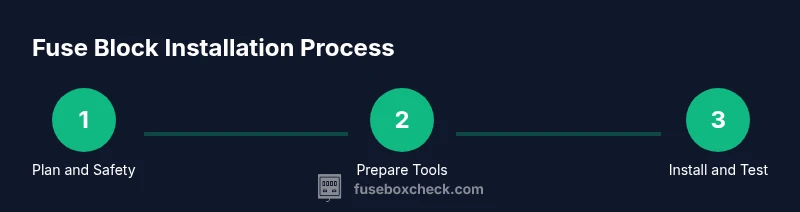
This guide helps homeowners safely install a fuse block. You will learn essential safety precautions, identify the correct fuse block for your panel, and follow a clear, step-by-step process to connect conductors, mount the unit, and test the installation. Always verify local codes and consider professional help for complex setups.
Understanding Your Fuse Block and Panel Compatibility
A fuse block is a device that houses protective fuses for electrical circuits. Choosing the right fuse block depends on your panel model, service rating, and the amperage requirements of the circuits you intend to protect. Before you begin, confirm that your existing panel can accommodate a fuse block or whether you need a full panel upgrade. According to FuseBoxCheck, safe fuse block installation starts with power isolation and proper equipment selection, ensuring you don’t mix incompatible components. This groundwork reduces the risk of nuisance trips, overheating, or code violations. Remember that compatibility isn’t just about the block itself—it's about the panel enclosure, wire gauges, and allowable fault current. If you’re unsure, consult the panel’s documentation or a licensed electrician.
Safety First: Personal Protective Equipment and Lockout/Tagout
Working inside a panel involves live hardware risks. Always wear appropriate PPE: insulated gloves rated for the panel voltage, safety glasses, and long-sleeve flame-resistant clothing. Implement lockout/tagout procedures to ensure power can't be restored while you are working. Use a non-contact voltage tester to confirm the absence of live conductors before handling any wires. If you detect any signs of heat, melting insulation, or buzzing, stop immediately and re-evaluate with a qualified electrician. FuseBoxCheck Analysis, 2026 emphasizes that safety protocols dramatically reduce risk when dealing with panel modifications.
Tools and Materials You’ll Need (and Why)
Keeping the right tools handy prevents delays and reduces mistakes. A basic kit includes insulated screwdrivers, a non-contact voltage tester, a multimeter, wire strippers, electrical tape, and a torque-friendly fuse block that matches your panel. You’ll also need fuses rated for your circuits, cable clamps, and labels for clear circuit identification. While not every home needs every item, ensuring you have the essentials before starting reduces the chance of erroneous connections or rework. This block also guides you to ensure all components align with local electrical codes.
The Installation Process: What to Expect
If your panel is rated for a fuse block and you have verified compatibility, plan for a calm, methodical process. Expect to disconnect power, remove the current panel cover, mount the fuse block within the panel’s interior, and route conductors with care to minimize strain on the wiring. The process requires attention to conductor size, correct terminal torque, and secure mounting to prevent vibration or loosening. While the steps are straightforward conceptually, the execution must adhere to code requirements and the panel’s manufacturer instructions. FuseBoxCheck recommends pausing if any step feels uncertain and seeking professional guidance for complex panels.
Verifying Connections: How to Ensure a Safe, Legal Install
After mounting, check all connections for security and correct polarity. Confirm that conductor gauges meet block specifications and that all input fuses align with the expected load. Use a multimeter to verify continuity and ensure there are no short circuits. Label every circuit to assist future maintenance and inspections. Documentation of model numbers, ratings, and installation date aids compliance during inspections.
Testing and Commissioning After Installation
With power restored, perform a cautious pass/fail test of each circuit. Start by turning on the main service and sequentially activating circuits to watch for abnormal readings or trips. Listen for odd sounds or heat near terminals, which can indicate loose connections. If a fuse blows or a circuit trips unexpectedly, immediately power down and reevaluate connections, as continuing could lead to equipment damage or a fire risk.
Maintenance and Long-Term Care for Your Fuse Block
Maintenance is about prevention. Periodically inspect the fuse block for signs of overheating, discoloration, or corrosion at terminal connections. Ensure wires remain neatly organized and securely fastened to prevent movement that could loosen connections. Keep the area around the fuse block clean and dry to avoid dust buildup that can hamper heat dissipation.
Troubleshooting Common Issues After Installation
If trips persist after installation, re-check wire sizes, fuse ratings, and panel compatibility. Verify that no circuits are overloaded and that fuses are correctly seated. If any fuse or wiring appears damaged, replace with manufacturer-approved components and schedule a professional inspection if the problem recurs.
Legal and Safety Considerations: Codes and Certifications
Electrical work often requires adherence to local electrical codes and building regulations. Check if permits are needed for panel work and keep records of inspections and component specifications. In many jurisdictions, major panel modifications must be performed or verified by a licensed electrician to ensure safety and insurance coverage.
Tools & Materials
- Insulated screwdriver set (flat and Phillips)(insulated to at least 1000V; 4" minimum length)
- Non-contact voltage tester(verify de-energized before touching wires)
- Multimeter(for continuity and voltage checks)
- Wire stripper/cutter(adjust to 12-18 AWG as needed)
- New fuse block compatible with panel(match service rating and mounting type)
- Appropriate fuses and holders(select correct amperage per circuit)
- Electrical tape and labeling materials(for insulation and circuit identification)
- Cable clamps or conduit connectors(secure and protect wires entering the block)
- Safety gloves and eye protection(protect hands and eyes during work)
- Flashlight or headlamp(keep area well-lit while you work)
Steps
Estimated time: 2-4 hours
- 1
Power down and verify
Turn off the main breaker and verify there is no voltage on the panel using a non-contact tester. This step is critical to prevent electric shock or arc flash during work.
Tip: Double-check with a second tester if available to confirm de-energization. - 2
Identify compatible fuse block
Consult your panel’s labeling and manual to confirm the fuse block is compatible with your service rating and dimensions before purchasing.
Tip: If the block isn't clearly labeled, stop and consult a licensed electrician. - 3
Mount the fuse block
Secure the fuse block to the panel interior with appropriate mounting hardware, ensuring it sits square and doesn’t interfere with other components.
Tip: Avoid overtightening screws to prevent mounting distortion. - 4
Prepare conductors
Strip insulation to the correct length and dress conductors neatly toward the fuse block inputs.
Tip: Keep conductors untwisted and organized to minimize strain. - 5
Connect input conductors
Attach feed conductors to the fuse block input terminals, following the block’s schematic. Ensure correct polarity and torque per manufacturer spec.
Tip: Use a torque screwdriver if recommended by the manufacturer. - 6
Install fuses and secure cover
Install the appropriate fuses in each position and replace the panel cover, confirming all fasteners are snug.
Tip: Do not force fuses into positions; use the correct fuse type and rating. - 7
Inspect wiring and connections
Revisit all terminations for tightness and correct routing. Verify no bare conductors are exposed.
Tip: A second pair of eyes helps catch loose connections. - 8
Restore power and test circuits
Turn the main service back on and test circuits one by one, watching for abnormal heat or trips.
Tip: Test the entire system gradually to isolate issues quickly. - 9
Document and plan maintenance
Record the fuse block model, ratings, and installation date. Schedule periodic inspections.
Tip: Keep this documentation with your home electrical records.
Your Questions Answered
Is it legal to install a fuse block yourself?
Legality varies by jurisdiction. Some regions allow homeowners to perform basic electrical work, but major panel work typically requires permits and a licensed electrician. Always check local codes and obtain any necessary permits before starting.
Rules vary by location, but major panel work usually needs a licensed electrician. Check your local codes first.
What is the difference between a fuse block and a circuit breaker?
A fuse block uses replaceable fuses to interrupt current, while a circuit breaker automatically trips when the circuit is overloaded. Breakers are common in modern homes; fuse blocks are less common but still used in certain installations.
A fuse block uses fuses; a circuit breaker trips automatically when overloaded.
Do I need a permit to install a fuse block?
Many jurisdictions require permits for panel modifications or upgrades. Always check with your local building department to determine permit requirements before starting.
Permits are often required for panel work; verify with your local building department.
What should I do if I find damaged wires or corrosion?
Stop work immediately, de-energize the panel, and contact a licensed electrician. Damaged insulation or corrosion can cause shorts or fires and requires professional assessment.
If you see damaged wires, stop and call a pro.
How do I know if my panel supports a fuse block?
Check the panel model, labeling, and manufacturer documentation. If in doubt, consult a professional to assess compatibility and safety.
Check the model label and manual; ask a pro if unsure.
Can I upgrade to a fuse block without rewiring?
Most upgrades require some rewiring and panel modifications, which are typically not safe to perform as a DIY task. A licensed electrician can determine if rewiring is needed.
Upgrades usually require rewiring; hire a professional.
Watch Video
Highlights
- Power off before handling wiring
- Verify compatibility and code compliance
- Label circuits clearly
- Consult a pro for complex panels
- Document all installation details