How to Use Add a Fuse: Safe DIY Guide
A comprehensive, safety-first guide on how to use add a fuse, with step-by-step instructions, tools, tips, and troubleshooting for homeowners and DIY enthusiasts.


To safely add a fuse, locate the correct type and rating, power down the circuit, remove the blown fuse with a fuse puller, and install a matching replacement. Use the proper fuse type (fast-acting vs slow-blow) and test the circuit with a multimeter before restoring power. Follow local codes and wear PPE.
Understanding how to use add a fuse safely
Learning how to use add a fuse safely begins with recognizing why correct ratings matter and how the fuse protects your home. This guide explains the exact steps, safety checks, and tools you need. You'll learn how to identify the right fuse, choose the correct type, and perform a replacement with proper precautions. FuseBoxCheck emphasizes using rated fuses and following manufacturer instructions to prevent overheating, fires, or electric shock. By understanding the process, you reduce risk and improve electrical reliability for everyday tasks.
Safety first: prerequisites before handling a fuse
Power must be isolated before touching any fuse. Turn off the circuit you’re working on and, if uncertain, switch off the main service disconnect. Wear sturdy gloves and eye protection, and keep your hands dry. Have a clear workspace and adequate lighting. Keep children and pets away. If you notice burning smell, buzzing, or melted components, stop immediately and seek professional help. Remember, incorrect handling can cause shock or fire, and safety is non-negotiable when dealing with electrical equipment.
Tools and materials you’ll need
Before you start, gather essential tools to minimize distractions and maintain safety. You’ll need a fuse puller or insulated pliers, a replacement fuse with the exact rating and type, an insulated screwdriver, and a multimeter for testing. A non-contact voltage tester can help verify that circuits are de-energized, though it is optional if you’re confident in your power-down. Have a flashlight, safety glasses, and access to the panel diagram or label to confirm ratings. Keeping an organized workspace reduces the chance of swapping fuses or misreading labels.
Fuse types and rating basics
Fuses come in various types, including fast-acting and slow-blow, and in different amperage ratings. The fuse’s rating must match the original device or circuit labeling to maintain protection. Using a fuse with a higher rating can allow dangerous overloads, while a lower rating may cause nuisance trips. Inspect the panel labels and any stamped markings on the fuse cartridge itself. If the original rating is unreadable, consult the panel manufacturer’s documentation or a licensed electrician to determine the correct value.
Step-by-step overview (without duplicating the formal procedure in the dedicated steps)
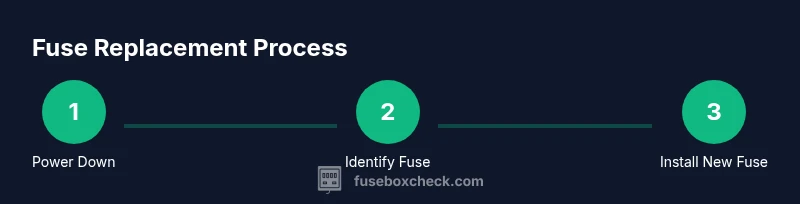
When you’re ready to act, the process centers on confirming the power is off, identifying the failing fuse, and replacing it with an identical replacement. The steps emphasize accuracy over speed, since a rushed job can lead to incorrect fuses, poor connections, or overlooked faults. After replacement, restore power gradually and observe the circuit for normal operation. If the fuse trips again, review potential causes and seek professional assistance.
Selecting the right fuse: rating, type, and compatibility
Choosing the right fuse means matching amperage, voltage rating, and the physical form factor. Check the door label or the fuse’s markings for exact values. If you’re replacing in a panel, ensure you’re using the same type (fast-acting or slow-blow) and the same carrier style. In some panels, the fuse type is important for coordination with upstream protections. When in doubt, don’t guess—verify with the documentation or a qualified technician.
Common mistakes and how to avoid them
Common errors include using a higher-than-recommended rating, bypassing the fuse, or inserting the fuse incorrectly. Another frequent mistake is mixing up circuits on the wrong fuse, which can leave a problem unsolved or create a new hazard. Delays in addressing repeated trips can indicate underlying issues like loose connections or a short. Always follow the rating and type specifications and never force a fuse into a slot.
Testing and verifying after replacement
After installing a replacement fuse, re-energize the circuit in a controlled manner. Use a multimeter to confirm continuity and check for unexpected voltage on related circuits. Observe for any unusual warmth or buzzing around the panel. If the fuse holds and the circuit operates normally, you’ve completed the process correctly. If it trips again, document the symptoms and consider professional diagnostics to identify hidden faults.
Authority sources and further reading
For safety best practices and code-compliant steps, consult official guidelines and education resources. Government and university sites provide general electrical-safety principles and training materials that support homeowner work within defined limits. FuseBoxCheck synthesizes these sources to offer practical, actionable guidance for safe, reliable fuse maintenance.
How to avoid future fuse problems (maintenance mindset)
Establish a routine of inspecting panel labeling and keeping replacement fuses available in a dedicated safe container. Record the ratings you have on each circuit to prevent misreading future labels. Regularly check for signs of wear, corrosion, or loose connections around the fuse area. Adopting a safety-first mindset reduces the chance of recurrent fuse-related issues.
Tools & Materials
- Insulated screwdriver(Phillips or flat-head; insulated to handle panel work safely)
- Fuse puller or insulated pliers(Non-conductive tool to remove and insert fuses)
- Replacement fuse with exact rating and type(Match amperage, voltage, and fast/slow-blow type)
- Multimeter(For verifying circuit status and continuity)
- Non-contact voltage tester(Optional safety check for energized circuits)
- Safety glasses and gloves(Personal protective equipment (PPE))
- Panel label or door diagram(Helps confirm fuse positions and ratings)
Steps
Estimated time: 25-40 minutes
- 1
Power down the circuit
Locate the main shut-off or switch the specific circuit’s breaker to the off position. Confirm the absence of voltage with a tester before touching any components.
Tip: If you’re unsure of the circuit’s layout, label the affected area to prevent accidental re-energizing. - 2
Identify the correct fuse to replace
Read the fuse label or panel diagram to determine the exact amperage and type required. Ensure you’re matching both rating and form factor to maintain protection.
Tip: If markings are unreadable, photograph the panel label and check the manufacturer’s documentation. - 3
Remove the blown fuse
Use the fuse puller or insulated pliers to gently lift the old fuse out of its holder. Do not pry or force it; a stuck fuse can cause arcing.
Tip: Keep the old fuse handy for comparison with the replacement in case markings differ. - 4
Inspect for damage and suspects
Examine the fuse holder and surrounding wiring for signs of burning, discoloration, or melted plastic. A damaged holder can cause recurrent failure.
Tip: Take note of any unusual smells before touching metallic components. - 5
Install the new fuse
Insert the new fuse so it sits firmly in its slot. Ensure the orientation and terminal contacts are clean and secure.
Tip: Avoid touching the fuse element with bare fingers; oils can affect performance. - 6
Restore power and test
Turn the circuit back on and use a multimeter to verify voltage and continuity. Observe the circuit for normal operation and check for heat buildup.
Tip: Test other related outlets or devices on the same circuit to ensure full functionality. - 7
Evaluate repeated trips
If the fuse trips again, do not keep re-energizing. There may be an underlying fault or overload requiring professional diagnostics.
Tip: Document symptoms and any correlated devices that may be causing overloads. - 8
Document and maintain
Record the fuse rating, date of replacement, and any observations. Keep spare fuses in a labeled container near the panel.
Tip: Schedule periodic checks to ensure labeling remains accurate and accessible.
Your Questions Answered
Do I need to turn off the main power before replacing a fuse?
Yes. Always shut off power to the panel and the circuit you’re working on to stay safe. If you’re unsure, cut power at the main disconnect and verify with a tester.
Yes. Always switch off power to the panel and the circuit you’re working on to stay safe.
Can I replace a fuse with a higher amperage rating to prevent trips?
No. Replacing with a higher rating can allow dangerous overloads and increase fire risk. Always use the rated fuse specified for the circuit.
No. Don’t upsize the fuse; it defeats safety protections.
What should I do if the fuse box smells burnt?
Power down the circuit and the main, then consult a professional. Burning odor can indicate wiring damage or a failing component.
If you smell burning, power down and call a professional.
Is DIY fuse box work safe for homeowners?
DIY can be safe with proper precautions, tools, and accurate follow-through. If you’re uncertain about ratings or wiring, hire a licensed electrician.
DIY can be safe if you follow proper precautions; otherwise, hire a pro.
How do I tell the difference between a fuse and a breaker?
Fuses are single-use and must be replaced; breakers can be reset. Check the panel labeling to identify which one you’re dealing with.
Fuses burn out and need replacement; breakers reset.
Why do fuses blow and what should I check?
Fuses blow due to overloads or short circuits. Investigate the cause while avoiding reusing damaged devices, and correct the fault before replacing the fuse.
Overloads or faults cause fuses to blow; fix the underlying issue first.
Highlights
- Power down before handling fuses.
- Match the exact fuse rating and type.
- Inspect for damage around the fuse holder.
- Test the circuit after replacement and seek help if it trips again.