How to Add a Circuit to a Fuse Box: A Homeowner’s Guide
Learn how to safely add a dedicated circuit to your fuse box with practical planning, materials, and step-by-step instructions. This guide from FuseBoxCheck emphasizes safety, code compliance, and when to call a pro for complex service upgrades.


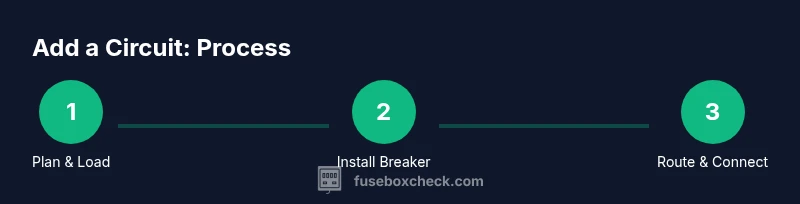
Goal: add a dedicated circuit to your fuse box by installing a proper breaker and wiring a new branch. You must plan load, choose the correct breaker, and route conductors safely within code. If in doubt about service capacity or code compliance, stop and consult a licensed electrician. This guide provides a safe, step-by-step approach from FuseBoxCheck.
What adding a circuit to a fuse box means for your home
A fuse box add a circuit involves creating a new branch from your service panel to power outlets, lighting, or appliances that aren’t on the existing circuits. In many homes, this is a practical way to reduce overloaded outlets and improve reliability. A dedicated circuit minimizes nuisance trips and improves safety by ensuring the new load has its own protected path. For most households, this means installing a compatible circuit breaker and running appropriately sized conductors from the panel to the destination. The FuseBoxCheck team emphasizes that a well-planned circuit is not just about adding watts, but about balancing loads, maintaining clearance, and staying within labeling and code rules. Before you begin, map the route, identify the load, and verify that your panel has spare capacity. This planning step can save time and prevent rework later.
Safety first: codes, service capacity, and permits
Working on a fuse box carries significant risk. Electricity can cause shocks, burns, and arc-flash injuries, and illegal wiring can lead to fire hazards. Start by checking your local codes and panel labeling, as many jurisdictions require a permit for adding a circuit. If the service panel is full or if the main service rating is near capacity, you may need a service upgrade, which is best handled by a licensed electrician. Always de-energize the panel and use non-contact voltage testers to confirm power is off before touching any conductors. Maintain a safe workspace, keep hands dry, and avoid working alone if possible. FuseBoxCheck's guidelines prioritize safety, and we strongly discourage bypassing safety steps or improvising fixes.
Planning your new circuit: load calculations and circuit design
A successful addition begins with precise planning. Start by listing every device that will run on the new circuit and estimate their wattage. Use a conservative approach: assume worst-case usage and account for diversity (not every device hits max at once). Identify where the circuit will terminate, such as a set of outlets or a lighting run, and map the distance from the panel. Your design should specify the breaker size, the wire gauge, and the route that minimizes exposure to heat or physical damage. Clear labeling and a simple diagram help future upgrades and maintenance. This stage reduces guesswork and keeps you aligned with code requirements and panel labeling.
Choosing materials and components
Selecting the right components is essential for safety and performance. You’ll need a correctly sized circuit breaker that is compatible with your panel, and branch wiring from the panel to the destination. Use NM-B cable in the common 14/2 or 12/2 configurations, choosing gauge based on breaker size and local code. Plan protective routing through walls or conduits as required, and include grounding conductors and proper neutral connections. Keep spare packaging and manufacturer torque specs handy, and avoid reusing old or damaged conductors. Having the right tools and connectors reduces the risk of loose connections that can overheat.
Route and enclosure considerations
Your wiring path should minimize sharp bends, avoid heat sources, and stay inside walls or protected channels. When crossing other services, maintain separation to reduce interference or physical damage. Install cable staples or clamps at appropriate intervals to prevent movement, and leave sufficient slack at the panel for inspection. If routing through unfinished spaces, use conduit where required by code. Ensure the new breaker, hot conductors, neutrals, and grounds are all accessible for future testing and servicing. Proper routing not only meets code but also makes future troubleshooting quicker and safer.
Verification and testing before re-energizing
Before re-energizing, double-check all connections: hot to the breaker, neutrals to the neutral bar, and grounds to the grounding system. Close and secure the panel cover, then switch on the main and the new breaker slowly. Use a voltage tester on representative outlets and fixtures to confirm correct operation and polarity. Look for signs of overheating, such as warm outlets or a lingering smell of insulation. If anything seems off, power down and re-inspect. Documentation of your wiring plan and test results helps future maintenance and code compliance.
Common mistakes and troubleshooting
Common mistakes include underestimating loads, using the wrong gauge wiring for the breaker, and failing to properly bond or ground the circuit. Avoid bypassing safety devices or connecting to incorrect terminals. If a breaker trips immediately after energizing, re-check connections, confirm you’re on the correct circuit, and reassess load. Keep a clear workspace and never work with wet hands. If an unexpected burn or arc occurs, shut off power and contact a licensed professional. Following a methodical approach reduces risks and ensures long-term reliability.
Tools & Materials
- Main electrical panel with spare breaker space(Ensure there is a free breaker slot and adequate working clearance.)
- Correct-sized circuit breaker (e.g., 15A or 20A) compatible with your panel(Check panel labeling for compatible trip rating and type.)
- NM-B cable (14/2 or 12/2) for branch wiring(Choose gauge based on breaker size and local code.)
- Grounding conductor and grounding bar/jumper(Ensure proper grounding per code.)
- Voltage tester and non-contact tester(Verify power off and test terminals.)
- Wire stripper, needle-nose pliers, and fish tape(Tools for wiring and routing.)
- Cable clamps/staples(Secure cable along framing and protect from damage.)
- Conduit and fittings (optional)(Use where the route requires protection or per code.)
- Safety gear: insulated gloves and eye protection(Important for personal protection.)
Steps
Estimated time: 3-6 hours
- 1
Identify loads and plan circuit
List devices to be on the new circuit and estimate their peak usage. Create a simple diagram showing the circuit’s destination and connection to the panel. Confirm that the overall load remains within the panel’s capacity and label anticipated outlets or fixtures.
Tip: Use a load calculator or panel directory to avoid overloading. - 2
Shut off power and verify panel is de-energized
Turn off the main breaker and verify no voltage is present on any conductors you’ll touch. Use a non-contact tester at each terminal to confirm power is off before handling wires.
Tip: Always double-check with two independent testers if available. - 3
Install the new breaker into an open slot
Select the correct type and size of breaker and firmly seat it into the panel bus. Ensure the breaker latch engages and there is no existing loose wiring on adjacent terminals.
Tip: Do not force a breaker; if it doesn’t seat correctly, reassess compatibility. - 4
Run and route branch wiring to the destination
Pull NM-B cable from the panel to the location of outlets or fixtures. Secure the cable with staples or clamps per code and use conduit if required by local rules.
Tip: Avoid sharp bends and protect conductors from physical damage. - 5
Connect hot, neutral, and ground to the new circuit
Connect the hot conductor to the new breaker, attach neutrals to the neutral bar, and bond grounds to the grounding system. Use the manufacturer’s torque specs and label the wires for future maintenance.
Tip: Keep conductor colors consistent and mark the circuit in the panel directory. - 6
Test the circuit and inspect for proper operation
Restore power, flip the new breaker, and test outlets/loads with a tester. Look for signs of overheating, buzzing, or tripped breakers and verify polarity.
Tip: If any abnormal signs appear, power down and recheck connections. - 7
Label, document, and secure the panel cover
Record the new circuit in the panel directory and physically label the breaker. Replace the panel cover and keep a copy of the wiring diagram for future reference.
Tip: Keep a home reference sheet with circuit maps for quick troubleshooting.
Your Questions Answered
Is it safe for a homeowner to add a circuit themselves?
Adding a circuit can be safe with proper training, but electrical work carries risk. If you lack experience, hire a licensed electrician; always follow code. Do not bypass safety steps.
Adding a circuit is possible for skilled DIYers, but it’s risky. If you’re unsure, hire a licensed electrician and follow code.
Do I need permits to add a circuit?
Permits vary by location; check with your local building department and obtain one if required before starting.
Permits may be required; check locally and obtain one if needed.
Will adding a circuit require upgrading the service?
If your panel is full or your overall service is near capacity, a service upgrade may be necessary. A professional assessment is advised.
A service upgrade might be necessary if the panel is full or service is tight.
What size breaker is typically used for a new circuit?
A 15A or 20A breaker is common; match breaker size to wire gauge and anticipated load.
Usually a 15- or 20-amp breaker, depending on the wire and load.
What should I do if I can’t find a spare breaker space?
Consult a professional; you may need a panel upgrade or alternative wiring solution.
If no spare space, a panel upgrade or alternative wiring approach may be needed.
How can I identify which wires go where?
Label wires as you connect, keep a diagram, and verify with a tester. Do not rely on memory.
Label wires and keep a map for future reference.
Watch Video
Highlights
- Plan the circuit with realistic load in mind.
- Verify panel capacity and local code before starting.
- Label the new circuit clearly in the panel.
- If uncertain, consult a licensed electrician.