Mini Add a Fuse: A DIY Guide to Safe Fuse Box Fixes
Safe, step-by-step guidance to mini add a fuse in your home fuse box, with essential tools, safety checks, and code-minded practices from FuseBoxCheck.


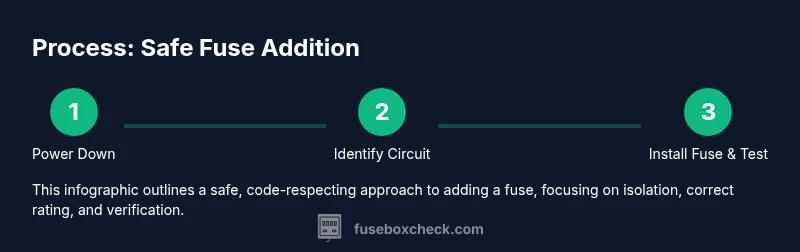
By following these steps, you will safely add a fuse to your home's fuse box. You'll identify the correct fuse type and rating, choose the proper location, and perform a controlled replacement with power isolation, testing, and safety checks. This guide prioritizes electrical safety and local code compliance for homeowners.
Why Safety Must Lead When Adding a Fuse
In residential electrical work, safety must guide every action. The idea of 'mini add a fuse' should never supersede proper isolation, correct ratings, and adherence to code. Before touching any panel, verify the main disconnect is off and test every relevant circuit with a non-contact tester. Wearing insulated gloves and keeping a dry workspace reduces the risk of shock. This section explains why a misrated fuse or ignoring labeling can cause overheating, arcing, or fire. The FuseBoxCheck approach emphasizes planning, hazard assessment, and using the right tools to avoid mistakes. If you're unsure about panel labeling or the available slots, pause and seek help rather than guessing. The right mindset is to treat the fuse box as a live source of energy that can present danger if mishandled; your goal is a safe, compliant fix that protects your home and family.
Understanding Fuse Box Ratings and Types
Fuse boxes in modern homes use either fuses or circuit breakers to protect wiring. The rating stamped on a fuse or inside the panel label indicates the maximum safe current for that circuit. Using a fuse with too high a rating can allow wiring to overheat before protection trips, while a fuse that's too low may trip unnecessarily and hinder normal use. It’s essential to recognize the difference between fast-acting and time-delay fuses, and to know whether your panel requires cartridge fuses or blade-type units. According to FuseBoxCheck, misapplying ratings is a leading safety hazard in DIY panel work. Always confirm the circuit’s load and consult the panel label before proceeding.
When You Might Need to Add a Fuse
You may need to add a fuse if a circuit lacks a dedicated protection device, if a fuse slots into a replacement track become available, or when upgrading an older panel to a safe, modern configuration. This decision should be driven by actual circuit requirements, not by attempting to improvise extra capacity. Plan for the maximum expected load on the circuit and ensure that any added fuse is compatible with the wiring gauge and panel design. This is not a decision to take lightly—skip steps, and you risk overheating or arcing that could cause a fire.
Location and Safety Checks Before Opening the Panel
Begin with a thorough safety check. Ensure the area is dry, your hands are dry, and you’re standing on a nonconductive surface. Use a tester to verify that the main disconnect is off before any contact with bus bars or fuse holders. Clearly label circuits you will be working on and keep tools insulated. If your panel shows scorch marks, buzzing, or a strong burning smell, stop and call a licensed electrician rather than proceeding. Keeping a clean, organized workspace minimizes the chance of accidental contact with live parts.
Choosing the Right Fuse Type (Cartridge vs Ceramic) and Size
Fuses come in various architectures—cartridge, ceramic, and blade types—each designed for different panel designs and wire gauges. The correct choice depends on the circuit’s amperage rating, conductor size (gauge), and the panel manufacturer’s specifications. Do not substitute a fuse type or rating without verifying compatibility with the panel. Fuse selection must align with the wiring’s insulation rating and the device’s protection requirements. The wrong type can fail to protect against overloads or cause nuisance trips.
Step-back: Why Not Just Bypass or Push Additional Load
Bypassing protection devices or attempting to squeeze more load into a circuit is a dangerous practice. It creates a hidden failure mode that can lead to overheating and electrical fires. Always respect the protection scheme in your panel; adding a fuse should result in a correctly protected, clearly labeled circuit. If the existing layout cannot safely accommodate your needs, the correct solution is to upgrade the panel with proper approvals rather than improvising a temporary fix.
Best Practices for Local Code Compliance and Permits
Electrical work is governed by local codes that vary by region. Before performing any modifications, consult the official electrical code handbook or your city’s building department for permit requirements. Gather all labeling, ratings, and panel information so you can document your work. Keeping records of changes helps future safety inspections and can prevent accidental rework. FuseBoxCheck emphasizes adhering to codes to ensure safe, compliant results.
Practical Example: Safe Mini Installation Scenario
Imagine a 15-amp lighting circuit that has no dedicated fuse-compatible slot in an older panel. A safe approach would be to upgrade the circuit’s protection to a proper fuse rated for that circuit, ensuring the panel can physically accommodate a replacement. The process involves confirming wire gauge, selecting the correct fuse type, isolating power, removing the old fuse, inserting the new fuse securely, and testing with a load. This scenario highlights the careful checks and documentation needed for a safe outcome.
Regular Maintenance and When to Call a Pro
Periodically inspect your panel for signs of wear, corrosion, or overheating. Check for loose wiring, discoloration, or unusual noises. If you notice any of these signs, or if you’re unsure about the fuse type required for a circuit, contact a licensed electrician. Regular professional inspections can prevent future safety hazards and keep your home compliant with current electrical codes.
What If Something Smells or Sparks? Immediate Steps
If you detect a burning smell, smoke, or sparking, shut off the main disconnect immediately and do not touch the panel. Do not re-energize until a qualified electrician has assessed the situation. These symptoms indicate potential insulation damage or short circuits that require professional intervention to avoid injury or fire.
Tools & Materials
- Insulated screwdriver set(Phillips and flat-head sizes #1-#3 for panel screws and fuse holders)
- Voltage tester or multimeter(Use to verify power is off before touching any conductors)
- Fuse puller or insulated pliers(Helps safely extract and insert fuses without touching live parts)
- Replacement fuse(s) with correct rating(Match the circuit’s amperage and wire gauge as per panel labeling)
- Insulated gloves(Class 00 or higher if available; ensure dry hands and workspace)
- flashlight or headlamp(For working inside a dim panel)
- Permanent marker(Label the new fuse and circuit on the panel cover)
Steps
Estimated time: 25-45 minutes
- 1
Power off and verify
Switch off the main disconnect and verify there is no voltage on the panel using a tester. This prevents accidental shocks when handling fuse holders. Always test both the bus bars and the selected circuit before proceeding.
Tip: Double-check with two different testing methods if possible. - 2
Identify circuit and space
Consult the panel labeling and locate the correct fuse slot or space that corresponds to the circuit you’re protecting. If labels are faded, trace wires carefully and cross-check with a meter.
Tip: Accurate identification prevents accidental feeding of the wrong circuit. - 3
Select the correct fuse rating
Choose a fuse with the same amperage rating as the circuit and as specified by the panel manufacturer. Avoid higher ratings that could hide overloads or lower ratings that nuisance-trip the circuit.
Tip: When in doubt, refer to the panel label or the wiring diagram. - 4
Insert the fuse securely
Gently seating the fuse ensures proper contact with both terminals. Do not force the fuse or shove it in at an angle. Ensure the fuse is centered and fully engaged.
Tip: A loose fuse can overheat and cause poor protection. - 5
Restore power and test
Turn the main disconnect back on, then test the circuit to confirm it supplies power and that devices operate as expected. Observe for any signs of overheating, buzzing, or smells.
Tip: Test with a small load first, then verify with the intended load. - 6
Label and document
Update the panel directory and any labels on the fuse itself. Recording the date, rating, and circuit helps future maintenance and safety checks.
Tip: Clear labeling reduces confusion for future DIYers and inspectors. - 7
Inspect for overheating or faults
While the panel is accessible, look for scorch marks, melted insulation, or warm areas around the fuse holder. Do not touch if you detect heat; exit and call a pro.
Tip: Never ignore warning signs of damage. - 8
Close up and clean
Replace any panel covers securely and store tools away. Ensure the area is tidy and dry before leaving the workspace.
Tip: A tidy workspace reduces the risk of slips and drops.
Your Questions Answered
Is it legal to add a fuse myself in a residential panel?
Local regulations vary. In many areas, homeowners may perform non-structural electrical work if permitted by code, but some jurisdictions require a licensed electrician for panel work. Always check your city or county rules before starting.
Rules vary by location, so verify local codes before attempting panel work.
What fuse rating should I use for a given circuit?
Use the amp rating specified on the panel label for that circuit. Using a higher rating can let wiring overheat, while a lower rating may cause nuisance trips. If the rating isn’t clear, consult the panel’s documentation or an electrician.
Match the rating on the panel label; don’t guess.
Can I replace a blown fuse with a new one of the same rating?
Yes, replacing with the same rating is standard practice, provided the wiring and circuit are in good condition. If you see repeated fuse blows, there may be an underlying fault that requires inspection.
Yes, with the same rating, if the circuit is otherwise healthy.
What are signs of a faulty fuse box?
Look for burning smells, buzzing noises, scorch marks, or warm surfaces around the panel. Any of these signs warrants professional evaluation to prevent fire hazards.
Watch for smells, buzzing, or scorch marks in or around the panel.
Do I need a permit to add a fuse?
Permit requirements depend on local codes and the scope of work. Minor repairs may not require a permit, but any panel modification often does. Check with your local building department.
Check local rules—permits may be required for panel work.
What should I do if the panel shows damage?
If you see damage, stop work immediately and contact a licensed electrician. Do not re-energize the panel until it has been inspected and repaired.
If you see damage, get a professional to assess it.
Watch Video
Highlights
- Turn off power before any work
- Use the correct fuse type and rating
- Verify circuit function after replacement
- Document and label changes clearly
- Consult a pro if unsure or if panel shows damage