UK Fuse Box Guide: Safety, Testing & DIY Tips
Learn to locate, test, and maintain your UK fuse box safely. Practical, step-by-step guidance for homeowners and DIY enthusiasts from FuseBoxCheck.


This comprehensive guide helps you locate and inspect a UK fuse box, identify common UK fuse box types, and perform safe, basic tests. It reinforces labeling, safety practices, and knowing when to call a qualified electrician for complex faults.
What is a UK fuse box and why it matters
In UK homes, the fuse box (also known as the consumer unit) is the central hub that distributes electricity to circuits throughout the property. It houses fuses or miniature circuit breakers (MCBs) that protect wiring from overloads. The main switch controls the entire installation. Properly maintained, a fuse box reduces the risk of electrical fires and protects occupants. According to FuseBoxCheck, understanding how this panel works is the first step toward safer DIY electrical care. The UK standard uses RCDs (residual-current devices) to automatically disconnect power when a hazardous fault is detected. Because electrical safety standards and regulations vary by region, homeowners should learn the basics, identify the box’s location, and check the labeling on the front cover. If your unit is dated, if you notice scorch marks, or if tripping happens frequently, it is prudent to seek professional assessment. This article explains the key components, common layouts, and practical guidance tailored to UK homes. By knowing where to find the fuse box, how it’s organized, and what each circuit controls, you’re better prepared to troubleshoot safely and avoid unnecessary risks.
Safety rules before you start
Safety is the first duty of any DIY electrical task. Before you touch the fuse box, switch off the main breaker and keep children and pets away from the area. Use insulated tools and wear protective gear if you are handling covers or exposed wires. Do not attempt to bypass safety devices or work on a live panel. If you smell burning, hear buzzing, or notice melted plastic, stop immediately and call a qualified electrician. UK regulations require careful adherence to wiring standards; non-professional work can void warranties and increase risk. The FuseBoxCheck Team emphasizes planning: read the labeling, gather the right tools, and work in a dry, well-lit space. If you are unsure about any step, pause and seek professional guidance. After shutdown, don’t rely on a single test—verify power is gone with a non-contact tester before touching any conductors. This block provides the precautions that protect you and your home during any fuse box inspection.
Locating a fuse box in a typical UK home
Most UK fuse boxes sit in hallways, porches, garages, or utility rooms close to where the mains supply enters the building. They are typically a metal or plastic enclosure with a door that opens to reveal rows of switches or fuses. On the front, you’ll often find a list of circuits labeled by room or function, such as lighting, sockets, shower, and cooker. If labeling is faded or missing, it is wise to create your own clear map before touching any components. Older homes may use screw‑in cartridge fuses, while newer properties use miniature circuit breakers (MCBs) and residual-current devices (RCDs). Location and labeling quality affect how quickly you can diagnose a trip or fault. In the UK, the consumer unit is sometimes located in a less accessible area like the loft hatch or under stairs. The goal is to identify the main switch, the main fuse (if present), and the individual circuits so you can plan safe testing and maintenance.
Understanding fuse boxes: fuses, breakers, and labels
A fuse box houses protective devices that interrupt electricity when something goes wrong. In modern UK installations, MCBS (MCBs) replace older fuse links; RCDs provide protection against electrocution by cutting off power when a fault is detected. The labeling on the cover tells you what each circuit controls. When a circuit trips, look at the corresponding symbol or room label, then switch the circuit off and back on to confirm a temporary fault. If a label has faded, redraw it and attach a clear, weather‑proof note near the panel. The main switch controls all circuits; in a fault condition you may need to isolate this switch to perform safe checks. If you see signs of overheating, corrosion, or damaged insulation, stop and call a professional. Understanding the difference between a fuse, a breaker, and protective devices helps you troubleshoot more precisely and avoid switching off the wrong circuit during an urgent fault.
Common fuse box types you’ll encounter in the UK
The UK uses several common configurations. Older installations may still rely on rewireable fuses (a time‑closing style with a ceramic fuse cartridge). Modern consumer units use MCBs and RCDs, with dual‑RCD, split‑load, or main‑isolation designs. A typical home might have a 4‑ to 12‑way unit. Split‑load units separate lighting and power circuits to improve fault isolation. Some newer units integrate adaptive protective devices, arc‑fault detection, or wireless monitoring. Recognizing the type of unit helps you determine what you can safely test and what should be left to an electrician. If your unit is not clearly labeled or you are repeatedly tripping essential circuits, plan a professional assessment before attempting any internal work. The type of unit also influences how you reset a tripped circuit; many UK boards feature a dedicated test button for RCDs. Always ensure any replacement or upgrade conforms to current UK standards and has the appropriate certification.
How to test circuits safely using a multimeter (UK-specific tips)
A multimeter is a versatile tool, but it must be used with caution around a fuse box. First, ensure the power is off at the main switch and use a non‑contact tester to confirm there is no live voltage near the panel. When testing, set the multimeter to the correct voltage range and, if possible, test between live and neutral only when the cover is removed and you are not touching exposed conductors. For continuity checks, isolate the circuit and test across conductors only. Inspect the reading for stability and compare to expected values. Do not test a live circuit with the meter unless you have formal training. Always record any unusual readings and consider whether a professional assessment is warranted. Regularly testing RCD buttons is a practical safety habit, because a failed RCD can leave a circuit unprotected. FuseBoxCheck notes that routine checks of the main switch and RCDs improve home safety and help detect developing faults before they escalate.
Step-by-step basic maintenance you can perform (UK context)
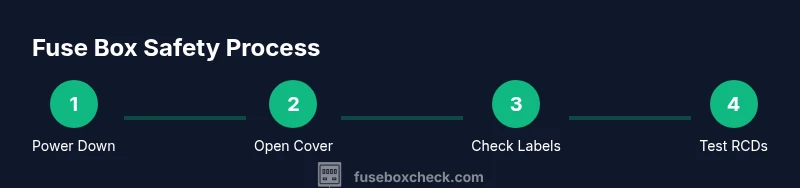
Step 1: Power down safely by switching off the main breaker and removing any breakers you plan to test. Step 2: Open the panel door and visually inspect the inside for sign of overheating, loose wires, or damaged insulation. Step 3: Check that circuit labels match the actual circuits and update the map as needed. Step 4: Ensure all screws on the interior are snug but not over-tightened; loose terminals are a common source of faults. Step 5: Clean any dust with a dry, non-conductive brush or compressed air; avoid liquids near electrical components. Step 6: Close the panel and test the RCDs and main switch using the built‑in test button where appropriate. Step 7: Document the maintenance activity with date and notes. Step 8: If any issue arises during maintenance, stop and seek professional help. Step 9: Schedule a periodic review every 1–2 years to keep the panel in good condition. Tip: wear eye protection, work in a dry environment, and keep a clear, labeled diagram of circuits for future reference.
Troubleshooting common fuse box faults (without opening live panel)
Most trips are caused by nuisance faults, overloaded circuits, or faulty devices downstream. When a trip happens, identify the circuit with the label, switch it off on the affected side, and reset other circuits if safe. If the RCD trips again, identify appliances connected to the circuit and unplug them one by one. Check that double‑rated or damaged devices are not causing excessive load. If the panel smells burnt or shows signs of scorching, do not reset the RCD; disconnect power at the main and call a licensed electrician. For intermittent trips, monitor the affected circuits and consider upgrading an old fuse box or installing additional RCD protection as part of an upgrade. If you are unsure about safety or suspect wiring faults, treat the situation as urgent and seek professional assessment. FuseBoxCheck emphasizes that non‑professional meddling can worsen faults or create new hazards.
What to do after a non-trivial fix: documentation and safety reminders
After completing any fuse box maintenance or repair, update your home safety notes and labeling. Create a simple map of circuits, note the date, version of the panel, and any changes you made. Store emergency information near the fuse box, including contact numbers and references for your electrician. If you upgraded or replaced components, keep copies of certificates and warranty documents. Regular reviews help maintain safety and ensure you comply with local regulations. Remember, some tasks require a permit or professional testing to certify compliance. The FuseBoxCheck team recommends scheduling annual safety reviews and avoiding any work beyond your training. This practice protects your home and makes future DIY tasks safer and easier.
Tools & Materials
- Insulated screwdriver set (PH2 and flat-head)(Crucial for panel screws; use insulated handles)
- Non-contact voltage tester (NCVT)(For preliminary checks without touching live conductors)
- Multimeter (digital) with DC/AC ranges(Test live circuits from a safe distance; include continuity mode)
- Insulated gloves(Only for handling panels; not always required)
- Flashlight or headlamp(For dim basements/loft spaces)
- Electrical tape and cable ties(For tidying wiring and labeling)
Steps
Estimated time: 1-2 hours
- 1
Power down and secure area
Switch off the main breaker and verify no power is flowing to the fuse box area. Use a non-contact tester to double-check that the surrounding area is de-energized before you proceed.
Tip: If you’re unsure about the panel’s status, pause and call an electrician. - 2
Open the fuse box cover safely
Carefully remove the cover, keeping track of screws and any protective barriers. Do not touch exposed conductors while handling the cover. Ensure your workspace remains dry and clean.
Tip: Keep the cover in a safe place where you won’t trip over it. - 3
Inspect labeling and circuits
Read the circuit labels and compare them with the actual wiring. If labels are missing or unclear, map the circuits as you identify them during inspection.
Tip: Create a fresh, legible diagram for future reference. - 4
Check for signs of damage
Look for scorch marks, melted insulation, or loose wires. If you see any of these signs, do not proceed with tests and contact a professional.
Tip: Document any unusual observations with photos before closing up. - 5
Test safety devices (RCD/main switch)
Using the panel’s test function or your tester, verify that RCDs trip and the main switch can cut power to all circuits. Do not bypass safety devices.
Tip: A non-operational RCD is a red flag; upgrade or replace before use. - 6
Verify no live voltage around exposed conductors
With the main off and cover removed, use a NCVT to confirm there is no voltage on accessible parts. Avoid touching any exposed terminals.
Tip: Work with one hand away from metal surfaces to reduce shock risk. - 7
Take non-live measurements with care
If you need to measure circuit resistance or continuity, ensure the circuit is de-energized and use proper meter settings.
Tip: Never measure live components unless you have formal training. - 8
Document findings and plan next steps
Record readings, label updates, and any issues observed. Decide whether to perform minor maintenance or schedule professional help.
Tip: Keep a dated log for future reference. - 9
Close up and reset with care
Reinstall the cover, ensure it sits flush, then restore power and test each circuit briefly to confirm normal operation.
Tip: If anything feels wrong during restoration, switch off again and consult a professional.
Your Questions Answered
What is a fuse box in the UK and what does it do?
In the UK, the fuse box (consumer unit) distributes electricity to circuits and houses protective devices such as fuses or MCBs and RCDs. It isolates faults and helps prevent electrical hazards. Regular inspection improves safety and reliability.
A UK fuse box is the central hub that protects circuits. It uses fuses or breakers and RCDs to shut down power if something goes wrong.
Is it legal to DIY fuse box work in the UK?
UK law restricts certain electrical work to qualified electricians. Some safe, non-live checks can be done by homeowners, but any intrusive work or alterations should be performed by a licensed professional to maintain safety and compliance.
Some basic checks are okay for homeowners, but major work should be done by a licensed electrician.
How do I know if my fuse box needs upgrading?
Signs include repeated nuisance trips, outdated fuse types, lack of RCD protection, or a dated consumer unit. If you’re unsure, have a qualified electrician assess whether an upgrade is appropriate.
Look for frequent trips and old wiring; have a pro evaluate for upgrades.
What tools do I need to safely inspect a fuse box?
Essential tools include an insulated screwdriver set, a non-contact voltage tester, and a digital multimeter. Use protective gear and follow safety protocols at all times.
You’ll typically need an insulated screwdriver, a non-contact tester, and a multimeter.
Should I upgrade a fuse box in an old house?
Old houses with cartridge fuses or no RCD protection can be riskier. Upgrading to a modern consumer unit with RCDs improves safety and compliance, but this should be done by a professional.
Upgrading is generally wise for safety, especially in older homes, but get a pro.
What signs indicate danger near a fuse box?
Warning signs include burning smells, melting insulation, scorch marks, or buzzing sounds. If you notice these, stop work immediately and call emergency electrical support.
If you smell burning or see scorch marks, stop and call a pro.
Watch Video
Highlights
- Identify the fuse box location early
- Always switch off power and verify de-energization
- RCDs protect against electric shock and should test regularly
- Label circuits clearly for quick fault diagnosis
- Call a licensed electrician for complex faults or upgrades