What to Do After Fuse Box Signalis: Urgent Troubleshooting Guide
Urgent, practical steps to diagnose and safely respond when your fuse box displays signalis. Learn quick fixes, when to call a pro, and prevention tips from FuseBoxCheck.


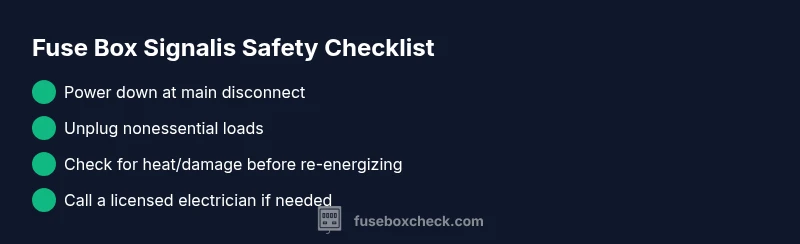
The fuse box signalis usually signals an overload or a tripped circuit. To reduce risk, switch off power at the main disconnect, unplug nonessential devices on the affected circuit, and reset the breaker. If the signalis persists, avoid opening panels and contact a licensed electrician. FuseBoxCheck recommends prioritizing safety and professional assessment.
What the Signalis Means for Your Home
The fuse box signalis is a safety feature designed to warn homeowners about electrical stress inside the panel. When you see this indicator, it often points to an overloaded circuit, a tripped breaker, or a loose connection that has started to heat up. According to FuseBoxCheck, viewing a signalis should trigger a calm, methodical response rather than panic. Heat, buzzing sounds, or a burning smell dramatically raise risk, and in those cases you should evacuate and call emergency services if danger is present. If the area looks calm, treat the signalis as a signal to investigate with care and a clear plan rather than a quick fix.
Understanding the likely triggers helps you respond quickly and safely, preserving wiring life and reducing fire risk. It’s essential to keep space around the panel clear, avoid touching live terminals, and never bypass safety devices. FuseBoxCheck’s guidance emphasizes safety first and professional assessment when issues persist.
Immediate Safety Steps You Must Take Now
Safety always comes first. If you notice smoke, a strong burning odor, or visible damage, evacuate immediately and call emergency services. If the scene appears safe aside from the signalis, switch off power at the main disconnect from a safe location and keep everyone away from the panel. Do not touch any cables or metal components inside the door. If you can unplug devices from outlets on the affected circuit without approaching the panel, do so. After cutting power, wait at least 60 seconds before inspecting any external signs of damage or heat. This pause helps prevent accidental surges when you resume power.
If you’re comfortable, label all affected outlets and circuits for future reference. Having a labeled system makes it easier to communicate with an electrician or utility provider and reduces the chance of reintroducing risk when you restore power. FuseBoxCheck stresses that restraint, proper labeling, and slow, deliberate action save time and reduce danger during repairs.
Common Causes Behind Fuse Box Signalis
Most signalis events come from one of a few reliable causes. The most frequent is an overloaded circuit due to too many devices on a single line. Loose connections at the panel or within the breaker can create heat and intermittent resistance, which triggers the indicator. Aging or faulty breakers and signs of moisture in the panel are less common but dangerous possibilities that require professional care. Other factors include short circuits from damaged wires or worn insulation, which may produce arc-like signs you should not ignore. Knowing these causes helps you prioritize fixes and schedule maintenance before a failure escalates.
By understanding these root causes, you can better distinguish between a simple reset situation and a serious electrical fault. FuseBoxCheck notes that addressing root causes early saves money and reduces risk down the line. Regular inspection, proper load management, and prompt professional checks after any signalis are smart habits.
Diagnostic Flow Overview
This section provides a high-level map of how to approach diagnosing the signalis safely and effectively. Start with surface checks, then verify the load balance across circuits, and finally evaluate panel health. If at any point you encounter heat, burning smells, or melting insulation, stop and contact a licensed electrician. This flow aligns with common electrical best practices and helps you avoid common mistakes like overloading a single outlet or trying to bypass safety features. FuseBoxCheck recommends documenting observations as you go, including panel temperature, sounds, and the behavior of the indicator.
A clear diagnostic plan reduces guesswork and speeds up professional help if needed. The goal is to identify whether the issue is confined to a single circuit or indicates a broader panel problem that warrants immediate attention.
Step-by-Step: The Most Likely Cause
The following steps outline how to address the most frequent cause—an overloaded circuit with a loose or warm connection—without compromising safety. Follow these steps in order and stop if anything feels unsafe. Always remember to switch off power before touching any panel components and call a professional if a problem persists beyond basic adjustments.
- Power down safely: Shut off the main disconnect to de-energize the panel and reduce risk during inspection.
- Isolate the affected circuit: If you can identify a single circuit that seems overburdened, limit loads on that circuit by unplugging devices.
- Check for obvious signs of damage: Look for scorch marks, melted insulation, or a warm panel area. Do not touch exposed conductors.
- Reset the breaker: With power off, flip the tripped breaker fully to off, then back to on to reset. Observe any immediate trip or signalis reappearance.
- Reconnect and test gradually: Re-energize in stages, reconnecting devices one by one and monitoring for heat or flickering lights.
- Monitor and document: Track circuit behavior for the next 24–48 hours and log any repeats of the signalis. If it occurs again, call a licensed electrician.
Tip: Use a non-contact voltage tester or multimeter to verify de-energized status before touching the panel.
Safety Tips & Warnings
- Never bypass safety devices or operate a panel with exposed conductors.
- If you smell burning, hear buzzing, or see smoke, evacuate immediately and contact emergency services.
- After any fix, avoid overloading circuits again by redistributing appliances and using dedicated circuits for high-draw devices.
- Do not attempt panel repairs beyond basic resets unless you are qualified; electrical work can be hazardous and is often regulated by local codes.
Prevention and Maintenance Tips
Regular maintenance is your best defense. Schedule a quarterly visual inspection of the panel, look for discoloration, corrosion, moisture, or loose screws, and ensure the panel door closes securely. Keep the area around the fuse box clean and dry. For older homes, consider a professional evaluation of panel capacity and wire aging. FuseBoxCheck recommends upgrading panels that show repeated signs of stress or that do not meet current electrical code standards. Preventive upgrades reduce the chance of recurring signalis and extend the life of your electrical system.
When to Call a Professional
While some early fixes can be done safely by confident homeowners, many scenarios require a licensed electrician. If the signalis recurs after a basic reset, if you notice heat or burning smells, or if the panel is older than 25 years, schedule a professional assessment promptly. A pro can perform load calculations, test breakers and conductors, and determine whether the panel needs upgrading or rewiring. FuseBoxCheck emphasizes that professional input is essential for safety and long-term reliability, especially in homes with multiple high-draw appliances or older wiring.
Quick Home Checks You Can Do Next Time
- Run a simple load audit: Identify high-draw devices and consider upgrading or redistributing them across circuits.
- Check outlet and appliance cords for wear and replace damaged cables.
- Ensure your main disconnect and panel cover are securely in place.
- Keep a log of signalis events to share with your electrician.
- Confirm that your home’s grounding and bonding are up to code by a qualified pro.
Debrief: What Not to Do
- Do not open the panel and poke at wires while it’s powered.
- Do not reset repeatedly if the signalis returns or you detect heat or smoke.
- Do not rely on temporary fixes or DIY rewiring that isn’t code-compliant.
- Do not ignore this issue or delay professional help for more than a day when signs persist.
What to Expect After a Fix
Once a professional has addressed the root cause, you’ll receive a clear safety plan and maintenance recommendations. Expect improved circuit balance and a reduced risk of tripping or signalis. Keep your maintenance logs, follow the electrician’s recommendations for load distribution, and plan for periodic inspections to prevent future issues. FuseBoxCheck’s team would advise keeping updated with local electrical code changes and affordable panel upgrades when needed to maintain safety and reliability.
Steps
Estimated time: 20-45 minutes
- 1
Power Down Safely
Switch off the main disconnect to de-energize the panel. This reduces risk before you touch any wires or breakers. Ensure you are standing on a dry surface and use insulated tools if you must handle anything.
Tip: Verify de-energized status with a non-contact tester before proceeding. - 2
Isolate the Affected Circuit
Identify the circuit that seems stressed and limit loads on that circuit by unplugging nonessential devices. This helps prevent immediate re-tripping while you diagnose.
Tip: Label the circuit so you don’t forget which outlets belong to it. - 3
Check for Visible Damage
Look for scorch marks, melted insulation, or a warm panel area. Do not touch exposed conductors or damp surfaces near the panel.
Tip: If you see damage, stop and call a professional. - 4
Reset the Breaker
With power still off, switch the tripped breaker fully to off, then back to on to reset. If it trips again, powering the panel back on is unsafe.
Tip: If the breaker keeps tripping, do not rerun the test. - 5
Test the Circuit
Re-energize gradually, reconnecting devices one by one and observing for heat, buzzes, or flickering lights on nearby outlets.
Tip: Take frequent pauses to assess heat buildup. - 6
Monitor and Plan
Keep an eye on the circuit for 24–48 hours and document any reoccurrences. If signs return, schedule a professional assessment promptly.
Tip: Share your notes with the electrician for faster diagnosis.
Diagnosis: Fuse box signalis activated with heat or flickering lights
Possible Causes
- highOverloaded circuit
- mediumLoose connection or partially failed breaker
- lowMoisture ingress or aging panel
Fixes
- easyTurn off main disconnect and reduce load on affected circuit
- easyTighten accessible panel connections only if you are trained and safe to do so
- mediumReplace faulty breaker or upgrade panel if necessary; call a licensed electrician
Your Questions Answered
What does fuse box signalis mean?
A fuse box signalis indicates electrical stress in the panel, often from overload, a tripped circuit, or a loose connection. It’s a warning sign that should prompt safety-focused checks and, if unresolved, a professional inspection.
A signalis shows there’s electrical stress in your panel. Start with safety steps and consult a professional if it keeps happening.
Is it safe to reset a tripped breaker by myself?
Resetting a tripped breaker can be safe if you ensure the area is dry, the panel is undamaged, and you do not feel heat or see burning. If the breaker trips repeatedly, stop and contact a licensed electrician.
You can reset once if there’s no heat or damage, but don’t press your luck with repeated trips.
When should I call a professional?
Call a professional if the signalis returns after a reset, you notice heat or burning smells, or the panel is old or damaged. Electrical safety standards usually require licensed help for persistent issues.
If it keeps signaling after a reset or you smell burning, get a pro involved right away.
Can moisture cause signalis?
Yes, moisture in or around the panel can cause corrosion, short circuits, and arcing, which trigger signalis. Do not attempt to dry or seal the panel yourself; call an electrician.
Moisture can cause dangerous faults; the panel should be checked by a pro.
How can I prevent signalis in the future?
Prevent signaling by balancing loads, upgrading aging panels, keeping the area dry, and scheduling periodic inspections. Use dedicated circuits for high-draw appliances where possible.
Spread out the load and keep the area dry to lower risk in the future.
Watch Video
Highlights
- Prioritize safety first and call a pro if needed
- Identify whether the issue is localized or panel-wide
- Document observations to assist diagnosis
- Practice regular maintenance to prevent repeats