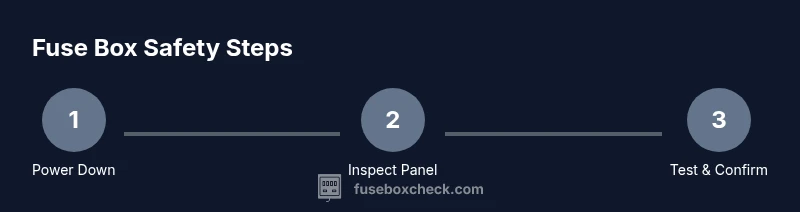
What to Do with Fuse Box: A Homeowner's DIY Guide
Learn practical, safety-first steps for diagnosing fuse box issues, resetting trips, and maintaining your panel. A FuseBoxCheck guide for homeowners and DIYers, with clear steps and safety precautions.


If you're wondering what to do with fuse box, this guide shows safe, practical steps for diagnosing common issues, resetting trips, and performing basic maintenance. Before you touch anything, switch off the main power, wear eye protection, and keep a flashlight ready. According to FuseBoxCheck, start with a safety plan and document circuits before testing.
Understanding fuse boxes and their role in home electrical safety
A fuse box, also called a panel, is the central hub that distributes electricity to circuits across your home. It houses fuses or circuit breakers that interrupt power when a fault occurs. Modern homes typically have a main service disconnect and multiple branch circuits labeled for rooms or appliances. Knowing what each circuit controls helps you isolate problems and avoid unnecessary work. Fuse boxes come in various sizes, and the labeling may vary by age and region. According to FuseBoxCheck, understanding the layout of your panel is the first step in safe DIY electrical care, and it reduces the risk of accidental shocks or arc faults. When you locate your panel, locate the main breaker; this is your primary shutoff for the entire house. The main panel often sits in utility rooms, garages, basements, or exterior walls, and accessing it in good light is essential for accuracy. Take a photo of the labeling for future reference and keep it with your tools.
Safety first: essential precautions before you start
Working on a fuse box carries risk of electric shock and fire if done incorrectly. Start by turning off the main power at the panel, then unplug or switch off devices on the affected circuits. Wear nonconductive gloves and safety glasses, and never work alone. Use a flashlight with fresh batteries rather than relying on room lighting. Keep a dry, clear workspace; hands should be dry and feet insulated from wet surfaces. If you hear buzzing, smell burning plastic, or see scorching marks, stop immediately and evacuate. Do not bypass safety features or substitute higher-amp fuses to handle an overloaded circuit. Remember the one-hand rule: keep your other hand out of the circuit to reduce shock risk. Restrain pets and children from the area, and store tools away from water sources. After each task, re-check the panel and ensure the main disconnect is fully on or off as appropriate. These precautions reduce incidents and align with electrical-safety best practices.
Reading fuse box labels and planning your tasks
Labeling inside a panel can be faded or missing; you may need to map circuits by turning power off and testing which breaker controls each outlet or room. Use a clean notebook to record circuit names and amperage ratings. If a circuit serves multiple rooms, label it accordingly. When planning to test or reset, group circuits by function (lighting, kitchen, HVAC) to minimize re-trips. Understanding the label is a time-saver and prevents accidental interference with critical systems like heating or safety devices. FuseBoxCheck notes that accurate labeling reduces troubleshooting time and helps homeowners who DIY in the future. If a label is absent, consult the panel door diagram, often found on the inside of the panel or in the owner's manual.
Common homeowner tasks you can handle
Homeowners often reset trips, replace a blown fuse with the correct amperage, and tighten loose connections within safe limits. Do not touch live conductors and avoid prying with metal tools. If a breaker trips, wait a minute before flipping it back to reset to avoid nuisance trips from a momentary surge. When replacing a fuse, ensure you use the same amperage rating and type; installing a higher-rated fuse defeats safety devices. Keep spare fuses of the correct type on hand. After replacing, test the circuit by turning on connected devices to verify operation. If the breaker trips immediately again, there is likely a fault downstream or a faulty appliance.
Troubleshooting common trip causes and reset limits
Trips happen when circuits are overloaded, there is a short, or a faulty device is connected. Overloads occur if too many high-draw appliances operate on a single circuit. Short circuits present when a hot wire contacts a neutral or ground path. A ground fault might occur in wet areas or with damaged cord insulation. If trips are infrequent, it could be a nuisance trip; if trips repeat, do not ignore. In this case, shutting off loads and inspecting cords or devices one by one helps identify the culprit. Keep in mind the age of your panel; older panels may require upgrades to meet current electrical loads and safety codes.
When to call a professional and what to expect
No homeowner should attempt dangerous tasks beyond basic testing and label verification. If you notice scorch marks, a burning smell, buzzing, or melted components in the panel, power should be shut off immediately and a licensed electrician should be contacted. An electrician will check for loose connections, incorrect wiring, and degraded components; they may replace the panel or install arc-fault circuit interrupters (AFCIs) and ground-fault circuit interrupters (GFCIs) as appropriate. The goal is to ensure safety and reliable operation without risking fire. The FuseBoxCheck team recommends scheduling a professional evaluation if you lack confidence, or if problems persist after basic troubleshooting. Your home’s electrical system should be regularly inspected to maintain safety and compliance.
Maintenance, upgrades, and future-proofing
Regular visual inspections help catch corrosion, discoloration, and loose hardware. Keep a log of trips and interventions to track issues over time. If circuits are constantly overloaded, consider upgrading service capacity or splitting loads across additional circuits. Upgrades may involve upgrading the service panel, improving conductor sizing, or rerouting circuits for better distribution. When upgrading, ensure all work complies with local electrical codes and is documented for future reference. For DIYers, limit changes to non-structural modifications and seek professional assistance for any wiring changes beyond your training. FuseBoxCheck suggests routine maintenance and professional checkups to maintain safety.
Maintenance, storage, and long-term care for the fuse box
Store tools and spare materials in a dry, accessible location. Keep the panel's cover on when not testing. Periodically inspect the panel for rust or water intrusion in basements and garages. Clean away dust with a dry brush; never use water or liquids inside the panel. Document any changes in labeling and keep the panel door closed. If you notice signs of wear or aging, plan a professional assessment before problems escalate. By following these steps, you extend the life of your fuse box and improve overall home safety. The goal is to keep your electrical system robust and ready for changes in your household energy usage.
Tools & Materials
- Non-conductive gloves(EN 374 or equivalent; protects hands from shocks)
- Safety glasses or goggles(Protect eyes from sparks or debris)
- Insulated screwdriver set(Prefer insulated handles; size as needed)
- Voltage tester / multimeter(Non-contact tester for presence of live wires)
- Flashlight with fresh batteries(Work in panel requires good light)
- Replacement fuses or circuit breakers(Only replace with correct amperage)
- Dry, clean workspace(Keep area clear of liquids and clutter)
Steps
Estimated time: 15-30 minutes
- 1
Power down and verify safety
Switch off the main power at the panel and verify that the area is de-energized using a non-contact tester. Clear the workspace and remove any jewelry or conductive items. This step reduces the risk of shock during inspection.
Tip: Always verify dead status with a tester before touching wires. - 2
Identify the affected circuit
Determine which circuit controls the affected devices by testing or inspecting the panel labeling. If labels are unclear, map circuits one by one by turning on circuits after testing each area.
Tip: Label circuits as you confirm them for future reference. - 3
Inspect the fuse and connections
Look for signs of scorch marks, burnt insulation, or loose connections inside or around the fuse holder. Do not touch exposed conductors if anything looks damaged.
Tip: If you see damage, stop and call a professional. - 4
Reset or replace the fuse/circuit breaker
If a fuse is blown, replace it with the same amperage rating and type. If a breaker tripped, switch it fully to off, then back to on after a brief pause.
Tip: Never substitute a higher-rated fuse to avoid nuisance trips. - 5
Test the circuit
Restore power and test the circuit with connected devices. Start with simple loads and watch for any immediate re-trips or heat indicators.
Tip: Test sequentially to identify the problematic device. - 6
Restore power and re-check other circuits
Turn the main switch to the on position and re-check adjacent circuits to ensure nothing else trips. Document changes and observe operation for a short period.
Tip: Keep a record of actions and outcomes for future reference.
Your Questions Answered
What is a fuse box and why is it important?
A fuse box is the central distribution point for your electrical circuits. It houses fuses or breakers that interrupt power during faults, helping prevent shocks and fires. Understanding its layout improves safety and DIY capability.
A fuse box is the main hub for your home's electricity. It uses fuses or breakers to stop power when something goes wrong, helping keep you safe.
Can I reset a tripped breaker myself?
Yes, if you follow safety steps: turn off loads on the circuit, switch the breaker fully off, then back to on. If it trips again, there may be an overload or fault downstream and you should stop and seek professional help.
You can reset a breaker if you do it safely, but if it trips again, it's likely a problem you should get checked by a pro.
How do I identify which circuit is on which breaker?
Label each circuit by turning off the panel, then test outlets and lights to see which area loses power. Record the findings and keep a labeled diagram for future reference.
Map circuits by testing each breaker with lights and outlets, then label them clearly.
Is it safe to replace a fuse or breaker on my own?
Only if you precisely match the amperage and type specified for that circuit. For damaged panels or uncertain tasks, hire a licensed electrician.
Only replace with the exact fuse or breaker type. For anything else, call a pro.
When should I call a licensed electrician?
Call a professional for persistent trips, signs of burning, scorching, or any hesitation about wiring. A pro can assess service capacity, wiring integrity, and safety code compliance.
Call a licensed electrician if trips persist or you notice burning smells or damaged wiring.
What tools do I need before starting?
Have non-conductive gloves, safety glasses, insulated screwdriver, voltage tester, flashlight, and spare fuses or breakers. Keep the workspace dry and well-lit.
You’ll need gloves, eye protection, a screwdriver, a tester, and a flashlight.
Watch Video
Highlights
- Know your panel layout and labeling.
- Safety is non-negotiable when working near a fuse box.
- Use the correct fuse or breaker rating for each circuit.
- Document changes and seek professional help for complex issues.