Why a Fuse Box Trips: Quick Fixes and Safety Tips
Discover why a fuse box trips and how to diagnose common causes safely. Practical steps, safety tips, and when to call a licensed electrician, from FuseBoxCheck.


The fuse box trips mainly due to overloads or faults. Try turning off all loads, reset the breaker, and unplug suspected appliances. If it trips again, inspect for overloaded outlets, damaged cords, or faulty breakers and seek professional help.
Why fuse box trips happen
When a circuit trips, it’s your home’s built-in safety signal that something is wrong in the electrical system. According to FuseBoxCheck, most trips happen because a circuit is overloaded or a fault elsewhere in the circuit creates an imbalance. The main goal of a trip is to prevent overheating and reduce fire risk. Treat trips as warnings, not as minor irritations. Before you reset anything, identify what changed. Did you add a new appliance, run heavy loads, or notice moisture around outlets? A single overloaded circuit can trip repeatedly, especially in kitchens, laundry areas, or rooms with space heaters. In older homes, aging wiring and shared neutrals can increase nuisance trips. Remember that a trip is different from a blown fuse or a dead outlet; it means the circuit breaker sensed a fault and automatically cut power. By understanding why trips occur, you can plan a safe, stepwise approach to restore power without creating new hazards. FuseBoxCheck’s guidance emphasizes patience: avoid jump-starting circuits with higher-rated fuses, and never bypass safety devices. If you’re ever unsure, pause and consult a professional.
Common causes in modern homes
The most frequent culprits behind nuisance trips are overloads, damaged wiring, and failing devices. In many homes, heavy-duty appliances—like space heaters, hair dryers, or microwaves—can exceed a single circuit’s capacity, especially if multiple devices run simultaneously. Short circuits occur when insulation wears thin and creates a direct path to ground or another conductor. Ground-faults and arc-fault trips (GFCI/AFCI) protect people from shocks and can trip even when the load is modest, if moisture or faulty wiring is present. Loose connections inside the panel, corroded lugs, or damaged breakers also cause intermittent trips. In older homes, aging insulation, degraded coatings, or shared neutrals between circuits can trigger more frequent trips. Moisture in damp areas or panels is a serious risk that can lead to corrosion and heat buildup. Recognize the difference between a nuisance trip and a genuine fault: a non-stop trip under normal use likely signals a wiring or panel problem.
Steps
Estimated time: 60-90 minutes
- 1
Identify the problem circuit
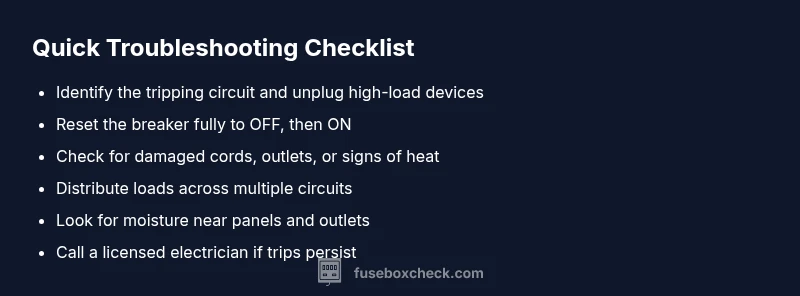
Check which outlets or devices are on the tripping circuit. Look for recent additions or high-draw appliances. Note any heat or burning smell and avoid using those devices until inspected.
Tip: Label the circuit breaker so you know what it controls next time. - 2
Power down and unplug loads
Switch off the main power or remove devices on the affected circuit. Unplug space heaters, hair dryers, and other high-draw equipment. Keep hands dry and stand on a dry surface.
Tip: Unplugging first reduces risk of shock and makes testing safer. - 3
Reset the breaker and test
Reset the breaker firmly to the full OFF position, then back to ON. Re-energize gradually by turning on one or two devices at a time, watching for a repeat trip.
Tip: If the breaker trips immediately after reset, stop and seek professional help. - 4
Inspect outlets and cords
Look for damaged insulation, scorch marks, or warm outlets. Replace frayed cords and avoid using damaged plugs. Keep outlets clear of clutter and moisture.
Tip: Damaged wiring should never be taped or patched—replace or have it inspected. - 5
Check for moisture or water exposure
Moisture near panels or outlets increases risk of shock and short circuits. Dry areas thoroughly and ensure proper weatherproofing where needed.
Tip: If you see water near the panel, turn off power at the main and call a pro immediately. - 6
Call a professional if it continues
If the circuit trips again after precautions, the problem is likely deeper in wiring or the panel. A licensed electrician should diagnose and repair to current code.
Tip: Persistent trips signal an ongoing risk—don’t delay expert help.
Diagnosis: Circuit trips frequently or unexpectedly
Possible Causes
- highOverloaded circuit from too many high-draw devices on one branch
- highShort circuit due to damaged insulation or faulty appliance
- mediumGround fault or arc fault in protected circuits
- mediumLoose or corroded connections in the panel
Fixes
- easyTurn off power at the main panel and unplug all loads on the tripping circuit
- easyReset the breaker and reintroduce loads one by one, starting with low-draw devices
- easyDistribute heavy appliances across multiple circuits and avoid daisy-chaining cords
- mediumInspect for damaged cords, scorched outlets, or signs of moisture and replace as needed
- hardIf the problem persists, call a licensed electrician to inspect wiring and the panel
Your Questions Answered
What is the difference between a fuse and a breaker?
A fuse is a one-time protective device that melts when overloaded, requiring replacement. A breaker can be reset after the fault is cleared, offering a reusable protection method.
A fuse is a one-time fuse that melts when overloaded, while a breaker can be reset after the issue is fixed.
Is it safe to reset a breaker after a trip?
Only if you’ve unplugged loads and there’s no burning smell or scorching. If trips recur, stop and consult a professional.
Reset only after unplugging loads and checking for heat or burning smells. If trips keep happening, call an electrician.
Can a trip lead to an electrical fire?
Trips are designed to prevent fires. Repeated trips indicate a wiring or panel fault that requires professional assessment.
Trips help prevent fires, but repeated trips mean you should have a professional check the system.
Should I replace a fuse with a higher rating?
No. Using a higher rating defeats protection and can cause overheating and fires. Match the device and circuit ratings exactly.
Never replace with a higher-rated fuse; it defeats protection and can cause overheating.
What if moisture is near the panel?
Turn off power at the main and keep away from damp areas. Call a licensed electrician to diagnose and repair moisture-related faults.
If there’s moisture near the panel, switch off power and call a pro right away.
When should I consider panel replacement?
If the panel is old, damaged, or repeatedly fails inspection, upgrading to a modern panel can improve safety and reduce trips.
If the panel is old or damaged, upgrading may be the safest long-term fix.
Watch Video
Highlights
- Identify the problem circuit and unplug loads.
- Reset safely and test circuits one by one.
- Avoid overloading outlets and daisy-chaining cords.
- Inspect for moisture or signs of damage.
- Call a licensed electrician for persistent trips.