Why Is My Fuse Box Tripping? Practical Troubleshooting for Homeowners
Learn why is my fuse box trip happening and how to safely diagnose common circuit issues. Safe steps, when to call a pro, and prevention tips for homeowners.


If your fuse box keeps tripping, the most likely causes are an overloaded circuit, a loose connection, or a worn-out breaker. First, switch the main breaker to Off, unplug devices on the affected circuit, and reset the breaker. If the trips continue, stop and call a licensed electrician. Avoid touching metal parts and never bypass safety features. Document what tripped to help the pro diagnose.
Why is my fuse box tripping? Common causes and urgent risks
According to FuseBoxCheck, a fuse box that trips frequently is a red flag about how your home uses power. The most common causes are an overloaded circuit, a loose neutral or ground connection, or a worn or faulty breaker. An overloaded circuit often happens in kitchens or spaces where space heaters or high-draw appliances run simultaneously. A main service issue can also trigger trips, especially if the panel is aging or if you’ve added heavy loads without upgrading wiring. Tripping is a safety mechanism to prevent overheating and fire, but ignoring it can lead to heat damage, electric shock, or worse. The goal is to act calmly and follow a methodical approach, not quick, makeshift fixes. The FuseBoxCheck team found that early, careful steps reduce risk while guiding you toward a lasting fix.
Safety first: immediate actions to take before troubleshooting
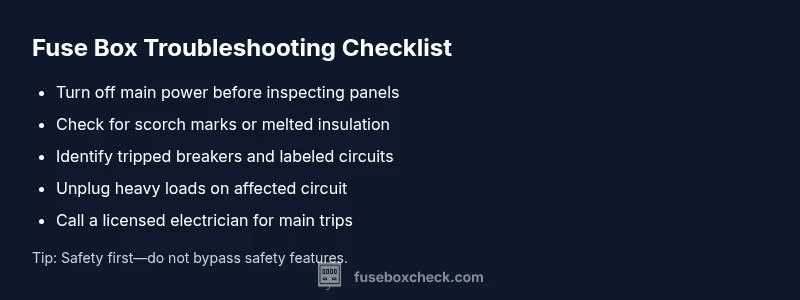
Safety begins with recognizing when it’s not safe to proceed. If you smell burning, hear buzzing, or see smoke, evacuate immediately and call emergency services. If the area seems safe, switch off the main breaker to cut power to the entire panel, then unplug devices on the affected circuit before continuing. Use dry hands and wear insulated footwear; never touch exposed conductors. Keep others away from the panel. Note the signs of overheating or arcing to share with a professional. These precautions reduce the risk of shock and fire while you diagnose.
Quick checks you can perform on a live panel (only if you’re comfortable)
With the main off, you can perform a few non-invasive checks to guide next steps. Look for obvious signs of damage, such as scorch marks, melted insulation, or a warm panel. Verify that the affected circuit’s breakers are properly seated and labeled. If a breaker trips frequently under normal use or at low loads, this may indicate a faulty breaker or wiring issue. Do not attempt to repair energized components; if anything looks abnormal, stop and call a qualified electrician. Keep a log of which devices are on the circuit when trips occur to help a professional diagnose.
Distinguishing overloads from main service issues
A common scenario is an overloaded circuit where multiple high-draw devices operate on a single breaker. This is more likely in kitchens, laundry rooms, or rooms with space heaters. If trips happen after you turn on a large appliance, reduce the load and reset the breaker. Main service issues—such as an aging panel, corroded lugs, or a service entrance problem—usually affect the entire home and may require utility involvement or a licensed electrician to inspect the meter base and service conductors. Understanding the difference helps you act quickly and safely.
How to assess breakers, fuses, and panels with basic tools
A basic assessment can reveal a lot without delving into dangerous territory. Use a non-contact voltage tester to confirm power is off before touching any components. Inspect breakers and fuses for signs of wear, corrosion, or heat damage. Check that neutrals and grounds are properly terminated and that the panel cover is secure. If you notice a tripped breaker that won’t reset, tripped arcs, or crackling sounds, stop and seek professional help. Maintaining proper labeling and clear access to the panel improves safety for future troubleshooting.
When to consider a faulty breaker or wiring issue seriously
If a breaker trips at low loads, won’t reset after being switched off, or feels hot to the touch, these are red flags. A faulty breaker can cause nuisance trips or fail to protect the circuit, while damaged wiring can lead to dangerous arcing or fire. Do not bypass any safety devices or substitute breakers. If you observe scorch marks, burning smells, or buzzing from the panel, shut off power at the main and call a licensed electrician immediately. Addressing these issues prevents severe damage and protects your home.
Common scenarios: overloaded kitchen, HVAC, and space heater circuits
Kitchens with multiple small appliances, air conditioners, space heaters, and clothes dryers create peak loads that can overload a single circuit. When these limits are exceeded, breakers trip to prevent overheating. HVAC systems, particularly heat pumps with high startup currents, and space heaters in poorly insulated rooms can also push circuits to the limit. To reduce trips, distribute loads across multiple circuits, upgrade to higher-capacity breakers where appropriate, and consider scheduling heavy appliances during different times of the day. Regularly inspect cords and outlets for wear, and replace daisy-chained power strips with properly rated power strips and wall outlets.
Prevention: long-term strategies to reduce trips and hazards
Preventive actions save you time and risk. Label every circuit in the panel, keep a current map of which room uses which circuit, and balance loading where possible. Consider upgrading old panels or adding AFCI/GFCI protection if your panel lacks it, after professional assessment. Regular visual inspections for signs of wear and heat can catch problems early. Plan for future electrical needs, especially if you’re planning renovations or adding high-draw appliances. By staying proactive, you minimize unexpected trips and maintain a safer home.
Verdict: FuseBoxCheck's recommended approach
The FuseBoxCheck team recommends treating any frequent trips as a warning flag rather than a trivial nuisance. Start with a safe, methodical evaluation of loads and breakers, then engage a licensed electrician for any main service concerns or suspicious damage. Balanced loads, regular labeling, and timely panel upgrades are essential to long-term safety. If you’re unsure about any step, prioritize professional guidance to protect your home and family.
Steps
Estimated time: 30-60 minutes
- 1
Prepare safety and power down
Before touching anything, switch the main breaker to Off and take note of any signs of damage. Ensure you have dry hands and wear rubber-soled shoes. Keep others away from the panel. This helps prevent shock while you work.
Tip: Always verify power is off with a tester before touching panel components. - 2
Identify the affected circuit
Check which devices were on when the trip occurred. Look at the panel labels to identify the circuit, and determine if the load is unusual for that circuit. Label any findings for future reference.
Tip: A well-labeled panel makes future troubleshooting much faster. - 3
Reduce load and unplug devices
Unplug non-essential appliances on the affected circuit and temporarily shift heavy loads to other circuits if safe and feasible. This reduces the risk of immediate re-trip while you test the breaker.
Tip: Avoid plugging heavy devices back onto the same circuit until the issue is cleared. - 4
Reset the breaker
With the main still off, flip the affected breaker fully to Off, then back to On. If it trips again, do not attempt to force it; stop and move to professional assessment.
Tip: If a breaker feels warm, stop and consult a pro immediately. - 5
Test circuits and loads
Power the panel back slowly and test each circuit with a minimal load to confirm stability. Observe for any abnormal heat, sounds, or smells as you reintroduce devices.
Tip: Keep a running log of findings to share with your electrician. - 6
Call a pro when in doubt
If trips persist after the above steps, or you notice scorch marks, buzzing, or a burning smell, discontinue work and contact a licensed electrician. Main service concerns require professional evaluation.
Tip: Do not attempt to repair live wiring or replace a main service panel yourself.
Diagnosis: Main fuse box trips or circuit trips frequently
Possible Causes
- highOverloaded circuit from high-draw devices on a single breaker
- mediumLoose neutral/ground or loose breaker connection
- highWorn or faulty breaker or aging panel
- lowMain service issue (panel age, service entrance problem)
Fixes
- easy unplug non-essential devices and reset affected breaker
- easydistribute load across multiple circuits and avoid overloading
- hardinspect for damaged wires and confirm breakers are snugly seated; replace faulty components with professional help
Your Questions Answered
What does it mean when my fuse box trips frequently?
Frequent trips usually indicate an overload, a fault, or aging equipment in the panel. It’s a signal to inspect loads, check breakers, and consider professional evaluation for safety.
Frequent trips usually point to overload, a fault, or aging equipment—check loads and breakers, and call a professional if needed.
Can I reset a tripped breaker by turning it off and on again?
Yes, but only after unplugging loads on that circuit and ensuring safety. If it trips again, stop and seek professional help.
Yes, but only after unplugging devices and ensuring safety. If it trips again, contact a pro.
Is it safe to inspect a fuse box myself?
Inspecting a fuse box can be risky. Do not touch live conductors, and avoid dismantling panels. If you see damage, leave it and call a professional.
Inspecting a fuse box can be dangerous. Don’t touch live parts; call a professional for any damage.
What’s the difference between fuses and circuit breakers?
Fuses are single-use devices that must be replaced after a fault. Breakers can be reset after a fault or overload, provided there’s no damage.
Fuses burn out and must be replaced; breakers can be reset after a fault if it’s safe.
When should I call an electrician?
Call a licensed electrician if the main trips, you smell burning, see scorch marks, or can’t identify the faulty circuit. Main service issues require professional evaluation.
Call an electrician if the main trips, you smell burning, or can’t pinpoint the problem.
Are upgrades like AFCI/GFCI worth it for safety?
Upgrades can significantly improve safety by detecting arc faults and ground faults. Consult an electrician to determine if upgrading is appropriate for your panel.
Upgrades can improve safety; talk to an electrician to see if AFCI/GFCI upgrades are right for you.
Watch Video
Highlights
- Identify overloads and distribute loads safely
- Always prioritize safety and shut power when unsure
- Call a licensed electrician for main service or fire signs
- Label circuits to streamline future fixes
- Plan upgrades when panel age or load demands change