Why Fuse Box Keeps Tripping: Troubleshooting Guide
Urgent, practical guide for homeowners troubleshooting fuse box trips. Learn safety checks, diagnostic flow, step-by-step fixes, and when to call a licensed electrician.


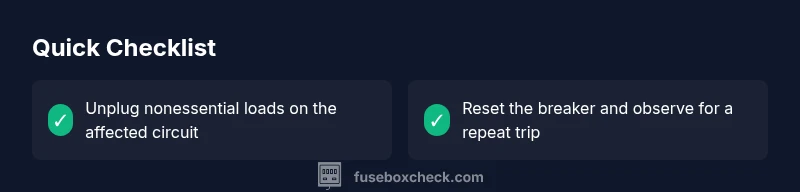
Reason: The most common cause of repeated fuse box trips is an overloaded circuit or a faulty appliance drawing excess current. Quick fixes: 1) unplug nonessential devices on the affected circuit, 2) switch the breaker off, then back on, and 3) if you have AFCI/GFCI protection, reset it and test. If the breaker trips again, stop and contact a licensed electrician.
Why the fuse box keeps tripping: what it indicates about your electrical system
When a fuse box trips, it’s a signal that your electrical system is protecting itself from overload or a fault. The keyword is safety: a trip means current is exceeding what a circuit is meant to handle, or a device on that circuit has developed a fault. In many homes, trips happen because a single circuit is overloaded by multiple appliances or power-hungry tools. The risk rises as you add more devices on older wiring, or when a circuit includes long runs with worn insulation. Understanding the pattern of tripping — whether it occurs with heavy loads, or unpredictably with a small appliance — helps narrow down the root cause. In this guide, we focus on practical, urgent steps to diagnose and manage the issue without overstepping safety boundaries. Remember: if you smell burning plastic, hear buzzing, or see scorch marks, leave the area and call emergency services.
Immediate safety steps you should take before troubleshooting
Your first priority is safety. If a breaker trips, switch it to the OFF position and leave it off for a few minutes to cool. Then, unplug most devices on the affected circuit and reset the breaker. If it stays on, plug in one device at a time to identify a culprit; if it trips with the device plugged in, that device may be at fault. Do not bypass safety devices; GFCI/AFCI outlets protect against shocks and should never be disabled. Keep water away, dry hands, and avoid working behind an energized panel. If anytime you see buzzing sounds, warm outlets, or melted insulation, stop and call a licensed electrician immediately.
Common causes to check first, before you rip out walls
- Overloaded circuit: too many high-wattage devices on a single circuit
- Faulty appliance or cord: a damaged heater, microwave, or power strip can pull surge current
- Damaged outlet or wiring: loose screws, frayed insulation, or corrosion
- Ground-fault or arc-fault: moisture or aging wiring can trigger GFCI/AFCI devices
- Defective breaker: breakers wear out and trip more easily over time
- Shared neutrals or multi-wire branch circuits: improper wiring can cause nuisance trips
By checking these causes methodically, you can often identify the culprit without exposing yourself to live voltages.
How to document and interpret trips for troubleshooting
Create a simple trip log: note the date, time, circuit label, and what devices were in use. Track whether the trip happens when a specific appliance starts, when power tools run, or during peak loads. A pattern like 'the fridge only' or 'the AC unit kicks in' points to the likely circuit or device. If you have AFCI/GFCI protection, note whether the GFCI trips alone or the entire panel trips. This information guides you toward the root cause and helps a professional diagnose faster.
Diagnostic flow at a glance
- Symptom: Breaker trips when loading a circuit; may involve a single heavy device or multiple loads.
- Diagnosis: Check for overload, inspect for damaged devices, test outlets, and verify the panel and ground connections.
- Solutions: Distribute load, replace faulty devices, repair wiring, or upgrade circuit capacity. If the panel is old, plan a professional upgrade.
Use this flow repeatedly to confirm the issue and avoid skipping steps that could hide a dangerous fault.
Step-by-step: Safe fixes for the most common cause (overload)
- Shut off power to the affected circuit at the panel. Keep your hands dry and stand on a non-conductive surface. Tip: Use a battery-powered flashlight instead of standing in the dark.
- Unplug all devices on that circuit and reset the breaker to ON. Observe if it stays on with no load. Tip: Label the circuit so you can monitor it in the future.
- Reconnect loads gradually: plug in one device at a time, starting with low-wattage items (lamps, chargers). If the breaker trips during a test load, the culprit is likely a high-wattage device or a wiring fault on that circuit. Tip: If a specific device triggers the trip, inspect its cord for damage.
- Inspect outlets on the circuit for heat or scorch marks; check for loose wires. Tip: If you notice any warmth, burning smell, or melted insulation, stop and call a licensed electrician.
- Consider upgrading the circuit or relocating devices to other circuits if overload continues. Tip: Do not attempt rewiring or panel upgrades yourself unless you have training.
- After addressing the suspected overload, slowly restore power and monitor for new trips. Tip: Keep a log of the test results for future reference.
Estimated time: 60-90 minutes depending on complexity.
Safety notes and when to call a pro
Electrical panels are high-risk environments. If you smell burning, notice buzzing, listen for crackling, or see melted insulation, evacuate and call emergency services if needed. Recurrent trips may indicate hidden wiring faults or aging components that require licensed electrical work. Always follow local code requirements and never bypass breakers, fuse links, or safety devices. When in doubt, schedule a professional inspection to prevent fire hazards.
Prevention strategies to reduce future trips
- Schedule periodic panel inspection and load balancing to distribute power across circuits more evenly.
- Replace old breakers and wiring with modern AFCI/GFCI-protected systems as needed.
- Use dedicated circuits for high-draw appliances (HVAC, water heater) to avoid overload.
- Keep cords and outlets in good condition; replace damaged cords immediately.
- Maintain a clean panel area; label circuits clearly and update the map if you add or remove loads.
Following these practices reduces nuisance trips and improves overall home electrical safety.
Steps
Estimated time: 60-90 minutes
- 1
Shut off power to the affected circuit
Go to the main panel, switch the target breaker to OFF, and confirm no power is flowing to that circuit. Wait a few minutes for any warm components to cool before handling.
Tip: Dry hands and non-conductive footwear reduce shock risk. - 2
Unplug all devices on the circuit
Remove every plug from outlets on that circuit to ensure the load is removed. This makes it easier to test whether the trip is caused by a device or the circuit itself.
Tip: Label the circuit to help you monitor loads in the future. - 3
Reset the breaker and test with no load
Turn the breaker fully to OFF, then back to ON and observe if it stays on without any devices plugged in. If it trips immediately, there may be a wiring fault.
Tip: If it trips with no load, stop and call a licensed electrician. - 4
Reconnect loads gradually
Plug in one device at a time, starting with low-wattage items. If the breaker stays on after a device is added, continue with the next item.
Tip: If a specific device triggers the trip, inspect its cord and outlet. - 5
Inspect outlets and wiring
Check for warm outlets, scorch marks, loose screws, or damaged insulation. Do not attempt repairs beyond basic inspection if you’re unsure.
Tip: If you see heat or melting, stop and call a professional immediately. - 6
Evaluate circuit capacity
If trips persist with only light loads, the circuit may be undersized or wiring degraded. Consider upgrading or redistributing loads.
Tip: Upgrading should be performed by a licensed electrician. - 7
Document results and plan ahead
Update your circuit map, log recurrence, and plan preventive steps like load balancing and potential panel refresh.
Tip: Keep a running log and label all changes in your panel.
Diagnosis: Fuse box trips frequently when loads increase on a circuit
Possible Causes
- highOverloaded circuit from multiple high-wattage devices on a single circuit
- mediumShort circuit due to damaged wiring or faulty outlet/appliance
- lowGround fault or arc fault from modern multi-wire branch circuits
Fixes
- easyUnplug nonessential devices and distribute load across multiple circuits; avoid running high-wattage appliances together
- mediumInspect outlets and cords for damage; replace damaged components; if you suspect a short, stop using the circuit and call a licensed electrician
- easyIf you have arc-fault or ground-fault circuit interrupter (AFCI/GFCI) devices, ensure they are reset properly; test using the test button if applicable
Your Questions Answered
Why does my fuse box trip when I turn on the washing machine?
Washing machines draw a surge when starting, which can trip a circuit if it’s near capacity or has a fault. Check that circuit with a sequential load test, inspect the outlet and cord for damage, and consider using a dedicated circuit if trips continue. If the problem persists, have the device checked by a professional.
Washing machines can cause trips due to startup surge or a fault; test with other devices and inspect the cord, then seek professional help if needed.
Can a fuse box trip lead to a fire?
Yes, repeated trips can indicate overheating, wiring faults, or damaged components that pose fire hazards. Stop using the affected circuit and consult a licensed electrician to inspect the panel, outlets, and wiring.
Yes, frequent trips can signal a fire risk; get the panel checked by a professional.
Is it safe to reset a tripped breaker repeatedly?
Resetting repeatedly without identifying the cause can hide a fault and increase risk. If a breaker trips again after reset, stop and seek a professional assessment.
Resetting repeatedly can hide issues; stop after a trip and get a professional check.
Should I replace a breaker or the wiring?
A tripping breaker can indicate a worn breaker, an overloaded circuit, or damaged wiring. An electrician should assess both the breaker and the wiring to determine the safe fix.
An electrician will determine whether the breaker or wiring needs replacement.
What is the difference between a fuse box and a circuit breaker panel?
A fuse box uses fuses that burn open when overloaded; a breaker panel uses switches that trip or reset. Modern homes typically use breaker panels with AFCI/GFCI protection.
Fuses burn open; breakers trip and can be reset. Modern homes usually use breakers.
When should I call a licensed electrician?
If trips recur after basic checks, if you suspect wiring damage, or if you smell burning. A licensed electrician will diagnose safely and advise on upgrades.
Call a licensed electrician if trips persist or you suspect wiring issues.
Watch Video
Highlights
- Identify the root cause before any replacement.
- Distribute load to prevent nuisance trips.
- Never bypass safety devices or wiring protections.
- Log trips to speed up diagnosis.
- Call a licensed electrician for complex faults.