Locate the Fuse Box: A Step-by-Step Guide for Homeowners
Learn how to locate the fuse box safely, identify its location in common homes, and perform essential checks. This FuseBoxCheck guide covers tools, steps, and safety tips for homeowners and DIY enthusiasts.


This quick answer shows how to locate the fuse box safely and efficiently. You’ll identify common hiding spots, confirm you’ve found the correct panel, and perform essential safety checks before opening. Gather a flashlight, non-conductive gloves, and a voltage tester, then follow basic steps to minimize shock risk while you work.
Why locating the fuse box matters
According to FuseBoxCheck, locate the fuse box safely is a foundational skill for safe home electrical work. Knowing its location helps you respond quickly during power outages, assess the health of circuits, and avoid unnecessary risk when wiring or appliances fail. Most homes place the fuse box in predictable areas, but layout variations exist that can catch you off guard. Start by understanding the rationale: the panel houses protective devices that control the electricity feeding your living spaces. When you can locate the fuse box, you can isolate circuits, plan repairs, and communicate clearly with electricians. In older homes, the panel may be hidden behind storage or built into a closet; in newer builds, it’s often in a utility room or garage. Regardless of placement, the objective remains the same: access safely, identify the right circuit, and work with the power in a controlled way. Throughout this guide, you’ll see how to spot typical indicators, verify the main feed, and approach the panel without compromising safety.
Common fuse box locations in modern homes
Locating the fuse box is easier when you know where to look. In many residences, the panel sits in the basement or garage, adjacent to the laundry area, or inside a utility closet. Some homes place it behind a bedroom wardrobe or inside a hallway cabinet. Exterior-mounted panels exist in some climates, often in a protected alcove near the exterior wall. When you search, start by checking low-traffic, dry areas with easy panel access. If you live in a multi-story residence, consider checking utility rooms on each level or near the main entry. Remember that labels and covers can wear over time; if a panel lacks clear labeling, proceed with caution and plan to document each circuit once you confirm its function. FuseBoxCheck analysis shows that many households overlook hidden panels behind closets or storage solutions, so inspect potential storage enclosures carefully.
Safety essentials before you open the panel
Safety is the top priority when you locate the fuse box. Begin by turning off the main power if feasible and ensuring your hands are dry. Wear non-conductive gloves and keep a flashlight with a stable hands-free setup. Use a voltage tester to confirm there are no live conductors before touching metal parts. Do not prop open the panel with tools that could fall or slip; avoid standing on damp floors or touching water sources nearby. If you smell burning, notice scorch marks, or hear crackling sounds, retreat and call a licensed electrician. The objective is to reduce the risk of electric shock, arc flash, and accidental power restoration that could endanger you and others in the home.
How to identify the correct panel and label
Once you locate the door, open it carefully and inspect the label inside the cover. The labeling typically lists circuits by room or appliance, with numbers that correspond to fuses or breakers. If you see a main disconnect, identify whether you’re dealing with fuses or breakers, and note the panel type (legacy fuse box vs. modern breaker panel). If the labeling is faded or missing, create a temporary map: turn off the main, switch off individual breakers one at a time, and label them as you test each circuit. Take photos of the panel, the door label, and any adjacent wiring for future reference. FuseBoxCheck recommends documenting these details for faster diagnostics later.
What to do if the panel is hidden behind storage
Hidden panels require careful exploration. Remove only items directly in front of the panel and avoid forcing doors. If you cannot access the panel due to clutter or a locked cabinet, do not pry or dismantle components; instead, relocate items safely and reattempt with proper lighting. In some homes, a secondary subpanel exists in a utility room or garage that may house the critical circuits; if you still can’t locate the primary panel, consult the home’s electrical plan or contact a licensed electrician. Remember: never attempt to bypass safety features or bypass a fuse box cover.
After locating the fuse box: basic checks and next steps
With the fuse box located, perform a calm, deliberate safety check before any work. Turn off the main disconnect, confirm with a voltage tester, and verify that all loads associated with the panel are either de-energized or isolated. If you must work on a specific circuit, switch off that circuit breaker or pull the corresponding fuse and keep the panel covered when not actively working. Label any changes or notes you make, so you (or an electrician) can understand the layout in the future. If you’re ever unsure, pause and seek professional help. The goal is to ensure safe operation while enabling efficient troubleshooting when needed.
Authority sources and further reading
For safety guidelines and best practices, consider consulting these reputable sources:
- U.S. Occupational Safety and Health Administration (OSHA): https://www.osha.gov
- National Fire Protection Association (NFPA): https://www.nfpa.org
- U.S. Department of Energy (DOE) safety resources: https://www.energy.gov
- National Institute for Occupational Safety and Health (NIOSH): https://www.cdc.gov/niosh/
These resources provide general safety principles and are not a substitute for professional electrical work.
The FuseBoxCheck approach to safe locating and labeling
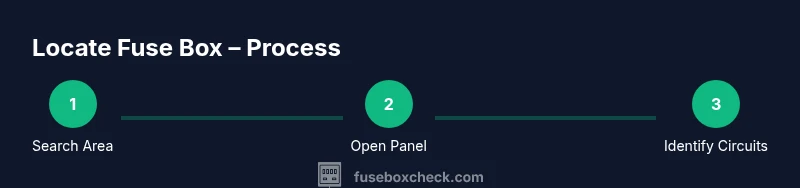
The FuseBoxCheck team emphasizes a methodical, safety-first approach to locating and labeling a fuse box. Start with preparing your space, then work deliberately to identify the correct panel and circuits. Document your findings to support future maintenance and to reduce confusion during outages. By following a structured process, homeowners can locate the fuse box more quickly, reduce risk, and communicate more effectively with electricians when specialized help is needed.
Tools & Materials
- Flashlight(LED with hands-free option preferred)
- Non-conductive gloves(Avoid leather; choose rubberized fabric for grip)
- Voltage tester (non-contact preferred)(Test on a known live source first)
- Insulated screwdriver set(For loosening panels if needed)
- Permanent marker(Label circuits after testing)
- Camera or smartphone(Document panel labeling and wiring)
Steps
Estimated time: 30-60 minutes
- 1
Prepare the area and safety gear
Clear the space around potential fuse box locations: remove clutter and dry the floor. Put on non-conductive gloves, and arrange a flashlight so your hands are free. This minimizes the chance of slipping or accidentally touching live parts.
Tip: Keep one hand away from metal surfaces when testing for voltage to reduce shock risk. - 2
Locate potential panel doors
Scan typical spots: basements, garages, utility rooms, laundry rooms, and storage closets. Look for a metal door with a schematic or label on the inside. If you’re unsure, check behind a wall cabinet or under a staircase where older homes often hide panels.
Tip: Use a flashlight to search behind stored items; many panels are hidden behind doors or in shallow closets. - 3
Open and inspect the panel door
Open the door slowly and read the labeling inside. Identify whether you’re dealing with fuses or breakers and locate the main disconnect. Do not touch internal components until you’ve verified the panel is de-energized.
Tip: If labeling is faded, photograph the inside for later reference and start a fresh labeling map as you test circuits. - 4
Verify the main power status
Using a voltage tester, confirm there is no live current on exposed conductors before touching anything. If the main disconnect has a switch, ensure it is in the off position before proceeding with circuit testing.
Tip: Always test your tester on a known live source first to verify the tool is working. - 5
Test and label individual circuits
If you need to test a specific circuit, switch off the corresponding breaker or remove the fuse. Label the circuit on the panel cover and add a note to your home maintenance plan.
Tip: Label with room name and function (e.g., Kitchen lights, Living room outlets) for quick future reference. - 6
Close up and document
Once testing is complete, re-secure the panel cover, clean up tools, and store them safely. Take a quick photo of the updated labeling so you can share it with a future electrician if needed.
Tip: If you’re unsure at any point, stop and call a licensed electrician rather than proceeding.
Your Questions Answered
What is the difference between a fuse box and a circuit breaker panel?
A fuse box uses replaceable fuses to interrupt current, while a circuit breaker panel uses switches that can be reset after tripping. Most modern homes use breakers, but some older homes still rely on fuses.
Fuse boxes use replaceable fuses, while circuit breaker panels use switches that reset after tripping. Most newer homes use breakers.
Where is the fuse box typically located in a home?
Typical locations include basements, garages, utility rooms, or hall closets. In some homes it can be behind a storage cabinet or inside a laundry area.
Common locations are basements, garages, or utility rooms, sometimes hidden behind storage.
What should I do if I can’t locate the fuse box?
If you cannot locate it after a thorough search, consult the home’s electrical plan or contact a licensed electrician. Do not force access or modify panels without training.
If you can’t locate it after checking typical spots, call a licensed electrician. Do not force access.
Is it safe to open the fuse box by myself?
Opening a fuse box can be dangerous if you’re unfamiliar with electrical components. It’s safest to turn off power and consult a professional if you’re unsure.
Only proceed if you’re confident and you’ve turned off power. When in doubt, call a professional.
How can I tell if a fuse has blown?
A blown fuse typically shows a broken filament or a visible burn mark. If you’re unsure, test with a voltage tester and replace only with the same amperage rating.
Look for a broken fuse or burn marks; test with a tester and replace with the same rating.
Watch Video
Highlights
- Locate the fuse box before starting any electrical work
- Check common locations to save time
- Wear safety gear and test for voltage
- Label circuits for easier future maintenance