Where is the fuse box in a caravan: a practical locating guide
Discover where a caravan's fuse box is usually located, how to identify it, and step-by-step safety tips for inspecting and maintaining your 12V/DC electrical system.


To locate the caravan fuse box, start at the service panel area and look for a removable access panel near the door. According to FuseBoxCheck, many caravans place it behind a cabinet panel in the service compartment, inside a wardrobe, or under seating. If you still can't find it, check the owner's manual or the main DC distribution label, and verify power is off.
where is fuse box in a caravan: common locations and how to spot them
If you’re wondering where the fuse box sits in a caravan, you’re not alone. The exact location varies by model and year, but there are reliable patterns you can rely on. In many caravans the fuse box lives behind a removable panel inside a service compartment, inside a wardrobe, or beneath a seating area or bed base. The board is typically labeled with fuses or circuit names (e.g., lights, water pump, fridge). When maintenance is needed, you’ll want to access this area with the power off and a clear workspace.
Look for small, accessible panels with screws or clips. Some models tuck the fuse box behind a kitchen cabinet or under a dinette area. If the caravan has a dedicated utility space, the fuse box may live there, sometimes near the trailer battery or main control panel. Always handle with care—remember that some caravan systems share a common negative return, so a wrong move can affect multiple circuits.
Where to start: inspect any obvious service compartments first, then check nearby storage spaces. If you still can’t find the fuse box, use the owner’s manual’s index under “Electrical system” or “DC distribution.” If you’re shopping for a used caravan, ask the seller about the fuse box location and whether any recent work has been done to the DC system.
Why this matters: locating the fuse box quickly helps you isolate faults, reset blown fuses safely, and prevent electrical damage during camping trips. For many owners, the fuse panel is a critical access point for preserving power to essential appliances and lighting.
Where is the fuse box in a caravan: step-by-step clarity and model variations
Caravans come in many layouts. Some fuse boxes are in a service bay behind a panel near the door; others are tucked under seating or behind wardrobe doors. In some designs, you might even find two separate fuse panels—one for interior DC circuits and another for the propulsion or vehicle-related electricals. If you’re working with a newer model, you may see a compact, shielded DC distribution unit with a labeled diagram on the cover. The bottom line is: check near the entry, in the kitchen or wardrobe, under beds, and in any dedicated service bays. If the label is worn or unreadable, refer to the manufacturer’s electrical diagram.
In any case, always verify the panel’s markings. A properly labeled fuse box will show each circuit with its function. If you’re unsure, contact the manufacturer or a qualified caravan electrician before making changes. With some models, the fuse block is modular and can be replaced or upgraded; ensure compatibility before swapping components.
How to visually identify the fuse box
Identifying the fuse box visually means recognizing a compact metal or plastic enclosure with multiple fuse slots or a cluster of circuit breakers. Look for the designation “DC” or a label like “FUSES” or “FUSE BOARD” on the panel. The cover often lifts to reveal the fuse links, with a small diagram indicating which fuse protects which circuit. Some modern units use blade fuses in a small fuse box, while older layouts may rely on ferrule-style or glass cartridges.
Safety signs are a plus: if the panel has warning icons for high current or battery power, treat it with extra caution. If the cover is obscured by stickers, take a photo first and clean the surface so you can read the labels clearly. If a panel layout is unclear, a spare flashlight and a magnifying glass can help you read tiny print. Remember, in caravans, 12V DC systems can be live even when “off” at the main consumer switch, so proceed with care.
Using the owner’s manual and model-specific diagrams
Always reference the owner’s manual for your caravan’s exact fuse box location and circuit mapping. Each model can differ, and a diagram printed in the manual will save time and reduce risk. If you’ve inherited a caravan without original paperwork, contact the manufacturer’s support line and ask for the electrical schematic or the service bulletin for your model year. In many cases, dealers or caravan clubs have PDFs of common layouts that can help you identify where your fuse box sits and which circuits you protect.
When using manuals, cross-check the diagram with the actual fuse box markings. If circuits appear mislabeled or faded, annotate the panel with clear, durable labels. A quick note: always ensure you’re working with the correct voltage reference (DC) and that you’re not confusing it with the AC shore power system. Misdirected efforts can blow fuses or damage electronics.
How to distinguish DC vs AC panels and what to expect
In caravans, the fuse box usually handles DC (12V) circuits for lights, water pump, and fans. AC circuits (230V or 120V, depending on region) are managed by a different distribution panel connected to shore power. The DC fuse box panel is typically smaller and uses blade-type or glass ceramic fuses, while AC panels may involve circuit breakers and a separate main breaker. If you see both panels separated by a wall or cabinet, approach them as two distinct electrical subsystems with separate safety rules. Always identify the panel you’re working on before removing any fuse or breaker.
When testing, avoid using metal tools near energized terminals. Use insulated tools and wear eye protection if you’re inspecting live components. If you’re unsure about whether a circuit is DC or AC, consult the user manual or a professional before touching any wiring. Keep a spare fuse kit with the correct ratings for your caravan’s circuits.
Tools and safety: preparing to inspect the fuse box
Before you begin, assemble the right tools and review safety steps. A basic toolkit includes a screwdriver set (Phillips and flathead), a panel removal tool, a sturdy flashlight, a non-contact voltage tester, and a digital multimeter if you plan on testing circuits. Wear gloves with good grip to avoid slipping, and keep your work area dry and well-lit. If you must work near the battery, take care to avoid short circuits. Neutral and earth wires should be handled with caution.
Power down safely: disconnect shore power and switch off the caravan’s battery or disconnect the negative lead if feasible. Ground fault protection and proper discharge procedures reduce the risk of shock. If you’re not confident, hire a qualified caravan electrician. Always document any changes you make for future maintenance and ensure all panel screws are tightened after work.
Step-by-step quick locate method (practical walkthrough)
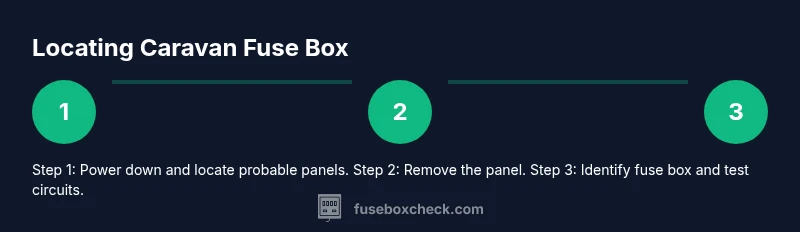
- Power down and secure the area: unplug from shore power and switch off the battery disconnect. 2. Inspect common locations (door near entry, wardrobe, under seating, or bed base) for a removable panel labeled with its function. 3. Use the screwdriver to remove the access panel screws; set the panel aside carefully. 4. Inspect the panel’s interior for a fuse box or a circuit-breaker cluster; verify the labels match the circuits you know. 5. If the fuse is blown, identify the rating, replace with a fuse of the same rating, and reassemble in reverse order. 6. Reconnect power, test essential circuits, and observe for any abnormal behavior. 7. Label each circuit and update the manual or notes with the fuse rating and circuit name. 8. If the fuse box is not found in the expected areas, check the manufacturer diagram or seek professional help.
Tip: take photos during removal so you can reassemble exactly as you found it. If you encounter corrosion, fatigue, or melted plastic, do not reuse components; replace them and inspect nearby wiring for damage.
Post-locate checks: testing circuits and labeling
After you locate and inspect the fuse box, perform quick tests to ensure circuits are functioning properly. Use the multi-meter to verify continuity across fuses and test battery voltage at the fuse input under load. Switch on one circuit at a time and monitor for abnormal signs like buzzing, heat, or burnt smell. Label every fuse with its circuit name, and include a date of inspection. Keep a spare fuse kit with the correct ratings and store it near the fuse box for quick replacement when needed.
Finally, resecure the panel, clean up the workspace, and verify all appliances run as expected on both battery and shore power. If you notice recurring fuse blows on a specific circuit, there may be a short or overload that requires a professional diagnosis.
Common mistakes to avoid and maintenance tips
Avoid guessing fuse ratings or substituting higher-rated fuses. Use the exact rating shown on the original fuse. Don’t force a panel cover if it doesn’t fit—misalignment can damage terminals. Never work on live circuits without proper PPE and a non-conductive tool. Regularly inspect fuse labels and replace any brittle or faded markings to keep maintenance straightforward. Schedule periodic checks to clean dust from the panel and ensure vents aren’t blocked, which can cause overheating.
This discipline helps prevent electrical faults and ensures safer travels in your caravan. To stay compliant with safety standards, follow regional electrical codes and rely on manufacturer recommendations for fuses, labels, and panel components.
noteforblock2IdempotentReturnCheckOnly? false?
Tools & Materials
- Screwdriver set (Phillips and flathead)(To remove access panels without damage.)
- Panel removal tool(Plastic pry tools reduce panel damage.)
- Flashlight or headlamp(Shine light into tight compartments.)
- Non-contact voltage tester(Verify no live current before touching components.)
- Digital multimeter(For testing continuity and voltage across fuses.)
- Notebook and marker(Document fuse ratings and circuits.)
Steps
Estimated time: 25-40 minutes
- 1
Power down and secure area
Turn off shore power and disconnect the battery if possible. Verify there is no voltage on exposed conductors using a non-contact tester before touching anything.
Tip: Always assume circuits might still be live until tested. - 2
Identify likely locations
Check common spots: near the entry panel, behind wardrobe panels, under seating, or beneath the bed base. Look for labeled panels with DC or FUSE markings.
Tip: Take photos of any labels before removing panels. - 3
Remove the access panel
Use the appropriate screwdriver to remove screws and set the panel aside in a safe place. Keep track of all screws to avoid misplacing them.
Tip: Be gentle to avoid cracking trim or bending the panel. - 4
Locate the fuse box within the panel
Inspect the interior for a small box with fuses or a bank of circuit breakers. Read the labeling to confirm it’s the DC distribution unit.
Tip: If labels are faded, cross-check with the manual diagram. - 5
Inspect and test fuses
Check each fuse for a blown filament or a broken circuit path. Use a multimeter or continuity tester to confirm faults.
Tip: Do not replace a blown fuse with a higher rating. - 6
Replace a blown fuse
Install a fuse of the same rating as the original. Recheck the panel’s labeling and ensure the fuse seats firmly.
Tip: Securely seat fuses to avoid loose connections. - 7
Reassemble and test circuits
Reattach the access panel, reconnect power, and test each circuit one by one to confirm proper function.
Tip: Test in a safe, step-by-step manner to isolate issues quickly. - 8
Document and label
Label each circuit for future maintenance and note the fuse rating and circuit name in your caravan manual.
Tip: Keep these notes with your owner's manual for future trips.
Your Questions Answered
Where is the fuse box typically located in a caravan?
Caravan fuse boxes are usually placed in a service panel area, behind a removable panel near the door, inside a wardrobe, or under seating/bed bases. Always consult the model’s electrical diagram to confirm the exact site for your unit.
Most caravans hide the fuse box behind a panel in the service area, near the entry, under seating, or in a wardrobe. Check your model's diagram to be sure.
Can I replace caravan fuses myself?
Yes, you can replace fuses yourself if you unplug power first and use the correct fuse rating. Do not exceed the rating to avoid overheating and potential fires. If a fuse continues to blow, there may be a short or overload requiring a professional diagnostic.
You can replace fuses if you disconnect power and use the right rating, but don’t override. If fuses keep blowing, get a professional to check for faults.
What ratings do caravan fuses use?
Fuse ratings depend on the circuit they protect. Always refer to the original labeling or the owner's manual to locate the correct rating, and replace with the exact same value.
Refer to the fuse label or manual to match the rating exactly; never increase the rating to compensate for a fault.
Is it safe to test a caravan fuse box with a multimeter?
Testing with a multimeter is safe when the power is off and you follow proper procedure. Do not test live circuits without training, and wear safety gear.
Only test when power is off and you know what you’re doing; if unsure, consult a professional.
What should I do if there’s no fuse box in my caravan?
Some caravans use circuit breakers instead of traditional fuses, or one centralized unit. Check the main distribution panel and consult the manufacturer for the correct layout.
If there’s no obvious fuse box, look for a circuit breaker panel or a centralized DC distribution unit and refer to the manual.
Can a blown fuse indicate a bigger electrical fault?
A blown fuse can signal a short, overload, or damaged wiring. If a fuse blows repeatedly, stop and seek professional diagnosis to prevent fire risk.
Repeated blows often mean a larger issue—don’t keep replacing fuses without investigating the cause.
Watch Video
Highlights
- Identify likely fuse box locations before starting
- Always power down before inspecting or touching fuses
- Label all fuses for easy future maintenance
- Use manufacturer ratings when replacing fuses
- Document changes and keep a maintenance log