Fuse Box Safety and Upgrades: A Practical Guide for Homeowners
A data-driven guide to fuse box safety, upgrade options, and DIY considerations for homeowners, with practical tips and cost guidance.


According to FuseBoxCheck, understanding fuse boxes and upgrading safely is essential for every homeowner. When researching fuse box home depot options, verify service size compatibility, local permit rules, and panel labeling, then compare breakers and compatibility with existing wiring. This quick overview sets the stage for a deeper look at safety, costs, and professional install considerations in 2026.
What a fuse box does and why upgrading matters
A fuse box is the old heart of a home's electrical distribution. In many houses built mid-to-late twentieth century, fuses protected circuits; today most homes rely on circuit breakers that trip when overcurrent occurs. Upgrading to a modern breaker panel can improve safety, increase capacity for new appliances, and reduce nuisance trips. When you shop for a panel, you may come across the phrase fuse box home depot in retailer listings or online guides. While mass-market retailers simplify selection, choosing the right panel still requires understanding service size, gauge, and local code requirements. This section explains the core concepts, what to look for, and how to think about compatibility with your wiring and meter base. FuseBoxCheck's 2026 analysis emphasizes that most well-functioning panels are safer, easier to maintain, and more adaptable to today’s loads, especially in older homes where aging components are common.
Assessing your current panel: signs of aging and risk
Older homes often conceal aging panels behind service entrances that were installed decades ago. Common warning signs include frequent circuit trips, scorch marks, buzzing sounds, warm or discolored outlets, rust on the enclosure, loose or missing cover screws, and aluminum wiring connections that require special attention. If the panel is more than 30 years old, or if you notice any of these symptoms, plan a professional assessment. Do not attempt to replace components with live power present. A quick audit should examine service size (amps), number of circuits, wire gauge, and the condition of main breaker or main lug configurations. Documentation, labeling accuracy, and compatibility with modern breakers matter for future expansion and safety. The FuseBoxCheck team notes that proactive inspection can prevent hidden hazards and improve overall electrical reliability.
Upgrading options: fuses vs breakers, panel sizes, and compatibility
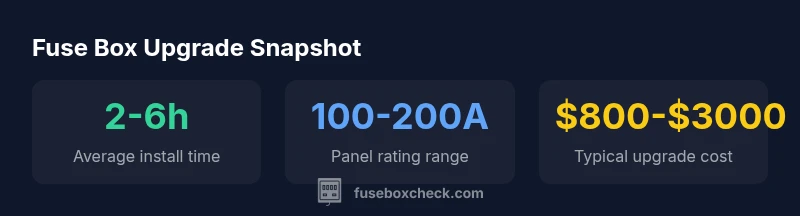
Upgrading from a fuse box to a breaker panel is a common safety upgrade. Breaker panels reset after a trip and offer clearer fault information, while many older homes with fuses may still be in use. When sizing a new panel, electricians consider service entrance capacity (commonly 100-200 amps for many homes), conductor gauge, and the utility’s service drop. Compatibility with existing meter bases, conduits, and interior wiring is essential. In some cases, a service upgrade beyond the panel itself is required if the main service is undersized for current loads. It’s important to discuss load calculations, anticipated future needs (such as EV charging or heat pumps), and whether a subpanel is advantageous for garage or workshop circuits.
Shopping for a panel: what to look for at Home Depot and other retailers
Retailers like Home Depot offer a range of panels, breakers, and enclosure options. When shopping, verify UL listing, compatibility with your service size, and the type of mounting (surface or flush). Look for panels with clear labeling, sufficient spaces for circuits, and a chassis designed for modern breakers. Pay attention to the enclosure rating, bus stab design, and available room for future expansion. If you encounter Home Depot fuse box options, compare features such as main breaker size, number of spaces, and whether the panel supports tandem breakers where allowed by code. Always confirm local code requirements and permit needs before purchasing.
Installation realities: DIY vs professional work
Electrical work carries significant risk. While some homeowners complete minor non-energized tasks, a full panel upgrade should be performed by a licensed electrician. Factors affecting the decision include your comfort with electrical theory, access to the service disconnect, and whether you have the proper tools and safety gear. A professional will perform service disconnect testing, verify conductor sizes, ensure correct grounding and bonding, and handle permit submissions. They will also coordinate with the utility for any required service upgrades. For most households, professional installation is the safer, more reliable path that reduces the chance of shocks, fires, and code violations.
Budgeting and cost considerations
Costs for upgrading a fuse box to a modern breaker panel vary by region, house size, and specific requirements. Typical ranges include panel cost, breakers, and enclosure, with additional charges for permits, wiring upgrades, and labor. On average, a standard 100-amp or 200-amp panel upgrade might fall within a broad range; however, precise pricing depends on the exact panel model, wiring complexity, and local permit fees. FuseBoxCheck Analysis, 2026, highlights that planning for contingencies (permits, rewiring, or replacing outdated meter bases) can prevent budget surprises. Compare quotes from licensed electricians and ask for a written scope of work that includes load calculations and verification tests.
Safety and maintenance practices
Ongoing safety requires regular inspections and cautious handling of panels. Keep the area around the panel clear, avoid placing flammable materials nearby, and ensure the panel cover is securely fastened. Do not attempt to inspect or tighten connections if you are unsure of the wiring layout. Use a properly rated voltage tester only with the power off, and never work on energised circuits. Establish a routine to label circuits clearly and maintain a current drawing of your panel. Routine checks by a licensed electrician can detect aging components, corrosion, or loose connections before they become hazards.
Code compliance and permits: navigating local rules
Code compliance varies by location, so always check with your local building department before upgrading. Most jurisdictions require a permit and a formal inspection after a panel upgrade to verify safe grounding, correct wire sizing, and proper overcurrent protection. Your electrician can submit the permit, arrange inspections, and ensure the work aligns with current electrical codes. Changes to service capacity may involve utility coordination for service drop upgrades. Staying informed about local rules reduces the risk of insurance denial and ensures the upgrade remains compliant over time.
Panel upgrade considerations and practical timelines
| Aspect | Option | Notes |
|---|---|---|
| Panel Type | Fuse box vs breaker panel | Most homes now use breaker panels; fuses are older technology |
| Service Size | 100-200 amps typical | Size must match load demand and utility supply |
| Permits | Often required for upgrades | Check local jurisdiction requirements |
| Labor Time | 2-6 hours depending on setup | Accessibility and wiring complexity affect duration |
Your Questions Answered
Is it safe to replace a fuse box myself?
Replacing a fuse box is dangerous and typically requires a licensed electrician. DIY work can expose you to shock, fire hazards, and code violations. Always consult a pro for a panel upgrade.
It's best to hire a licensed electrician for a panel upgrade to stay safe and compliant.
What is the difference between a fuse box and a circuit breaker panel?
A fuse box uses replaceable fuses, while a breaker panel uses resettable breakers. Breaker panels are generally safer and easier to reset after a fault; many homes with aging infrastructure still use fuse boxes.
Fuses burn out and breakers trip; modern homes mostly use breaker panels for convenience and safety.
Can I upgrade my fuse box to handle more amperage?
Yes, if the service and wiring support a higher load. This typically requires a service upgrade, a larger panel, and permits. A licensed electrician can perform load calculations to determine feasibility.
Upgrades depend on service capacity; you’ll often need a permit and professional assessment.
Does Home Depot sell complete replacement panels?
Home Depot offers electrical panels and related components, but installation usually requires a licensed electrician and permits. Verify compatibility with your service size and local codes.
Yes, you can buy panels, but installation should be done by a pro.
What permits or inspections are typical after a fuse box upgrade?
Most jurisdictions require permits and a post-install inspection to verify grounding and overcurrent protection. Your electrician will typically manage permit submission and scheduling.
Expect a permit and an inspection after installation.
“A modern fuse box upgrade is more than a box swap; it’s a safety and reliability upgrade that reduces fire risk and supports future loads.”
Highlights
- Assess safety before upgrading and document current panel details
- Choose a modern breaker panel for reliability and expandability
- Verify compatibility with service size and local code requirements
- Engage a licensed electrician for installation and permits