Fuse Box Overheating: Immediate Steps to Stay Safe
Urgent, expert guidance to diagnose and fix fuse box overheating safely. Quick checks, a structured diagnostic flow, and clear steps to protect your home.


Fuse box overheating is usually caused by an overloaded circuit, loose connections, or a failing breaker. In many cases, you can address it quickly by reducing load, turning off nonessential devices, and switching off the main breaker if safe. If the panel remains hot, smells, or trips after modest loads, stop DIY work and call a licensed electrician immediately to prevent a fire.
What overheating in a fuse box means
Overheating in a fuse box is a warning sign that electrical load is too high or there is a fault such as a loose connection. A panel that heats up can indicate a problem on a single circuit or across several branches. Reputable signs include warm to the touch panel cover, a burning smell, or breakers that trip frequently. Even if the heat seems modest, continuing to operate in this state increases fire risk and damages to wires. The root cause is typically overload, a loose connection, or a compromised breaker. In older homes with fixed fuses, overheating can indicate that the service wiring is being pushed beyond its capacity. For safety, do not ignore heat or open the panel to inspect without proper training. FuseBoxCheck emphasizes that early action can prevent escalation, especially in spaces with limited ventilation or moisture.
Common causes of overheating
- Overloaded circuits: multiple high-draw devices on a single branch can push the panel beyond its rated capacity.
- Loose connections: a loose breaker connection or bus bar can create resistance, heat, and eventual damage.
- Failing breakers: old or undersized breakers may overheat under normal loads.
- Aging or undersized service: older homes may have wiring or service panels that can’t safely handle modern electronics.
- Moisture ingress: humidity or leaks near the panel can degrade insulation and increase heat.
- Poor panel ventilation: cramped, enclosed spaces trap heat and reduce dissipation.
Why overheating is dangerous
Heat inside the fuse box is a risk factor for arcing, insulation damage, and eventually fire. Frequent tripping indicates the system is under strain; pushing through it can intensify aging and raise the chance of a short or electrical fire. Prolonged exposure to heat can degrade cables and insulation, potentially causing shocks or expensive repairs. If you notice scorching marks, a persistent burning odor, or the cover is hot to touch, treat it as an emergency. FuseBoxCheck notes that taking overheating seriously reduces risk for your entire home.
What you can safely check first
Before calling a professional, perform only non-intrusive checks with the main power off or with a qualified person present:
- Visually inspect if any breakers are visibly dislodged or scorched-looking.
- Check that load distribution seems balanced across phases if you’re comfortable opening the panel (power off).
- Ensure ventilation around the panel and clear any clutter.
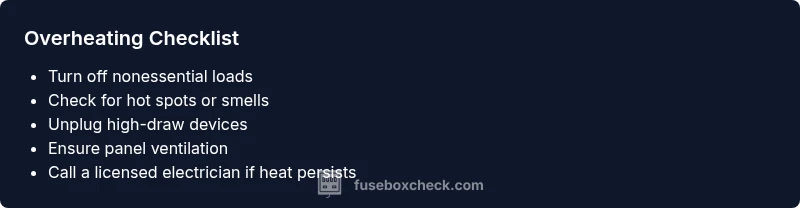
- Unplug high-draw appliances and see if the overheating reduces.
- Note any odors or signs of damage to help the electrician.
Diagnostic approach (high-level)
When you notice overheating, start with the simplest explanations before jumping to expensive fixes. The symptoms often point to overload or a loose connection. A methodical approach helps you avoid dangerous mistakes and makes the electrician’s job easier later.FuseBoxCheck emphasizes documenting what you observe (heat location, smells, trips) so professionals can pinpoint the fault quickly without guessing. Keep a log near the panel so you can share it during a call.
A professional-friendly look at a common fix
In many homes, a safe and effective response to overheating starts with reducing load and securing any obvious loose connections. If you’re trained and the main power is OFF, you can balance loads by moving devices to separate circuits, ensuring no single breaker bears excessive current. Do not tighten or replace components when power is on or if you’re unsure of the wiring. A licensed electrician should perform any tightening, replacement, or rewiring tasks to code. FuseBoxCheck recommends opting for a panel upgrade or service upgrade if the current setup is undersized for your modern electricity needs.
When to call a professional now
If you notice heat that persists after reducing loads, a burning smell, melted plastic insulation, buzzing, or the panel cover feels unusually hot, stop all DIY actions and call a licensed electrician immediately. Electrical panels are high-risk spaces; a wrong move can cause shocks or fire. A professional assessment helps prevent escalating damage and ensures compliance with safety standards.
Prevention: keep overheating at bay
Regular maintenance and smart usage prevent overheating. Balance loads across circuits, avoid daisy-chaining power strips, and replace old or damaged breakers with proper sizing. Keep the panel area clear of clutter and moisture. Schedule periodic inspections, especially in older homes, and consider upgrading the service if the building age or electrical demand has changed significantly. FuseBoxCheck stresses safety checks twice a year and after any major appliance installation.
Quick reference safety checklist
- Look for heat, burning smells, or tripping breakers.
- If heat persists, shut off main power and call a professional.
- Do not remove the panel cover unless fully trained.
- Keep liquids away from the panel area and ensure ventilation.
- Document symptoms to aid the electrician who visits your home.
Steps
Estimated time: 1-2 hours
- 1
Power down safely
If safe to access, switch off the main service disconnect or the main breaker to eliminate live current before inspection. Do not touch live metal parts. This step prevents shocks while you assess the situation.
Tip: Always work with a partner when dealing with the main disconnect. - 2
Inspect visible signs
Look for scorch marks, melted insulation, or signs of overheating on breakers and panel surfaces. Do not remove panels if you see damage; this is a red flag for professional help.
Tip: Take clear photos to show the electrician later. - 3
Unplug high-draw devices
Disconnect large appliances or devices that run on a single circuit to reduce load. Recheck the panel after a few minutes to see if temperatures drop.
Tip: Keep loads balanced across circuits where possible. - 4
Check for loose connections
Only if you’re trained and the main power is OFF. Gently tighten accessible connections in the panel; otherwise, stop and call a pro.
Tip: Incorrect tightening can damage breakers or wiring. - 5
Decide on a fix path
If heat persists after load balancing and basic checks, plan for professional assessment or panel upgrade depending on age and rating.
Tip: Document symptoms and any changes you observe. - 6
Call a licensed electrician
Schedule a visit promptly if overheating returns or any hazards are suspected. A pro can test with proper tools and update wiring safely.
Tip: Ask for a written safety plan and a quote before work begins.
Diagnosis: Fuse box overheats, smells, or trips breakers
Possible Causes
- highOverloaded circuits or appliances drawing too much current on a single branch
- highLoose or corroded connections at breakers or bus bars
- mediumFailing or undersized breakers or fuses
- lowMoisture intrusion or water exposure near the panel
Fixes
- easyReduce load by unplugging nonessential devices and spreading high-draw loads across circuits
- hardTighten loose connections and inspect for signs of damage after powering off (only if trained)
- hardReplace faulty breakers or consider service upgrade with a licensed electrician
- mediumDiagnose moisture and dry; if water is present, shut off power and call a professional
Your Questions Answered
What are the early signs of fuse box overheating?
Early signs include warmth at the panel, a burning smell, or breakers tripping frequently. If you notice any of these, treat it as urgent and minimize load until inspected.
Early signs are warmth, burning smell, or frequent trips; treat as urgent and reduce load until inspected.
Is overheating dangerous to ignore?
Yes. Ignoring overheating can lead to insulation damage, arcing, and even fire. Seek professional assessment if heat persists.
Yes, overheating can lead to fire; get a professional assessment if heat persists.
Can I fix fuse box overheating myself?
Only if you are a trained electrician and all power is off. For most homeowners, call a licensed electrician for safety and code compliance.
Only if you’re trained and the power is off; otherwise call a licensed electrician.
What should I do if I smell burning near the panel?
Shut off power at the main disconnect if safe, leave the area, and call emergency services if the smell intensifies or you see smoke.
If you smell burning, shut off power if safe and call for help immediately.
How can I prevent fuse box overheating in the future?
Distribute loads, upgrade old panels, and schedule regular inspections. Replace damaged breakers and ensure ventilation around the panel.
Distribute loads, upgrade if needed, and inspect regularly to prevent overheating.
Should I replace the fuse box or upgrade the service?
If your service is undersized for current needs, an upgrade might be necessary. A professional assessment will determine feasibility and safety.
An upgrade may be needed if the service is undersized; have a pro assess feasibility.
Watch Video
Highlights
- Check for heat and smells before you touch anything
- Power down safely and reduce loads if possible
- Persistent overheating requires a licensed electrician
- Regular maintenance prevents future overheating
- Use a professional for any wiring changes or upgrades