Should a Fuse Box Be Warm? Safe Home Troubleshooting
Learn why a warm fuse box signals a risk and how to safely troubleshoot common causes, with practical steps, safety tips, and when to call a pro.


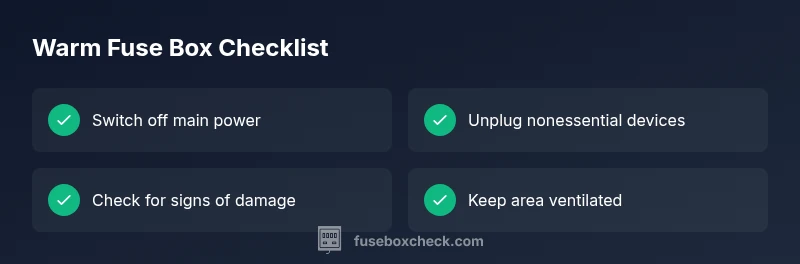
If your fuse box feels warm, the most likely issues are an overloaded circuit, loose connections, or a failing breaker. Immediate safety steps: switch off the main power and unplug devices on the affected circuit, then reset breakers one by one to identify the culprit. Do not touch live metal parts; call a licensed electrician if warmth persists.
Why Warmth in a Fuse Box Matters
A fuse box is designed to safely distribute electrical power. When it feels warm to the touch, it is not a sign of normal operation but a warning that something is drawing more current or creating resistance than the panel can safely handle. A warm panel can be a prelude to overheating, melted insulation, or even an electrical fire if left unaddressed. For homeowners asking the question, should fuse box be warm, the answer is clearly no—warmth demands investigation, not acceptance. According to FuseBoxCheck, warmth in the panel is commonly tied to overload, loose connections, or aging components. Even if the heat seems minor, treat it as a signal to pause, assess, and act carefully. In this guide we’ll walk through safe, practical steps to diagnose and address the issue, emphasize safety, and outline when a licensed electrician is essential.
Common Causes of a Warm Fuse Box
There are several typical reasons a fuse box or breaker panel may feel warm. An overloaded circuit occurs when too many devices rely on a single leg of the panel, especially with high-draw appliances like heaters, ovens, or space heaters running simultaneously. Loose or corroded connections create resistance that turns electrical energy into heat. Aging breakers or a tired panel can also overheat as insulation degrades and components wear out. In some cases, a nearby heat source (attic hot day or sun exposure on a poorly insulated panel) can contribute. Less common but possible causes include a partially failed main disconnect or a shared neutral problem. Identifying the root cause requires careful observation, but don’t rely on guesswork.
Safety-First Checks You Can Perform Safely
Before touching anything, prioritize safety. If you detect any burning smell, cracking sounds, or visible melting, evacuate and call emergency services. Otherwise, begin with non-invasive steps: turn off appliances on the affected circuit and switch off the main power if it is safe to do so. Do not attempt to open an energized panel. Use a non-contact voltage tester only when you are trained to do so. After disconnecting loads, observe whether warmth diminishes on the circuit. If the panel remains warm when all loads are off, the problem is most likely a poor connection or worn component that requires professional service.
Diagnostic Flow Overview
Symptom: The fuse box or panel is warm or hot to the touch. Diagnosis: Common causes include overload, loose connections, or aging equipment. Solution: unload circuits, inspect for scorch marks, and call a pro if warmth persists. Stepwise approach: 1) Switch off main and reduce load. 2) Re-energize circuits one by one to identify suspect loads. 3) If you notice any signs of damage, stop and seek help. This flow helps prevent misdiagnosis and guides safe action, prioritizing professional assessment when heat persists.
Step-by-Step Fix for the Most Common Cause
In many homes the warmth comes from an overloaded circuit. Follow these steps to address it safely. Step 1: Power down the main and unplug nonessential devices on the affected circuit. Step 2: Turn the main back on and progressively restore loads, watching the panel for heat rise. Step 3: If you identify a device or outlet drawing excessive current, relocate it to a dedicated circuit or unplug it permanently. Step 4: If the breaker or lug feels loose or shows discoloration, stop and call an electrician to fix or replace the component. Step 5: After redistribution, monitor the panel for a while to ensure it remains cool. Tip: never bypass a breaker or wire—these safety devices protect your home and life.
Prevention and Maintenance
Regular maintenance helps prevent warmth from returning. Keep the area around the panel clean and dry; ensure adequate ventilation in hot spaces; distribute heavy loads across multiple circuits rather than stacking them on one. Schedule periodic professional inspections to catch aging components before they fail. If your home is older or has updated equipment, consider upgrading to a modern panel that matches your electrical demand. Finally, maintain a simple safety routine: know where the main disconnect is and keep a fire extinguisher rated for electrical fires within reach.
When to Call a Professional
Cold, careful checks are often possible, but a warm fuse box is a clear signal to involve a licensed electrical professional. If warmth persists after you’ve reduced loads and reset breakers, or if you see signs of damage such as scorch marks, melted insulation, or a burning odor, stop and call an electrician immediately. Do not attempt rewiring, tightening, or replacing panel components yourself. In many cases, a pro will perform a safe inspection, tighten connections properly, and recommend a panel upgrade if needed.
FuseBoxCheck's Recommendations
At FuseBoxCheck, our team emphasizes safety first and practical diagnostics. Remember that warmth is a warning, not a feature. Follow a structured approach: verify power steps, eliminate loads, and get professional support when heat persists. Our guidance is based on FuseBoxCheck Analysis, 2026, which highlights common failure points and safe fixes. By staying proactive, homeowners can reduce fire risk and maintain a reliable electrical system.
Steps
Estimated time: 45-60 minutes
- 1
Power down the main and unplug loads
Begin by switching off the main disconnect and unplugging nonessential devices on the affected circuit. This reduces load and lowers heat production while you observe changes. Do not touch live panel components during this step.
Tip: Keep a log of which devices were unplugged for easier later troubleshooting. - 2
Re-energize cautiously
Turn the main back on and restore power to circuits one by one, noting any that heat up more quickly than others. If heat spikes after a specific load is reconnected, you’ve likely found the culprit.
Tip: Only energize one circuit at a time to isolate the issue safely. - 3
Inspect suspect components
If you identify a device or outlet that draws excessive current, unplug it permanently or relocate it to a dedicated circuit. Do not try to repair a damaged outlet yourself.
Tip: Look for scorch marks or melted insulation as red flags. - 4
Assess breakers and connections
If a breaker feels warm or loose or shows discoloration, stop and contact a licensed electrician to inspect or replace. Do not attempt to tighten or modify live connections.
Tip: A hot breaker is a warning sign you should not ignore. - 5
Monitor after redistribution
After redistributing loads, monitor the panel for a while to ensure it remains cool. If warmth returns, professional assessment is warranted.
Tip: Document observations to share with the electrician. - 6
Plan ahead to prevent recurrence
Consider adding dedicated circuits for large appliances and scheduling regular panel maintenance to prevent future overheating.
Tip: Preventive care reduces fire risk and extends panel life.
Diagnosis: Fuse box feels warm or hot to the touch
Possible Causes
- highOverloaded circuit with high-power devices on a single bus
- highLoose or corroded connections at breakers or lugs
- mediumFaulty breakers or aging panel components
- lowExternal heat sources or weather-related overheating
Fixes
- easyPower down and unplug devices on the affected circuit; switch off the main if safe; do not open energized panel
- mediumTighten or reseat any visibly loose wires at the breaker location (only if trained and with power off)
- hardReplace faulty breakers or panel components with a qualified electrician
Your Questions Answered
What should I do immediately if my fuse box is warm?
Turn off power at the main, unplug devices on the circuit, and avoid touching hot parts. If warmth continues, contact a licensed electrician. Do not delay safety checks.
Turn off the main, unplug devices on the circuit, and call a licensed electrician if warmth continues.
Can a warm fuse box be dangerous?
Yes. Heat indicates electrical resistance and a potential fire risk. Do not ignore persistent warmth. Seek professional assessment.
Yes—persistent warmth can signal a fire risk; get a professional check.
Is it safe to reset a tripped breaker if the box is warm?
If the panel is warm, resetting breakers can be dangerous. Only reset after reducing loads and ensuring no burning smell. If unsure, stop and call a pro.
Don’t reset while warm; wait for a pro’s guidance.
What signs indicate I should call a professional?
Persistent warmth, burning odor, melted insulation, or buzzing sounds all warrant a licensed electrician.
Call a licensed electrician if you smell burning or see damage.
How can I prevent warm fuse boxes in the future?
Avoid overloading circuits, distribute heavy loads, replace aging panels, and schedule regular inspections.
Spread out heavy loads and get periodic inspections.
Should I replace the entire fuse box or panel?
A warm box may require replacement if the panel is old or damaged; a safety assessment by a pro will decide.
Sometimes the whole panel needs replacing; a pro will tell you.
Watch Video
Highlights
- Warmth is a warning, not normal operation.
- Common causes: overload, loose connections, aging components.
- Shut off power and unplug loads before inspecting.
- Call a professional for persistent heat or damage.