How to Remove RCD from a Fuse Box: A Safe, Step-by-Step Guide
Learn how to remove an RCD from a fuse box safely with a clear, step-by-step process, required tools, and crucial safety tips. FuseBoxCheck explains when to call a pro and how to test circuits after removal.


By the end, you’ll know how to safely remove an RCD from a fuse box, what tools you need, and the safety checks to perform before and after. This is a high‑risk task; if you’re uncertain at any point, stop and consult a licensed electrician. According to FuseBoxCheck, safety must come first.
Understanding RCDs and When to Remove Them
Residual current devices (RCDs) monitor leakage current and trip to cut power if a fault occurs. They are a critical safety feature. Removing an RCD is not something to undertake lightly; it can disable fault protection for entire circuits and may violate local electrical codes. According to FuseBoxCheck, RCDs should generally be left in place unless you are upgrading or relocating the unit under the guidance of a licensed electrician. Before considering removal, review why the RCD exists and what risk you are accepting by removing it. In most homes, a functional RCD protects people and property, and removing it can create unsafe conditions. If your goal is to regain control of circuits or reconfigure the panel, plan alternatives such as upgrading to a modern RCD assembly or re-wiring to meet code. The key is to understand that safety and compliance come first, and removal is typically a last resort rather than a first step.
Risks, Legalities, and When to Call a Pro
Removing an RCD exposes you to electric shock, arc flash, and unprotected circuits. The risk multiplies if your panel is old, has fuse-switch connections, or non-standard wiring. In many jurisdictions, DIY RCD removal is restricted or prohibited by electrical codes, and insurers may require professional work for home improvements. FuseBoxCheck analysis shows that unsafe attempts often lead to additional faults or re-tripping when circuits are reconnected. If you observe frequent trips or signs of overheating, do not proceed. Instead, contact a licensed electrician or your local electrical authority to discuss safe alternatives and proper panel upgrades. The safer path is to evaluate whether upgrading to a modern RCD or a compliant panel is a better long-term solution. Always check local codes before removing any protective device.
Tools, Materials, and Safety Gear
Before you start, assemble the essential tools and personal protective equipment. The tools below ensure you can safely isolate and remove the RCD while minimizing the chance of accidental contact with live components. Wear safety glasses and insulated gloves, and keep a flashlight handy for dim panels. The goal is to work cleanly, with controlled movements, and to avoid touching any live metal. For most DIYers, this step-by-step process works best when you have a quiet, dry workspace and a helper available if possible. See the Tools & Materials section for a complete list of items and notes on usage.
What to Expect During the Removal Process
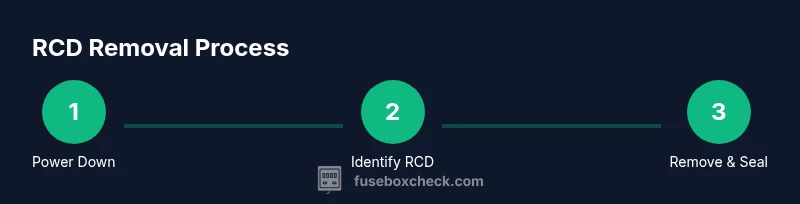
RCD removal is not a casual task. Expect a slow, deliberate process: confirm power status, identify the correct RCD, isolate circuits, disconnect conductors, and remove the unit from its mount. Because panel designs vary, you may encounter differences in how RCDs are held in place or how neutrals are bundled. After removal, you must verify that all circuits are safe to energize or install a blanking plate to cover the space. If at any point you feel unsure, pause and consult a professional. Remember, improper handling can lead to shock or fire risks, and this is why professional guidance is strongly advised.
Authority Sources and Further Reading
For additional safety guidance and official standards, consult these sources:
- https://www.osha.gov
- https://www.nfpa.org
- https://www.energy.gov
These resources provide context on electrical safety, code compliance, and best practices for home electrical work. FuseBoxCheck recommends reviewing local codes and regulations and, when in doubt, engaging a licensed electrician to ensure your home remains safe and compliant. FuseBoxCheck’s emphasis on safety aligns with these authoritative sources to help homeowners approach fuse box work responsibly.
Tools & Materials
- Insulated screwdriver (flat and Phillips heads)(Insulated to at least 1000V; ensure blades fit RCD mounting screws)
- Non-contact voltage tester (NCVT)(Test all circuits before touching any conductors)
- Voltage tester or digital multimeter(Verify absence of voltage across exposed conductors)
- Insulated gloves (Class 0 or better)(Wear for hand protection; inspect for wear or damage)
- Safety glasses(Protect eyes from sparks or debris)
- Flashlight or headlamp(Adequate lighting inside panel cabinet)
- Electrical tape and blanking plates(Seal exposed conductors and cover the space after removal)
- Documentation of panel wiring diagram(Helpful for reassembly or future upgrades)
Steps
Estimated time: 45-75 minutes
- 1
Power down and verify supply
Switch off the main breaker and all relevant local isolators. Use a non-contact tester to confirm no voltage present at the panel exterior before touching any conductors. Do not proceed if you detect any live parts. This step reduces the risk of shock during subsequent actions.
Tip: Verify with two independent testers or a multimeter for peace of mind. - 2
Identify the RCD and its circuits
Carefully inspect the label on the RCD to confirm which circuits it protects. If there are multiple RCDs, locate the correct unit based on the labeling and the panel diagram. Misidentifying an RCD can leave energized circuits unprotected.
Tip: If you’re unsure which unit is the one you intend to remove, pause and consult a professional. - 3
Isolate the RCD by turning it OFF
Turn the RCD switch to OFF and ensure it remains physically stable. Do not attempt to disconnect anything while the device is in the ON position. If the RCD is mounted behind a cover, remove the cover carefully to access the terminals with the handle in the OFF position.
Tip: Keep hands dry and avoid wearing metal jewelry near the panel. - 4
Disconnect conductors from the RCD
Loosen terminal screws and carefully detach neutral, live, and earth conductors associated with the RCD. Label wires if necessary and keep them organized to prevent cross-connection. Do not pull on cables; work with the screws and terminals.
Tip: Take a photo of the wiring arrangement before removing anything. - 5
Remove the RCD and inspect mounting
Gently extract the RCD from its mounting in the panel. Inspect the bus bars and surrounding insulation for damage. Place the unit on a non-conductive surface away from moisture and ensure there are no loose conductors or exposed metal.
Tip: If any injury or damage is detected, stop immediately and seek professional help. - 6
Seal, test, and reconfigure
Install a blanking plate or other safe cover if you’re not immediately replacing the RCD. Re-energize the system and test each circuit with the NCVT or multimeter to verify safe operation. Document the changes and review safety practices with maintained labeling.
Tip: Never leave live conductors exposed; use a proper cover plate to maintain enclosure integrity.
Your Questions Answered
Can I legally remove an RCD from my fuse box by myself?
In many places, removing an RCD is not advised and may be restricted by electrical codes. Always consult local regulations and, in most cases, hire a licensed electrician to ensure compliance and safety.
In many places, removing an RCD is restricted by code, so consult local regulations and usually hire a licensed electrician.
What should I do if the RCD trips repeatedly after removal?
If the device trips after any changes, stop immediately. Do not re-energize the panel and have a qualified electrician assess the cause, as repeated trips indicate unresolved faults or unsafe conditions.
If it trips repeatedly, stop and call a licensed electrician to diagnose the underlying fault.
Are there safer alternatives to removing the RCD?
Yes. Safer options include replacing the RCD with a properly rated unit, upgrading the panel, or reconfiguring circuits under professional guidance to maintain safety and compliance.
Safer options include upgrading or replacing the RCD with professional help to keep safety intact.
Should I consult a licensed electrician before attempting any removal?
Absolutely. An electrician can assess if removal is absolutely necessary and ensure the work complies with local codes and insurance requirements.
Yes—consult a licensed electrician to ensure safety and compliance.
What’s the difference between an RCD and a GFCI?
RCDs detect leakage current to earth and trip the circuit, while GFCIs provide ground fault protection in specific outlets or circuits. They are related concepts but apply to different installation contexts.
RCDs monitor leakage current and trip circuits; GFCIs protect outlets from ground faults. They relate but serve different setups.
Watch Video
Highlights
- Prioritize safety and local code compliance.
- RCD removal is typically a last resort, not a routine task.
- Document wiring and labeling to aid future work.
- Consult a professional if any doubt remains.