How to Reset Fuse Box After Trip: Safe DIY Guide
Learn how to safely reset a fuse box after a trip with a step-by-step guide, essential tools, and safety tips. This FuseBoxCheck guide helps homeowners restore power confidently.


You’ll learn how to safely reset a tripped fuse box and restore power to affected circuits, while understanding what caused the trip and when to call a professional. This quick answer outlines the key safety checks, the proper sequence for resetting, and essential tools you’ll need before you begin at minimum.
What happens when a fuse trips and why resetting after trip is not a cure-all
A circuit trip happens when electrical load exceeds the circuit’s rating or a fault is detected. Resetting a fuse box after trip can restore power to non-faulty circuits, but it does not fix the underlying problem. According to FuseBoxCheck, the first step is to assess safety and identify the likely cause before you touch anything. Look for signs of damage: scorch marks, melted insulation, or a burning smell—these indicate hazards that require professional service. If the panel and area look normal, you can proceed with caution, but always stay focused on safety. In this guide you’ll see how the reset fits into a broader safety process: inspect, isolate loads, reset in the correct order, and test before returning to full operation. The goal is to minimize risk while restoring power in a controlled, repeatable manner.
Safety first: minimize risk before handling the panel
Working with a fuse box carries real risks, including electrical shock and fire. Always ensure your hands are dry and you stand on a non-conductive surface. Wear safety goggles and gloves, and keep children and pets away from the work area. If you smell burning or see signs of arcing, shut off power at the main breaker if you can do so safely, and call an electrician immediately. This section lays out the critical safety checks you should perform before any reset so you don’t create a hazardous situation.
Tools and safety checks you should complete before you reset
Having the right tools and a quick safety checklist helps you work confidently. Assemble a non-contact voltage tester, a digital multimeter, an insulated screwdriver set, a flashlight, and safety goggles. Confirm the panel area is dry, the environment is well lit, and your work surface is clean. Use a test load on the suspected circuit only after you’ve confirmed there is no live exposure. This preparation reduces the chance of accidental shocks and makes the reset more predictable.
Step overview: the correct sequence to reset after a trip
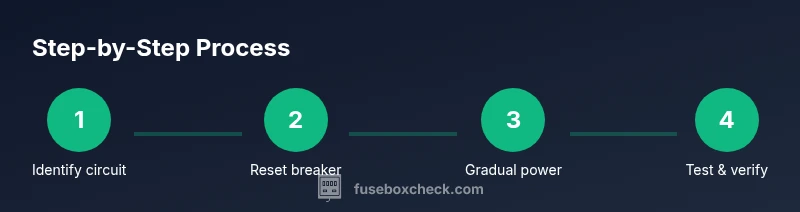
The proper approach to resetting a fuse box after trip is deliberate and staged. Start by identifying the affected circuit, then isolate loads (unplug or switch off devices) on that circuit. Flip the corresponding breaker OFF and then ON to reset. If the main breaker is tripped, reset it in the same OFF-ON sequence after ensuring safe surroundings and no visible damage. Finally, restore power to loads gradually, testing outlets and devices as you go. Following this sequence minimizes the risk of immediate re-tripping and helps you confirm which circuit is at fault.
Step 1: Identify the affected circuit and prepare the space
Locate the tripped breaker or blown fuse by inspecting the panel labels and the position of the handles. If the handle is in the middle or clearly off, that’s your cue. Before you touch anything, unplug or switch off all devices on that circuit to reduce inrush current and avoid arcing when the breaker is reset. Confirm there is no moisture, water intrusion, or signs of damage around the panel. This step reduces the risk of re-tripping or shock during the reset.
Step 2: Reset the circuit properly
With the affected circuit isolated, switch the breaker OFF, then firmly ON. Listen for a crisp click indicating a proper reset. If the breaker trips again immediately, stop and investigate the possible causes (overload, short, or device fault) rather than forcing a reset. If the main is tripped, follow the same OFF-ON sequence after ensuring safe surroundings and no visible damage.
Step 3: Restore power gradually and test
Turn devices back on one at a time or reconnect loads gradually, starting with low-power items first. Monitor whether the breaker stays reset; if it trips again, isolate the suspect device or circuit and call a licensed electrician if the problem persists. Use your multimeter to test outlets on the reenergized circuit for proper voltage readings and signs of overheating.
Common mistakes and troubleshooting after a reset
Avoid resetting the fuse box repeatedly in a short period; repeated trips usually indicate a fault or overload. Do not bypass safety devices or stymie warning signs like burning smells or scorch marks. Do not touch metal parts with wet hands or while standing on damp surfaces. If you are unsure of the cause, pause and call a professional. Document the incident and note which devices were on that circuit for future reference.
Maintenance tips to prevent future trips
Regularly inspect cords and appliances for wear, replace damaged fuses or breakers as needed, and keep the area around the fuse box clean and dry. Use a load calculator or the appliance’s wattage rating to distribute power evenly across circuits and avoid sudden overloads. Schedule periodic checks with a licensed electrician, particularly after home upgrades or renovations.
Tools & Materials
- Non-contact voltage tester(Check for live circuits from a safe distance before touching the panel.)
- Digital multimeter(Used to verify voltage and troubleshoot suspected faults.)
- Insulated screwdriver set(Use insulated handles and proper tip size.)
- Safety goggles(Eye protection in case of sparks or debris.)
- Flashlight or headlamp(Power the area if the panel light is dim or missing.)
- Dry work surface and gloves(Keep hands dry and protect against minor shocks.)
Steps
Estimated time: 45-75 minutes
- 1
Assess safety and scene
Survey the area for hazards, ensure your hands are dry, and have a clear workspace. Identify which circuit is affected by looking at the panel and recent usage. If you smell burning or see damage, stop and call an electrician.
Tip: Keep a clear exit path and a phone handy in case you need professional help. - 2
Prepare by disconnecting loads
Unplug or switch off devices on the affected circuit to reduce load and inrush when you reset the breaker. This helps prevent immediate re-tripping due to a sudden surge once power is restored.
Tip: If a device is hot or smells burnt, do not touch it. - 3
Reset the breaker
Switch the tripped breaker OFF, then firmly ON until it sits in place with a clean click. Do not jerk the handle or force it beyond its stop. If it immediately trips again, stop and diagnose the fault.
Tip: If you cannot feel a click or the handle wobbles, stop and call a professional. - 4
If the main is tripped, reset it after checks
If the main breaker is tripped, perform the safety checks again and then OFF-ON the main after confirming there are no obvious hazards. Main trips are a sign of a larger issue and require caution.
Tip: Do not reset the main while touching metal parts or with wet hands. - 5
Restore loads gradually
Reconnect or switch on devices one by one to monitor for re-trips. Start with low-wattage items and watch the panel closely for any signs of struggle.
Tip: If a particular device trips the circuit, inspect or replace that device before reintroducing power. - 6
Test the circuit and outlets
Use the multimeter to test outlets on the reenergized circuit for proper voltage. Look for readings within the expected range and check for warm outlets or plugs.
Tip: Record voltages and any unusual symptoms for future reference. - 7
Observe for recurring trips
If the circuit trips again, isolate the circuit entirely and stop using it until you identify the fault. Recurrent trips indicate a fault, overload, or aging components that may require pro assessment.
Tip: Avoid plugging in multiple high-load appliances at once on the same circuit. - 8
Plan next steps
Document what happened, what devices were involved, and when the trip occurred. Schedule a professional inspection if trips persist or you notice panel damage or overheating.
Tip: Keep a home electrical safety log for future reference.
Your Questions Answered
Is it safe to reset a fuse box after a trip on my own?
Resetting a fuse box after a trip can be safe if there are no signs of damage and you follow proper safety steps. If you notice burning smells, scorch marks, or moisture, stop and call a licensed electrician.
Yes, but only if there are no signs of damage. If you smell burning or see scorch marks, stop and call a professional.
What should I do before resetting the panel?
Unplug devices on the affected circuit, ensure the area is dry, and verify you have a clear path to the panel. Wear safety goggles and use insulated tools.
Unplug devices on the affected circuit and check the area is dry before you reset.
How do I know which breaker to flip?
Look for the breaker that shows the OFF position or is not aligned with the others. Check the panel labeling to confirm the circuit designation before flipping.
Find the breaker that’s tripped or off, then flip it back after ensuring the area is safe.
What if the trip happens again after resetting?
If it trips again, don’t repeatedly reset. Isolate the circuit, inspect devices on that circuit, and consider calling an electrician to diagnose potential overloads or faults.
If it trips again, stop resetting and call a professional to check for faults.
Can I reset the main breaker if the entire house loses power?
If the main breaker is tripped, perform safety checks first. Reset the main OFF, then ON only after you’re confident there are no hazards.
Yes, but only after making sure there’s no danger or damage.
What tools are essential for resetting a fuse box?
Non-contact voltage tester, digital multimeter, insulated screwdriver, safety goggles, and a flashlight are essential for safely inspecting and resetting a fuse box.
You’ll need a tester, a multimeter, insulated tools, and good lighting.
Watch Video
Highlights
- Identify the affected circuit before resetting.
- Do not bypass safety devices or wear wet gloves near the panel.
- Restore power gradually and test after each step.
- Call a professional if trips recur or you smell burning.