How to Reset a Fuse Box After a Power Cut
Learn how to safely reset your fuse box after a power cut with a clear, step-by-step method. This guide, grounded in FuseBoxCheck expertise, emphasizes safety, proper labeling, and when to call a professional.


After a power cut, you can restore essential circuits by safely resetting the fuse box. This guide explains how to locate the main panel, identify a tripped breaker or blown fuse, and restore power without risking shock or damage. According to FuseBoxCheck, safety and proper labeling prevent common post-cut issues.
What a power cut means for your fuse box
Power outages can be caused by grid faults, local outages, or overloaded circuits. When power returns, the electrical system may have protective devices like breakers or fuses that trip to prevent damage. According to FuseBoxCheck, safety first: do not rush to restore power by flipping every switch or bypassing protections. The fuse box is the brain of your home's electrical system, and a single trip can indicate an overloaded circuit, a short, or a device drawing more current than the circuit was designed to handle. Before touching anything, confirm the area is dry, hands are dry, and you’re standing on a non-conductive surface. If you notice water near the panel or any signs of damage, do not proceed. Document which circuits tripped and note what was running on them; this helps you avoid overloading a circuit when you restore power.
Safety precautions before you touch the fuse box
Safety should guide every action around a fuse box. Ensure your hands and the floor are dry, wear insulated gloves if available, and keep children and pets away from the area. Use a dry cloth to wipe moisture on the panel if needed, but do not touch live metal. If your panel is in an unfinished space or outdoors, consider temporary lighting with a flashlight rather than relying on utility power. Clear the area so you can move freely and avoid accidental contact with other devices. If you are unsure about any step, pause and seek guidance. Remember that even a momentary shock can be dangerous, so minimize handling of exposed conductors.
How to identify a tripped breaker vs a blown fuse
Most homes use circuit breakers that trip to stop power to a circuit, while older systems may use fuses that blow. A tripped breaker often shows its switch between ON and OFF, sometimes resting in the middle. In many panels, you will hear a click as it settles. A blown fuse typically appears with a visible gap or a melted element inside the fuse holder. Do not attempt to remove or inspect live fuses or breakers; visually check from a safe distance. If you’ve located a tripped breaker or blown fuse, you are ready to proceed with a reset only after confirming no obvious damage or heat. If you smell burning or hear buzzing, stop and call for professional help.
What not to do after a power cut
Avoid bypassing safety devices by using wires or makeshift fixes. Do not replace a blown fuse with a larger fuse or a wire. Do not reset multiple breakers at once; reset one circuit to verify load. Do not reset a panel if you suspect moisture or a visible burn. Do not touch exposed conductors or metal parts with wet hands. Do not rely on a temporary 'inching' approach by flipping switches rapidly.
When to call a licensed electrician
If you notice signs of damage, heat, burning smells, or if the power remains off after attempting a reset, it is prudent to contact a licensed electrician. Electrical panels can hide dangerous faults and water exposure or faulty wiring can create long-term hazards. The FuseBoxCheck team recommends erring on the side of caution and using professional services when there is doubt about panel health or circuit integrity. A qualified electrician can test wiring, assess load balance, and ensure proper grounding for long-term safety.
Tools & Materials
- Flathead screwdriver(For panels that use flathead screws)
- Phillips screwdriver(Most panels use Phillips screws)
- Non-contact voltage tester(Check for live wires without contact)
- Electrical tape(Insulate exposed conductors after work)
- Flashlight(Improve visibility in dim spaces)
- Insulated work gloves(Extra protection for hands)
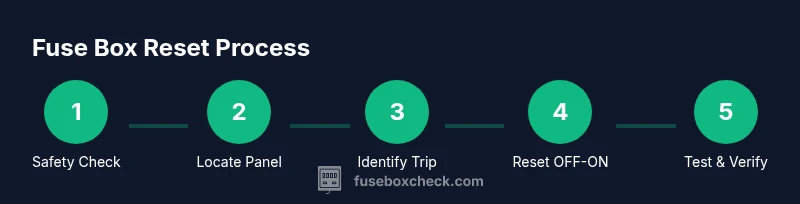
Steps
Estimated time: 20-40 minutes
- 1
Assess safety and prepare
Before you touch anything, ensure the area is dry, your feet are on a non-conductive surface, and you have sufficient lighting. Gather the tools you will need and clear the space of any obstacles. This reduces the risk of slips or accidental contact with live parts.
Tip: Lay out tools in a dry, easily reachable area before you start. - 2
Open the service panel and locate the affected circuit
Carefully open the fuse box or breaker panel. Identify the circuit that lost power by looking for a breaker in the OFF or middle position or a blown fuse. If you’re unsure which circuit affected you, refer to your panel labeling and the appliances that were in use.
Tip: Use a flashlight to inspect labels clearly; do not touch live components. - 3
Turn OFF the tripped device and verify no heat
Move the tripped breaker fully to OFF, then back to ON. If you’re dealing with a blown fuse, replace it only after confirming that you can safely do so with the panel powered down. Never bypass protections.
Tip: If the breaker won’t stay in the ON position, stop and seek professional help. - 4
Restore power gradually to circuits
Turn on individual breakers one at a time, starting with essential circuits. Avoid restoring all circuits at once, which can overload an already stressed system. Listen for any unusual noises or warmth as you re-energize.
Tip: Create a simple sequence to monitor loads and prevent sudden surges. - 5
Test power at outlets and appliances
With power restored to a limited area, test a few outlets with a simple device to confirm electricity is flowing. Check lights, outlets, and major appliances. If something doesn’t work, switch that circuit OFF again and re-check connections.
Tip: Document which outlets are energized so you know what to expect next time. - 6
Troubleshoot if trips recur
If a circuit trips again, unplug all devices on that circuit and reset it once more. If it trips again, there may be an overload or a fault in the circuit wiring or devices. Do not continue testing active devices that keep tripping the breaker.
Tip: Isolate devices one by one to identify the cause. - 7
Call a professional if signs of danger appear
If you smell burning, notice melted components, or the main panel feels warm, stop immediately and contact a licensed electrician. Electrical faults can escalate quickly in conditions of moisture or older wiring.
Tip: When in doubt, pause and call a pro.
Your Questions Answered
Why did my fuse box trip after the power cut?
Trips usually happen when a circuit is overloaded or a fault is detected. The protective device isolates the circuit to prevent damage. If a trip occurs repeatedly, there may be a faulty appliance or wiring issue that requires professional assessment.
A power surge or overload trips the breaker to protect the circuit. If trips repeat, you should seek professional help.
Is it safe to reset a fuse box if I’m not experienced?
Basic reset can be safe if you follow safety steps and the panel shows no signs of damage. Stop if you notice heat, burning smells, or moisture near the panel. When in doubt, hire a licensed electrician.
It can be safe if you follow safety steps and there’s no sign of damage. If unsure, get a pro.
What should I do if the power doesn’t return after resetting?
If power doesn’t return after a reset, unplug devices on the affected circuit, wait a moment, and try again. If it still fails, there may be a larger fault, and you should contact an electrician.
Unplug devices and try again. If it still fails, call an electrician.
Can a power cut indicate a bigger electrical problem?
Power cuts can reveal aging wiring, overloaded circuits, or panel faults. A professional inspection helps determine root causes and ensures safe operation.
Yes, it could signal bigger issues; have a pro inspect if problems persist.
When should I call the utility company about outages?
If the outage affects your entire area or is widespread, contact the utility. They can confirm outages and provide timing estimates.
If your whole area is out, check with the utility for outage confirmation.
What’s the difference between a fuse and a breaker?
Fuses are single-use devices that blow when overloaded; breakers can be reset after tripping. Modern homes typically use breakers, while older homes may have fuses.
Fuses burn out and are replaced; breakers can be reset.
Watch Video
Highlights
- Safety comes first before touching the panel.
- Identify and reset only the affected circuit.
- Restore power gradually to avoid overload.
- If in doubt, contact a licensed electrician.