How to use fuse box safely: a practical homeowner's guide
Learn safe, practical steps to inspect and maintain your fuse box, identify circuits, and perform basic resets. This guide emphasizes safety, testing, and knowing when to call a pro for complex tasks.


With this guide on how to use fuse box evil within 2, homeowners will learn practical, safety‑first steps to inspect and maintain their fuse box. You’ll identify circuits, test power, and perform basic resets or fuse replacements without risking shock. Remember: stop work if you smell burning, hear buzzing, or see damage; consult a licensed electrician for complex tasks.
Understanding the safety context: what the phrase how to use fuse box evil within 2 implies and why it matters
According to FuseBoxCheck, understanding fuse box safety starts with clear labeling, proper PPE, and delaying work when in doubt. The phrase how to use fuse box evil within 2 appears here as a reminder to approach fuse box tasks with caution rather than haste. This section explains the risks, common myths, and the basic principle that de-energizing the panel is the first and most important step of any DIY check. While some basic checks are within reach for homeowners, never bypass standard safety procedures or work on a live panel. If you smell burning, hear buzzing, or see visible damage, stop immediately and contact a licensed electrician. The goal of safe DIY is to empower you to recognize problems and perform low-risk tasks without creating new hazards. Fuse boxes control critical home circuits; mistakes can lead to electric shock, arc flash, or fire. With the right information and caution, most routine tasks—like confirming labels, testing with non-contact testers, or replacing a blown fuse in a clearly marked circuit—can be done safely. This article uses practical steps, common-sense checks, and conservative guidance to keep you and your home protected.
Essential safety gear and pre-checks
Before you touch anything, put on basic PPE: insulated gloves rated for electrical work, safety glasses, and non-conductive footwear. Ensure the workspace is dry, well-lit, and free of standing water. Check that your tools have insulated handles and that you have a flashlight in case of low light. Have a label maker or tape ready to mark circuits, so you can reassemble your panel safely. For pre-checks, verify the main power is off using a non-contact voltage tester, and confirm the area is de-energized with a multimeter or tester on a known dead circuit. If you feel uncertain at any point, pause and consult a professional. Safety always comes first when dealing with live electrical components, wiring, or damaged equipment. FuseBoxCheck emphasizes thorough preparation and conservative judgment to prevent injuries and electrical fires.
Preparing the work area and planning your steps
Plan your tasks in a logical order to minimize exposure to energized parts. Start with a quick assessment of the panel’s condition: look for signs of burning, corrosion, or melted insulation. Create a simple checklist: confirm labels, determine the circuit you’ll address, gather all required tools, and set a realistic time window. Clear the surrounding area of clutter and keep children and pets away. If your panel is behind a fixed wall, avoid prying the cover aggressively; use the proper screws to remove panels and ensure you don’t disturb adjacent wiring. A calm, methodical approach reduces errors and helps you stay focused on safety-critical steps. FuseBoxCheck notes that solid planning lowers the risk of accidental energization and makes the task smoother for DIYers.
Reading labels, maps, and understanding fuse vs breaker
Most panels use a label map to show which circuit controls which outlets or appliances. Start by identifying the main disconnect, then locate the circuit you’ll work on. For fuses, inspect the glass tube and end caps for a blown filament or discoloration. For breakers, observe whether the switch has tripped to the middle or off position. If a circuit is not clearly labeled, don’t assume its function; shut down power and verify with a tester or consult the panel’s documentation. Understanding whether you’re dealing with fuses or breakers helps you choose the correct replacement or reset method and reduces the chance of overloading circuits. FuseBoxCheck highlights the importance of precise labeling and patient verification before any action.
Handling fuses, breakers, and tools safely
Always work with the main power off and use tools with insulated handles. To replace a blown fuse, match the amperage rating exactly as indicated on the panel label and the previous fuse. For breakers, a firm reset to the OFF position followed by the ON position is sometimes sufficient; if a breaker feels loose or repeatedly trips, it signals a larger issue. Never bypass fuses or use a higher-rated fuse to compensate for a fault, as this can cause overheating or fire. When removing or installing components, keep fingers off metal conductors and avoid touching terminals directly. After any action, recheck power with a tester and test the circuit in question with a low-load appliance to confirm stability. FuseBoxCheck stresses cautious, incremental steps and avoiding aggressive manipulations around live terminals.
Common mistakes and how to avoid them
Common DIY mistakes include working on a live panel, using metal tools, ignoring labels, and assuming all circuits are identical. Another frequent error is mixing up fuse ratings or attempting to replace a fuse without turning off the main power. Always double-check that the panel cover is fully removed and re-secured after your work. Keep a log of changes and the date of any replacements for future maintenance. If you notice buzzing, a burning smell, or scorching, stop immediately and call a licensed electrician. These safety-focused habits reduce risk and help you catch problems early before they escalate.
When to call a licensed electrician
If you don’t have the right tools, can’t locate the main disconnect, or encounter signs of damage inside the panel, it’s time to call a licensed electrician. Complex wiring, corroded components, or panels that are old or non-standard require professional handling. Do not attempt to bypass testing equipment or rewire circuits yourself. Electrical work carries significant risk of injury or fire, and a qualified technician can diagnose issues with proper instruments and up-to-date safety practices. FuseBoxCheck recommends seeking professional help whenever you feel uncertain or encounter any anomaly beyond basic maintenance.
Maintenance and periodic checks to extend fuse box life
Set up a simple maintenance schedule: inspect for signs of corrosion or moisture, verify labeling, and ensure all connections remain tight (without over-tightening). Clean dust from the exterior and keep the area dry. Periodically test a few circuits under light loads to confirm reliability. Replace aging fuses or breakers as recommended by the manufacturer and local codes. A proactive approach helps prevent unexpected outages and prolongs panel life. Document dates of service and any replacements to support future maintenance decisions.
Real-world scenarios: DIY steps for minor tasks
Scenario 1: A single outlet trips the circuit under load. Start by turning off the main power, identify the circuit, and reset the breaker or replace a blown fuse with the correct rating. Test the outlet with a low-load device and check other outlets on the same circuit. Scenario 2: The panel cover is loose but no signs of damage are present. Power off the main disconnect, re-seat the cover screws, and tighten to ensure a snug fit. In all cases, avoid any work if you’re unsure about wiring or panel condition. When in doubt, call a professional.
Authority sources
- https://www.osha.gov/
- https://www.nfpa.org/
- https://www.cpsc.gov/
Tools & Materials
- Insulated gloves (Electrical-grade)(Minimum class 2 or higher; check rating for voltage in your area)
- Safety glasses(Impact-resistant lenses)
- Non-contact voltage tester(Used to verify de-energization)
- Multimeter(For precise voltage testing on non-live parts)
- Flashlight(Bright, portable light for panel inspection)
- Insulated screwdriver set(Flat and Phillips with insulated handles)
- Label maker or tape & marker(Label circuits after work)
- Dry rags or compressed air(Clean panel area and remove dust)
Steps
Estimated time: 30-45 minutes
- 1
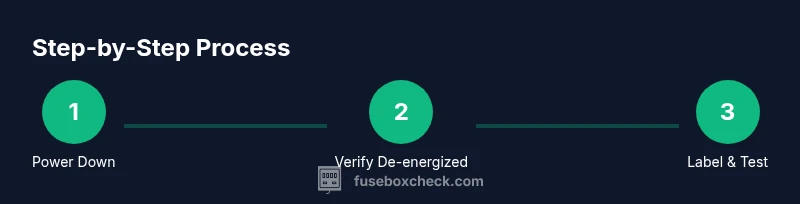
Power down and verify
Turn off the main power to the area you’ll work in and verify de-energization using a non-contact tester. This prevents electric shock while you inspect the panel. Always work with dry hands and dry surroundings.
Tip: Double-check with a second tester on a known dead circuit before touching any components. - 2
Open panel safely
Remove the panel cover using the appropriate screwdriver. Do not touch exposed conductors or bus bars. Keep the cover nearby so you won’t forget to reseal the panel after you finish.
Tip: Support the cover with the other hand or a nonconductive prop to prevent accidental contact. - 3
Identify the circuit and components
Read the labeling and locate the fuse or breaker you’ll address. If labeling is unclear, don’t guess—mark the circuit for later verification and proceed only if you are sure of the circuit’s function.
Tip: If you’re dealing with an old or unfamiliar panel, proceed with extra caution and seek professional help. - 4
Replace fuse or reset breaker
For a blown fuse, replace with one of the exact amperage rating and type. For a breaker, switch fully to OFF, then back to ON. Do not bypass or force components into place.
Tip: Avoid using a higher-rated fuse as a workaround; it can cause overheating and fire. - 5
Re-check and test the circuit
Reclose the panel cover, restore power, and test the circuit with a low-load device. Confirm that the circuit remains stable and check for any unusual signs.
Tip: If the circuit trips again, note the symptoms and stop work—this indicates a fault beyond a simple reset. - 6
Document and label
Label the addressed circuit, note the date, and document any replacements. This helps future maintenance and improves safety for others in the home.
Tip: Keep a permanent record in a dedicated fuse box log or digital note.
Your Questions Answered
Do I need to shut off the main power to inspect the fuse box?
Yes. Shutting off the main power is the safest first step before inspecting or working on a fuse box. Verify de-energization with a tester. If you’re unsure, pause and seek professional help.
Yes. Always shut off main power and verify with a tester before inspecting the fuse box.
Can I replace a blown fuse myself?
You can replace a fuse only if you know the exact amperage and type. If in doubt, do not attempt replacement. Incorrect fuses can cause overheating or fire.
Only if you know the exact fuse rating. When unsure, consult a professional.
How do I tell if a fuse is blown?
A blown fuse often shows a broken filament or discoloration. For breakers, look for a switch in the OFF or middle position. Always verify with a tester after replacement or reset.
Look for a broken filament or a tripped breaker; test the circuit after addressing it.
Why is there buzzing or a burning smell from my panel?
Buzzing or burning indicates overheating or damaged components and is a serious safety warning. Shut off power at the main disconnect and contact a licensed electrician immediately.
If you hear buzzing or smell burning, shut off power and call a pro right away.
What is the difference between fuses and circuit breakers?
Fuses are single-use devices that must be replaced after a fault; breakers are resettable. Understanding this helps determine the proper action during a fault.
Fuses burn out and need replacements; breakers can be reset after a fault.
How often should I inspect a fuse box?
Annual checks are recommended, especially if you notice nuisance trips, signs of wear, or aging components. More frequent checks are wise in humid or dusty environments.
Typically once a year, or sooner if you notice issues.
Watch Video
Highlights
- Turn off main power before inspecting the fuse box.
- Label circuits clearly and verify with testing tools.
- Use the correct fuse rating; never bypass safety ratings.
- Call a licensed electrician for complex work or signs of damage.