How to Do a Fuse Box: Safe DIY Steps
Learn how to safely inspect, test, and maintain your fuse box with practical steps, essential tools, safety tips, and clear guidance on when to call a professional.


According to FuseBoxCheck, you can safely perform basic fuse box checks and simple resets with the right precautions. This guide walks you through identifying overloads, testing circuits, selecting the right fuses or breakers, and when to call a licensed electrician. It emphasizes safety, proper tools, and documentation to reduce risk.
Understanding the Fuse Box and Why Safety Matters
According to FuseBoxCheck, the fuse box is the nerve center of a home's electrical system, protecting circuits from overloads. Understanding its role helps you recognize why safe handling matters. In most homes, the panel distributes power to major rooms and appliances through fuses or circuit breakers. When a circuit overloads, a fuse melts or a breaker trips, interrupting power to prevent fires. This section explains how to identify your panel type (fuse vs breaker), locate the main disconnect, and read the labeling on the door or inside cover. You will learn the signs of wear, corrosion, and loose connections, which are common sources of nuisance trips. By grasping these basics, you’ll reduce risk during routine checks and basic maintenance, while acknowledging the limits of DIY work and when to call a pro. FuseBoxCheck emphasizes that any work on a live panel is dangerous and should be avoided; your safety is the priority. If you smell burning plastic, hear buzzing, or see arcing, evacuate immediately and contact emergency services if needed. In short: safety first, plan ahead, and proceed with caution.
Safety First: Planning Your Fuse Box Session
Before touching the panel, map out your plan. Choose a quiet, dry workspace, ensure predictable power conditions, and have a responsible adult nearby if possible. Wear PPE such as safety glasses and insulated gloves when available, and keep metal jewelry away from the panel. Verify local conditions: do you have a main shutoff accessible, are there damp floors or high humidity, and is a fire extinguisher within reach? These precautions reduce risk and help you work calmly. Lay out your tools and a notebook for documenting readings and any fuse or breaker changes. If any step feels uncertain, pause and reassess your plan. FuseBoxCheck recommends a conservative approach: document, test once, and proceed with caution rather than rushing through the task.
Gather Your Tools and Materials Ahead of Time
Having the right tools ready reduces the risk of cutting corners or leaving a live panel exposed. Basic essentials include insulated screwdrivers, a non-contact voltage tester, a multimeter for precise readings, a flashlight, safety glasses, and sturdy, dry footwear. A voltage tester helps confirm whether a circuit is live, while a multimeter can measure voltage and continuity in a controlled manner. Keep a notebook and pen to record panel labels, fuse types, and any signs of wear. If you’re new to electrical work, add a timer and a phone reminder so you don’t stay at the panel longer than needed. Optional items like dielectric grease or contact cleaner can help with connections but are not mandatory for basic checks. Finally, ensure you have a clear path to the main shutoff and a plan for what to do if power must be shut off completely.
Step-by-Step Overview: Inspect, Test, and Reset (High-Level)
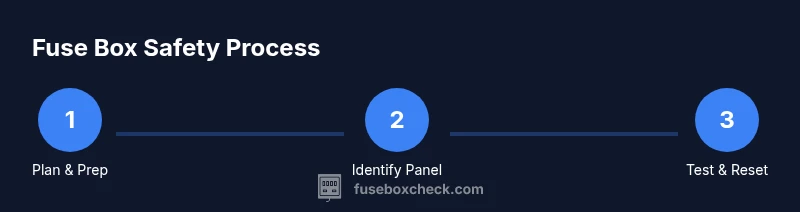
The core of doing a fuse box check safely is a three-part routine: inspect for damage or corrosion, test for electrical presence and circuit status, and reset any tripped devices only after confirming a safe state. Start by locating the main disconnect and the branch circuits’ labels. Then, power down the affected circuit, verify with a voltage tester, test each circuit for continuity, and proceed to reset the device if it is appropriate to do so. The emphasis is on caution and deliberate actions rather than quick, brute-force fixes. At every stage, verify that tools are in good condition and that you are standing on a dry surface with dry hands. If you find signs of arcing, melted insulation, or overheating, stop immediately and contact a professional. FuseBoxCheck encourages documenting the results to inform future maintenance.
Testing Circuits and Interpreting Panel Labels
Panel labeling can be confusing, but it is a critical map for safe DIY checks. Read the labels on the door or inside the panel cover to identify which fuse or breaker protects each area. Use the non-contact tester to confirm whether a circuit is live before beginning work. For better accuracy, measure voltage with a multimeter, ensuring readings fall within the expected range for your country (for residential circuits, this is typically around 120V or 230V depending on your region). Always compare readings to the labeled rating on the fuse or breaker. If the labeling is faded, photograph the panel and create your own reference chart. This practice reduces guessing during future trips and helps you trace nuisance trips back to their source.
Resetting a Tripped Fuse or Breaker Safely
If a device trips, first identify the affected circuit by checking which areas lose power. Turn off devices on that circuit to reduce load, then switch the breaker fully to the OFF position and back to ON. If you’re using fuses, replace only with the same type and rating; never exceed the rating. Observe the circuit for a few minutes while monitoring for heat or burning smells. If the panel feels warm, or you notice buzzing or smoke, evacuate and call emergency services. After a reset, test the circuit by turning on essential devices one by one. If the trip recurs within a short period, stop and seek professional help. This procedure minimizes risk but does not replace professional advice for recurring problems.
Documentation, Maintenance, and When to Hire a Pro
Maintaining a basic record of panel inspections helps you notice changes over time and plan upgrades. Note the date, what you tested, and any parts you replaced. Schedule periodic checks, such as every 6-12 months, and update your documentation after any work. If you observe signs of corrosion, burnt smells, loose connections, or repeated trips, it is prudent to call a licensed electrician. Insurance coverage and local codes may require professional work for safety and compliance. FuseBoxCheck suggests that homeowners err on the side of caution and seek pro help when tasks involve main service equipment or signs of damage.
Safety, Codes, and Best Practices for DIY Fuse Box Work
Always prioritize safety and adherence to local electrical codes. Working on a fuse box without training can expose you to shock or arc flash, especially when the main disconnect is accessible. Ensure you’re following permit requirements where applicable and using tested tools with proper insulation. Never bypass safety features or use damaged components. Learn the core differences between fuses and breakers, know when to upgrade panels, and respect the limits of DIY work. This guidance aligns with industry best practices and FuseBoxCheck recommendations for responsible home electrical care.
Tools & Materials
- Non-contact voltage tester(Quickly verify if a circuit is live without touching wiring)
- Multimeter(Precise voltage readings and continuity checks)
- Insulated screwdrivers (Phillips and flat-head)(Keep hands safe while loosening panel screws)
- Flashlight or headlamp(Ensure good visibility inside the panel)
- Safety glasses(Protect eyes from sparks or debris)
- Rubber-soled footwear and dry workspace(Minimize risk of electric shock)
- Notepad and pen(Record labels, readings, and actions)
- Insulated gloves (optional)(Extra protection for sensitive work)
- Water-resistant clothing(Keep dry in case of accidental moisture)
Steps
Estimated time: 45-60 minutes
- 1
Identify panel location and accessibility
Locate the fuse box or electrical panel and confirm access to the main disconnect. Note the panel type (fuse vs breaker) and check labeling. If the panel is mounted high or in a cramped space, plan your approach and ensure you can stand safely.
Tip: Take a photo of the panel labels for future reference. - 2
Shut off power to the affected circuit
If addressing a specific circuit, switch the corresponding breaker to OFF or remove a fuse only after confirming the area you’ll be working on is isolated. Keep the main disconnect accessible in case you need to cut overall power.
Tip: Always verify power is off with a tester before touching wires. - 3
Test power status and confirm isolation
Use a non-contact tester to ensure no voltage is present on the wires you’ll touch. For more accuracy, use a multimeter to verify voltage levels and ensure readings align with panel ratings.
Tip: Work with dry hands and a dry surface to reduce slip risk. - 4
Inspect for damage and note labeling
Look for signs of burning, melted insulation, corrosion, loose connections, or torn wiring. Compare panel labels with actual wiring paths and update your notes if you find discrepancies.
Tip: If anything looks abnormal, stop and call a professional. - 5
Reset tripped devices or replace a fuse
If a breaker is tripped, switch it fully OFF and then ON. If using a fuse, replace only with the same type and rating. Do not exceed the rating to avoid overheating.
Tip: Do not force a breaker past the OFF position; a forced reset can indicate a fault. - 6
Restore power and verify function
Once reset, restore power gradually by turning devices back on one by one. Confirm all affected circuits operate normally without signs of distress.
Tip: If trips recur, stop and schedule a professional inspection.
Your Questions Answered
Is it legal to work on a fuse box yourself?
legality varies by location; many jurisdictions require licensed electricians for main service or complex tasks. Always check local codes and insurance requirements before proceeding. If in doubt, hire a pro.
Legal requirements vary by place, so check local codes. For safety and insurance, consider hiring a pro for main panel work.
What should I do if a fuse keeps blowing?
Unplug devices on that circuit, check for overload, and replace the fuse with the correct rating if safe. If it continues to blow, there may be a short or fault requiring a professional inspection.
If a fuse keeps blowing, unplug the circuit and replace with the correct rating. If it recurs, call a professional.
Can I replace a fuse with a higher rating?
No. Replacing with a higher rating can allow overheating and fire risk. Use the same type and rating or consult an electrician for alternatives.
No, never up-rate a fuse. It can be dangerous; consult a pro for alternatives.
What is the difference between a fuse and a breaker?
A fuse is a one-time device that melts to interrupt current; a breaker can be reset after tripping. Both protect circuits, but modern panels favor breakers for ease of use.
Fuses burn out; breakers can be reset. Both protect circuits, but breakers are reusable.
Why does a fuse box trip?
Trips occur when a circuit overloads or a fault is detected. This prevents overheating and fire risk; repeated trips warrant professional inspection.
Trips happen to stop overloads. If it keeps happening, get a pro to check it.
When should I call a professional electrician?
If you’re unsure about any step, the panel shows signs of damage, or the main service needs work, call a licensed electrician. It’s safer and often required for code compliance.
If in doubt, call a licensed electrician. Safety and code compliance matter most.
Watch Video
Highlights
- Turn off power before touching the panel.
- Know the difference between fuses and breakers.
- Label and document panel actions for future reference.
- Replace fuses with the same rating; never upsell.
- Call a licensed electrician for uncertain or major work.