Issue with Fuse Box: A Practical Troubleshooting Guide
An actionable, step-by-step guide to diagnose and fix common issue with fuse box problems safely, with safety tips, diagnostics, and guidance on when to call a pro.


According to FuseBoxCheck, the most likely causes of an issue with fuse box are a blown fuse, a loose connection, or an overloaded circuit. Quick fix: turn off power at the main disconnect, replace a blown fuse with the correct amperage, and redistribute loads to reduce overheating. If issues persist or you smell burning, call a professional immediately.
Understanding the Fuse Box and Why It Fails
When you encounter an issue with fuse box, you are looking at the central hub that distributes power to individual circuits. A fault here can affect lights, outlets, and major appliances throughout the home. In older homes, a traditional fuse box is common; newer homes may use a modern breaker panel. The core idea is simple: the panel protects each circuit and helps manage loads. Recognizing this, you can approach troubleshooting in a safe, structured way. FuseBoxCheck emphasizes that you should not rush to conclusions when a panel shows symptoms like trips, buzzing noises, or a burning smell. These signals signal risk and require a careful, methodical approach. In this guide you’ll find a practical diagnostic flow that starts with the easiest checks and progresses to more thorough inspections. The goal is to restore safe, stable power while minimizing risk, and to know when professional help is required. Always reference the specific amperage ratings and manufacturer guidelines for your fuse box model to avoid improper repairs.
Common Causes of an Issue with Fuse Box
The most frequent culprits behind an issue with fuse box include a blown fuse or a tripped breaker, which stops power to a circuit. Loose or corroded connections inside the panel can create heat, arcing, and intermittent failures. Overloaded circuits—where heavy appliances run on a single leg of the panel—are another common source of trips and overheating. Moisture intrusion, especially in basements or outdoors, can corrode contacts and trigger short circuits. Aging wiring, outdated fuse types, or compatibility issues between fuses and breakers also contribute to problems. Finally, improper replacements or mixing different fuse types can undermine protection, increasing fire risk. The key is to observe symptoms, map them to likely causes, and apply safe, incremental fixes.
Immediate Safety Steps You Should Take
Before you touch anything, prioritize safety. If you notice scorch marks, a burning smell, or melted components, evacuate the area and call emergency services if the risk seems immediate. When safe to proceed, switch off power at the main disconnect to remove ongoing energy to the panel. Do not work on live circuits; use insulated tools and wear protective gear like rubber-soled shoes and gloves. Unplug heavy appliances that may be overloading circuits, and keep liquids away from the panel. After power is off, inspect for obvious signs of damage, such as melted fuses or burnt insulation. If you cannot identify the problem safely, or if the symptoms recur after a reset, seek professional electrical assistance. In all cases, document what you observe for the electrician. The emphasis is on safety first and avoiding improvisation that could escalate the danger.
Diagnostic Flow: Symptom to Diagnosis
A clear diagnostic flow helps you avoid guesswork. Start with the symptom you observe—tripping, buzzing, heat, flickering lights, or a scent of burning. Then consider the most likely causes: blown fuse or tripped breaker (high likelihood), loose connections (medium), or overload (low). For each symptom, you should verify the status of the main disconnect and the specific circuit involved, then inspect the corresponding fuse or breaker. If a fuse is visibly blown or a breaker trips frequently, record the circuit’s load and identify connected appliances. If the issue persists after addressing obvious causes, escalate to a professional assessment. FuseBoxCheck’s approach blends safety with practical checks, helping you narrow down the root cause without risking injury.
Step-by-Step: Fix for the Most Common Cause
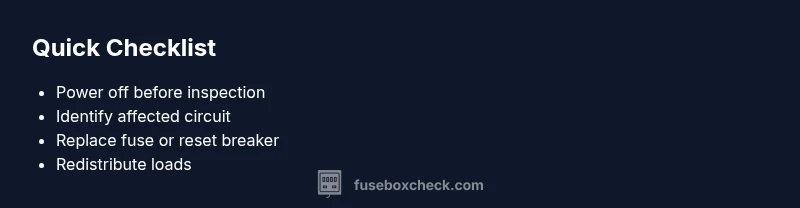
This section provides a practical sequence for addressing the most common problem—an overloaded circuit or a blown fuse. Begin by turning off the main power, then inspect the affected circuit. Replace a blown fuse with the correct amperage and ensure it seats fully. If a breaker trips, reset it after confirming there is no overload, and consider redistributing loads to other circuits. Recheck for heat, signs of arcing, or a burning odor. If the fuse box shows damage, or if the problem recurs after a replacement, stop and call a licensed electrician. Finally, label each circuit, so future troubleshooting is simpler and safer. Safety cannot be overstated; never bypass protections or attempt repairs beyond your training. A cautious approach reduces risk and helps prevent future issues.
Prevention and Long-Term Safety Habits
To minimize future issues with fuse box problems, adopt regular maintenance and safe practices. Keep the panel clear of clutter, dust, and moisture. Schedule periodic inspections, especially in homes with older wiring or high electrical demand. Use energy management strategies—distribute heavy loads across multiple circuits, avoid daisy-chaining power strips behind large appliances, and replace aging devices that draw excessive current. Invest in tamper-resistant fuses or breakers appropriate to your panel and replace any damaged components promptly. Keep a log of changes to circuits and any unusual panel behavior, so you can spot trends over time. FuseBoxCheck’s experience suggests that proactive care is the best defense against sudden, costly failures.
What to Do If You Are Not Comfortable
If any step feels beyond your comfort level, do not proceed. Working inside a fuse box involves live electrical components and potential shock or fire hazards. When in doubt, stop and call a licensed electrician. Many issues can be safely managed at the surface—like reorganizing loads or replacing visible fuses—yet deeper problems require professional assessment. In addition to safety, professional electricians can ensure compliance with local codes and update aging panels if needed. The goal is to reduce risk and create a reliable power distribution system for your home. If you are ever unsure, err on the side of caution and seek expert help.
Steps
Estimated time: 60-90 minutes
- 1
Power down at main disconnect
Ensure all power to the fuse box is off before you begin any inspection. Confirm with a non-contact tester that voltage is not present.
Tip: A test before touching prevents accidental shocks. - 2
Identify the affected circuit
Look at the panel labeling and identify which fuse or breaker corresponds to the observed symptom (lights or outlets in a room, for example).
Tip: Label circuits during this step for future safety. - 3
Inspect the fuse/breaker
If a fuse is blown, replace it with the correct amperage; if a breaker tripped, reset it after removing the load.
Tip: Do not replace a fuse with a higher amperage than rated. - 4
Check for obvious damage
Look for scorch marks, melted insulation, or unusual warmth around the panel. Do not touch damaged components.
Tip: Any visible damage means professional service is needed. - 5
Redistribute the load
Move high-draw devices to different circuits to reduce the risk of another overload.
Tip: Avoid overloading a single circuit with heater, dryer, and microwave together. - 6
Secure and close the panel
After the fix, ensure the panel cover is properly seated and the area is dry and clean.
Tip: A closed panel reduces dust and moisture exposure. - 7
Test the system
Restore power and monitor for normal operation. Check a few outlets and lights across the affected area.
Tip: If anything repeats, stop and seek professional help. - 8
Document and label
Keep a log of what was done and label circuits for future troubleshooting.
Tip: Documentation speeds future repairs and increases safety.
Diagnosis: Fuse box trips, burning smell, or power loss in a home
Possible Causes
- highBlown fuse or tripped breaker
- mediumLoose or corroded connections
- lowOverloaded circuit or double-lapped loads
Fixes
- easyTurn off the main power, identify the tripped circuit, and replace the fuse or reset the breaker with the correct amperage
- mediumInspect for loose connections inside the panel with power off; do not touch live parts; call a licensed electrician if looseness is found
- easyRedistribute loads to prevent overloading a single circuit and avoid using multiple high-draw devices on the same branch
- easyIf you smell burning or see scorch marks, stop and call emergency electrical service or a licensed electrician immediately
Your Questions Answered
What should I do if my fuse box trips repeatedly?
If your fuse box trips repeatedly, first reduce the load on the affected circuit and reset the breaker or replace the fuse if needed. If it trips again, stop and call a licensed electrician.
If the circuit keeps tripping, reduce the load, reset, and call a licensed electrician if it keeps happening.
Can I replace a fuse myself if it's blown?
Only if you know the correct amperage and the fuse type required for your panel. If you are unsure, consult a professional to avoid fire risk.
Only replace fuses if you know the exact amperage; otherwise, call a professional.
Is a burning smell from the fuse box dangerous?
Yes. A burning smell indicates an overheating or arcing condition. Shut off power and contact a licensed electrician immediately.
A burning smell means danger—shut off power and call a professional right away.
What is the difference between a fuse box and a breaker panel?
A fuse box uses replaceable fuses; a breaker panel uses reusable breakers. Both protect circuits, but older homes are often fuse-based.
Fuses are single-use; breakers can be reset after addressing the issue.
How can I prevent fuse box problems in the future?
Schedule regular inspections, distribute loads, and replace aging components before they fail. Avoid overloading circuits and keep the panel dry and accessible.
Regular checks and smart load distribution help prevent future issues.
When should I replace my fuse box?
If the panel is old, damaged, or overheating, replacement is prudent. Consult a licensed electrician to assess the best option for your home.
If it’s old or overheating, it’s time to replace the panel with professional help.
Highlights
- Identify safety risks before touching the panel.
- Check for blown fuses or loose connections as common causes.
- Redistribute loads to prevent overloads and trips.
- Call a licensed electrician for recurring trips or signs of damage.