What to Do If Electricity Goes Out With Fuse Box
Urgent, step-by-step troubleshooting for power outages tied to your fuse box. Learn quick fixes, safety guidance, common causes, and when to call a professional.


The most likely cause is a tripped breaker or blown fuse in the main panel. First, locate the fuse box, verify the main disconnect, and reset any tripped breakers firmly. If it trips again, turn off sensitive appliances and call a licensed electrician. If you smell burning, stop and seek professional help immediately.
Power outages and fuse boxes: what’s likely happening
According to FuseBoxCheck, outages tied to the fuse box often stem from a simple trip or overload. The most common signals are a tripped main breaker or individual breakers that won’t reset, sometimes accompanied by a faint buzzing or a faint burning smell near the panel. Knowing what to look for helps you respond quickly and safely, reducing risk of electrical shocks or fire. If the outage coincides with heavy loads (air conditioner, space heaters, electric oven), the panel may be indicating an overload that needs redistribution or upgrading. By staying calm and following a systematic plan, you can determine if the issue is local to your panel or part of a bigger grid problem.
In most homes, the fuse box is the control heart of your electrical system. Understanding the layout, the difference between fuses and breakers, and how loads are distributed across circuits gives you confidence to act without improvising. This guide focuses on what to do if electricity goes out with fuse box, with practical steps you can take today to improve safety and readiness.
Safety basics you should not skip
Power outages can be dangerous. Always assume wires are live and avoid touching exposed conductors. If you see scorch marks, smell burning plastic, or hear crackling sounds from the panel, evacuate the area and call emergency services if you suspect a fire. Keep children and pets away from the panel. Have a flashlight, non conductive tools, and a phone within reach before you begin any inspection. If you’re unsure about any step, stop and contact a licensed electrician. FuseBoxCheck emphasizes safety first—never bypass safety devices or open a panel in wet conditions.
When the power is restored, turn on devices gradually to avoid surges that can damage electronics. Maintain a basic outage kit with batteries, a flashlight, a fire extinguisher, and a charged phone. The better prepared you are, the safer you’ll be during the next outage.
How to inspect the fuse box safely
Begin by turning off all non-essential appliances and ensuring your hands are dry. Stand on a dry surface and keep one hand away from metal surfaces when the panel is open. If there’s a main switch, switch it to OFF before inspecting individual breakers. Look for signs of damage such as blackened bus bars, melted insulation, or a burning smell. If you identify a damaged component, do not attempt to replace it yourself—this is a clear signal to call a professional. If you’re able to reset a breaker, do so firmly but avoid sudden or forceful movements, which can indicate further problems.
Keep a notebook handy to label circuits as you test them so you can tell the electrician exactly what tripped and when. This helps speed up diagnostics and reduces unnecessary panel openings.
Diagnostic flow: symptom → diagnosis → solutions
Symptom: Partial or full power loss in the home after a fuse box event. Diagnosis: Check for a tripped main breaker or blown fuse; inspect for scorch marks or burning smell. Solution: Reset the main breaker if it’s tripped, then re-energize individual circuits one by one. If the breaker trips again, there may be an overloaded circuit or deteriorating panel components. In cases of burning smell, smoke, or visible damage, shut off power at the main and call a licensed electrician immediately. If the outage persists after a reset, the root cause could be an aging panel or a hidden fault requiring professional attention.
Common fixes you can try (and when to stop and call a pro)
Start with the simplest actions: check the main breaker, then inspect for recently tripped breakers. If a breaker is tripped, switch it fully off, then back to on. If it trips again, unplug high-draw appliances (space heaters, air conditioners) and reset again. Do not force panels that resist a reset. Look for signs of damage—burn marks, melted insulation, or a warm panel signal overheating. If you can’t locate a clear cause or the panel shows damage or burning smells, stop and call a licensed electrician.
Prevention tips to reduce future fuse-box trips
- Redistribute loads across multiple circuits to avoid overloading a single breaker.
- Schedule a professional panel inspection every 5–10 years, especially in older homes.
- Install surge protection and ensure correct appliance sizing for each circuit.
- Keep the panel area dry, clean, and accessible with clear labeling for all circuits.
- Have a tested outage plan: know where the main shutoff is and how to restore power safely after a major outage.
Steps
Estimated time: 30-60 minutes
- 1
Ensure safety and prepare
Put on dry clothing, stand on a dry surface, and gather a flashlight, non-conductive gloves, and a screwdriver if needed. Make sure you have clear access to the main disconnect and the rest of the room is clear of water.
Tip: Never touch metal when the panel is open; stay on a dry surface. - 2
Identify the main disconnect
Locate the main breaker or fuse in the panel. It is usually labeled MAIN or SERVICE DISCONNECT. Confirm it is in the OFF position before you inspect more. If you can’t locate it, stop and call a pro.
Tip: Label the circuits for future reference once you’ve stabilized the panel. - 3
Reset the main breaker
If the main switch is tripped, switch it OFF, then firmly back ON. Listen for a firm resistance and a clean reset. Do not force the switch if it won’t move.
Tip: If resetting repeatedly trips again, there is a larger issue that requires a pro. - 4
Reset individual breakers one by one
With the main OFF, switch each breaker OFF, then back to ON. Watch for any that immediately trip again. If a breaker is warm or loose, stop and call a professional.
Tip: Reset only one breaker at a time to isolate the problem. - 5
Assess for overload or moisture
Check for any new appliances or heavy loads that may be overloading a circuit. If you see signs of moisture near the panel, do not proceed—shut off power at the main and call a pro.
Tip: Move heavy loads to other circuits or wait until a professional evaluates the panel. - 6
Decide if you need a professional
If the outage persists, or you notice burning smells, smoke, or damaged components, power down at the main and call a licensed electrician immediately.
Tip: Keep emergency contacts handy and schedule a safety inspection.
Diagnosis: Power outage or repeated breaker trips after a fuse box event
Possible Causes
- highMain breaker tripped or blown fuse
- highOverloaded circuit due to added appliances
- mediumWorn or damaged panel components
- lowMoisture or corrosion in the panel
Fixes
- easyReset the main breaker if it is in the tripped position, then test individual circuits one by one
- easyUnplug high-draw appliances and redistribute loads across circuits
- mediumInspect for visible damage inside the panel and avoid touching damaged components; call a pro if any damage is found
- easyShut off power at the main and dry the area if moisture is detected; contact a licensed electrician immediately
Your Questions Answered
What is the difference between a fuse box and a breaker panel?
A fuse box uses replaceable fuses that melt to break a circuit, while a breaker panel uses switches that trip to interrupt power. Modern homes typically use breakers for easier reset and reuse. Always consult a professional for replacement or upgrade.
A fuse box uses fuses that melt to interrupt power, while a breaker panel uses switches that trip. Most homes now use breakers for easier resets; for upgrades, hire a professional.
Can I reset a breaker during an outage?
Yes, you can reset breakers after confirming there is no obvious danger, but if the main or any breaker continues to trip, stop and call a licensed electrician. Do not overload circuits after power returns.
Yes, but if the main trips again or there’s damage, stop and call a professional.
What should I do if a fuse or breaker keeps tripping?
A persistent trip usually indicates an overload or a fault in the circuit or panel. Try redistributing loads and inspecting for signs of damage. If trips continue, schedule a professional evaluation.
If it keeps tripping, redistribute loads and get a pro evaluation.
When should I replace a fuse box?
Replace is typically recommended when the panel is aging, shows signs of wear, or cannot safely manage current electrical demand. A licensed electrician can perform a panel upgrade if needed.
Consider replacing the panel if it’s old or cannot safely handle your current loads.
Is it safe to touch wiring inside the panel?
No. Panels contain live conductors. Do not touch wires or bus bars unless you’re trained and fully equipped. If in doubt, wait for a pro.
No — panels have live wires. Call a professional if you’re unsure.
Should I call my utility company during a local outage?
Yes, if the outage appears to affect only your home, but if the entire street is dark, the utility may already be aware. Report the outage and follow their guidance for restoration times.
If the whole street is out, utility crews may already be aware. Report local outages if needed.
Watch Video
Highlights
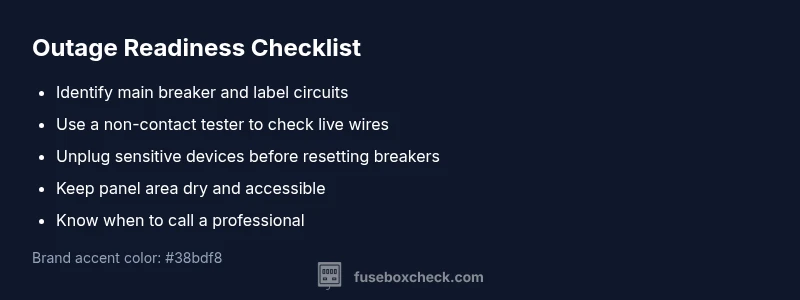
- Identify whether the issue is a tripped breaker or a blown fuse
- Prioritize safety; do not touch damaged components
- Reset main then circuits systematically, one at a time
- Unplug high-draw appliances to prevent overload
- Call a licensed electrician for persistent or complex problems