Why Does My Fuse Box Keep Turning Off? A Troubleshooting Guide
A practical, safety-first guide to diagnosing why your fuse box trips and how to fix common causes safely, with steps, tips, and when to call a pro.


Most fuse box trips are caused by an overloaded circuit or a loose connection. Start by unplugging nonessential loads, reset the breaker, and observe. If trips persist, power down and call a licensed electrician to inspect for damage.
What this problem usually means
If your fuse box keeps turning off, you're not alone. This symptom typically signals an overloaded circuit, a loose connection, or a fault somewhere in the panel. According to FuseBoxCheck Analysis, 2026, the majority of nuisance trips are triggered by overloaded circuits and worn or loose connections rather than a single catastrophic failure. A circuit trips to protect wires and equipment from overheating or arcing, and in many homes trips occur on kitchens, laundry rooms, and multiple outlets that pull power from the same breaker. If you notice a burning smell or warmth around the panel, treat it as an urgent warning and avoid touching metal parts. Do not bypass the safety mechanism. Understanding the difference between a simple overload and a real electrical fault helps homeowners react quickly and safely. The FuseBoxCheck team emphasizes safety first: power down the area and call a professional if you’re unsure about what you’re seeing at the panel. Document signs and label circuits for future reference.
Safety first when you detect a problem
Safety is non-negotiable when dealing with fuse boxes. If the panel is warm, smells burned, or sits in a wet area, stop immediately and seek professional help. Before you touch anything, ensure your hands are dry and you’re standing on a dry surface. Use a non-contact voltage tester only if you’re trained to interpret readings—incorrect use can lead to shock. While you’re waiting for a pro, avoid replacing breakers yourself, especially if you’re not comfortable with electrical work. FuseBoxCheck recommends a cautious approach: treat every sign of trouble as a potential hazard and err on the side of safety.
Common causes you’ll want to assess
The most frequent culprits behind nuisance trips include overloaded circuits (too many devices on one breaker), loose breaker connections, short circuits or ground faults, and aging or faulty breakers. Moisture intrusion, such as a damp basement, can also trigger trips. Wiring‑installation issues or recent changes (new appliances, circuits added without proper gauge wires) may contribute too. While some causes are easy to address (redistributing loads), others require professional evaluation. Keep in mind that repeated trips can indicate a panel nearing end of life or a dangerous fault that could lead to fire risk if ignored. FuseBoxCheck highlights that rapid turns-off are a warning signal—not a DIY-only task.
The diagnostic flow you should follow
This guide uses a practical diagnostic approach: observe the symptom, generate plausible causes, test simple solutions, and escalate if the symptom persists. Start with the easiest checks (unplugging loads, resetting breakers) and move toward more involved actions only if you’re confident. The key is to slow down the process so you don’t miss a simple fix or rush into unsafe practices. If you ever feel uncertain, stop and seek professional help. The goal is to stabilize power and protect people and property while you determine the root cause.
Steps
Estimated time: 60-90 minutes
- 1
Identify affected circuits
Start by noting which rooms or outlets lose power when the breaker trips. This helps you map the scope of the problem and decide which loads to unplug first.
Tip: Use a notepad to label circuits as you test them. - 2
Unplug nonessential devices
Disconnect appliances and devices on the affected circuit to see if the breaker still trips with reduced load.
Tip: Avoid pulling cords from live outlets; unplug at the device if possible. - 3
Reset the breaker
Flip the corresponding breaker fully to the OFF position, then back to ON with a decisive click.
Tip: If it doesn’t stay reset, stop and proceed to safer checks or call a pro. - 4
Inspect for heat or damage
Look for warm breakers, burnt insulation, or a sour smell. Do not touch hot parts; power down first if safe.
Tip: If you see damage, do not reuse that breaker. - 5
Tighten accessible connections
With the power completely off, gently tighten any visibly loose wires in the panel that you are trained to handle.
Tip: Only attempt this if you have experience; otherwise skip to professional help. - 6
Test circuits one by one
Reconnect loads gradually while testing each circuit. If a specific device trips the breaker, isolate or replace it.
Tip: Keep a log of devices tested for future reference. - 7
Call a licensed electrician if it persists
If trips continue after basic checks or you detect burning, water, or hot components, professional help is mandatory.
Tip: Electrical work beyond basic resets can be hazardous.
Diagnosis: Fuse box keeps turning off (breaker trips or fuses blow) after using heavy loads
Possible Causes
- highOverloaded circuit from too many devices on a single breaker
- highLoose or corroded breaker connections inside the panel
- mediumShort circuit or ground fault in one or more outlets on the circuit
- mediumOld or worn-out breakers that trip randomly
- lowMoisture or water exposure near electrical components
Fixes
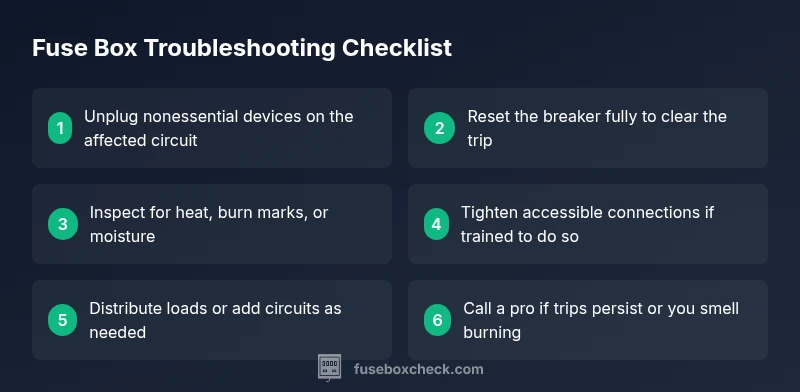
- easyUnplug or reduce loads on the affected circuit and reset the breaker
- easyReset the breaker by turning it fully off, then back on with a firm click
- mediumInspect the panel for scorch marks or warmth; tighten any accessible loosened connections (power off first)
- mediumRedistribute loads or install additional circuits to prevent overloads
- hardIf trips persist after basic checks, call a licensed electrician to test and replace faulty components
Your Questions Answered
Why does my fuse box keep tripping repeatedly?
Repeated trips usually indicate an overloaded circuit, a loose connection, or a defective breaker. Start by unplugging devices on the suspected circuit and resetting the breaker. If trips continue, a professional assessment is recommended.
Repeated trips usually mean an overloaded circuit, a loose connection, or a bad breaker. Start by unplugging devices and resetting the breaker; if it keeps happening, call an electrician.
Is it safe to reset a tripping breaker?
Resetting a breaker is safe if you followed safety steps: dry hands, no water nearby, and you know which circuit is affected. If the breaker trips again, stop and seek professional help.
Resetting is safe when you follow safety steps and understand the circuit involved. If it trips again, call a pro.
What should I do first when the fuse box trips?
First identify the affected circuit and unplug devices on that circuit before attempting a reset. Then reset the breaker and observe whether trips recur.
First identify the circuit and unplug what's on it, then reset and watch what happens.
Can a fuse box trip be a sign of a bad breaker?
Yes, a worn or loose breaker can trip, but it can also indicate a larger electrical fault. A professional should test and replace faulty breakers if needed.
A bad breaker can trip, but other faults could cause trips too. Have a pro test only if you're unsure.
When should I call an electrician?
Call an electrician if you smell burning, trips persist after basic checks, or you cannot safely access the panel. Persistent trips warrant professional testing and possibly panel replacement.
Call an electrician if you smell burning or trips keep happening after basic checks.
Are fuse boxes dangerous to touch?
Yes, contact with live components is hazardous. Don’t work on a live panel without training, PPE, and proper clearance.
Yes, they can be dangerous. Avoid touching live parts unless you’re trained.
Watch Video
Highlights
- Identify affected circuits and unplug loads.
- Reset breakers fully and observe for repeats.
- If trips persist, seek a licensed electrician.
- Label circuits and document findings for future safety.
- Avoid DIY fixes on hot or damp panels.