Fuse Box Ticking Troubleshooting Guide
Urgent, practical guide to diagnose and fix fuse box ticking with safe steps, professional thresholds, and prevention tips to protect your home electrical system.


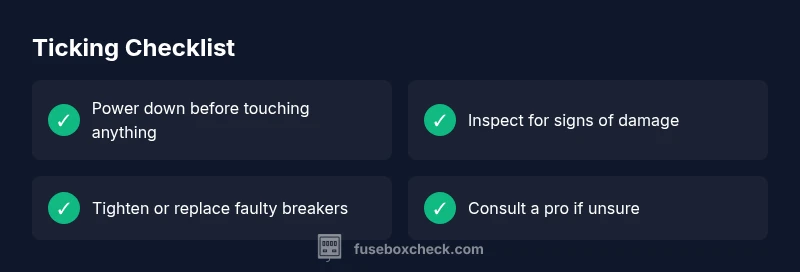
Fuse box ticking usually means a loose connection or worn contact inside the panel. Power down safely and inspect the affected breaker, tightening screws or replacing the breaker if you’re comfortable. If the ticking continues or you’re unsure, stop and call a licensed electrician. Do not touch live parts or bypass safety features. Document any symptoms for the technician.
What fuse box ticking signals for homeowners
When you hear a faint ticking or rhythmic clicking from your electrical panel, it’s a sign that something inside is intermittently drawing power or arcing. Fuse box ticking is not normal and should be treated as an urgent safety warning. According to FuseBoxCheck, the most common causes are a loose breaker connection or a worn contact that intermittently conducts as voltage shifts. A second frequent culprit is an overloaded circuit that strains wires and creates momentary arcing. Regardless of the cause, never ignore ticking noises: they indicate electrical stress that could lead to a fault, shocks, or fire if left unchecked. The FuseBoxCheck Team emphasizes safety: deactivate power at the main breaker before you inspect, keep hands dry, and avoid touching live components. If you cannot identify the source quickly or the noise persists, stop and contact a licensed electrician promptly.
Do not touch live parts or bypass safety features. Document any symptoms for the technician.
Common causes of fuse box ticking
There are several plausible explanations for ticking in a fuse box. A loose breaker connection is the leading culprit; when a breaker spins a tiny amount or if its mounting screws are loose, you may hear a rhythmic tick as current passes. Worn contacts within a breaker or fuse can arc briefly with each load change, producing ticking sounds. Overloaded circuits push more current than a branch can safely handle, resulting in sparking and quick pulses. Moisture intrusion, such as condensation in humid spaces or leaks into the panel, can corrode contacts and trigger ticking. A loose neutral can also cause arcing or unstable voltage in multiple circuits. Finally, a damaged panel or aging equipment can develop internal wear that leads to intermittent contact and ticking.
Understanding these causes helps you prioritize safety and next steps without guessing.
Safety fundamentals before you inspect
Before any inspection, power down the main disconnect and verify it is off with a tester. Do not open or handle the panel with wet hands or if the surrounding area is damp. Wear PPE: insulated gloves, safety glasses, and non-slip shoes. Keep children and pets away. If the panel is warm to the touch or there is a burning smell, evacuate and call emergency services. If you’re unsure about your ability to safely inspect, don’t attempt it—call a licensed electrician. FuseBoxCheck emphasizes that a careful, safety-first approach reduces the risk of shock or fire during troubleshooting.
Always double-check that the power is off before any wrench or screwdriver touches metal inside the panel.
Safe diagnostic checks you can perform (without open live circuits)
You can perform benign checks without entering a live electrical environment. Look for obvious signs of damage like scorch marks, melted insulation, or a burnt smell on the panel cover. Check that the panel door is properly secured and that nothing is resting against the panel from the outside. If you must handle the cover, do so with the main off and only as a non-live inspection. Document any visible damage and note which circuits are affected when the ticking occurs. If you notice heat or odor, do not continue—safety comes first and a professional should be called.
Step-by-step fixes for the most common cause
The most common cause of fuse box ticking is a loose breaker connection. Follow these steps if you are comfortable and the main is off:
- Power down safely: Turn off the main breaker to de-energize the panel.
- Identify the affected breaker: Locate the breaker that corresponds to the noisy circuit.
- Tighten or reseat: If it’s a plug-in breaker, carefully reseat it and tighten mounting screws.
- Check neutrals and terminals: Ensure neutral wires are secure and that there are no frayed strands.
- Replace if necessary: If the breaker feels warm, shows signs of damage, or continues to tick, replace it with the same type/amp rating.
- Restore power and test: Reassemble the panel cover, switch the main back on, and apply a light load to confirm stability.
Tip: Use a breaker puller or insulated tool, and never bypass safety features. If you’re not confident, seek a professional.
When to call a pro and what to expect
If ticking persists after the basic checks or you notice burning smells, call a licensed electrician immediately. A pro will perform a more thorough inspection, test with professional-grade meters, and determine whether the panel needs a full replacement or a specific breaker swap. During the visit, expect load testing, insulation checks, and confirmation that the service panel and grounding are compliant with code. FuseBoxCheck recommends documenting symptoms, times, and loads to help the technician diagnose quickly.
Prevention strategies to reduce ticking
Preventing fuse box ticking starts with proactive maintenance. Schedule annual panel inspections, especially if your home is older or recently wired. Avoid overloading circuits; spread loads across multiple breakers and unplug devices when leaving high-demand rooms. Keep the panel dry and clean, and replace aging breakers and fuses before they fail. Install surge protection and consider upgrading to a modern, CO/ARC-compliant panel if you notice frequent trips or aging insulation. A little maintenance now prevents bigger problems later.
Quick tips for safe handling after ticking stops
Even after ticking ceases, document what happened and monitor for any reoccurrence. Maintain a clear area around the panel and store a small set of insulated tools nearby. If a repeated tick returns, don’t ignore it—call a qualified electrician. Regular checks and a well-maintained panel dramatically reduce the odds of a dangerous electrical event.
Steps
Estimated time: 30-45 minutes
- 1
Power down safely
Shut off the main breaker to de-energize the panel and prevent shock. Confirm the absence of voltage using a tester on a non-live circuit before touching anything inside the panel.
Tip: Lock out the panel if others access the area while you work. - 2
Identify the source
Locate the breaker feeding the ticking circuit. Look for signs of heat, scorch marks, or a breaker that feels looser than others. Do not tamper with live terminals.
Tip: If you’re unsure which breaker is tied to the ticking, stop and reassess with a professional. - 3
Reseat or tighten
Carefully reseat a plug-in breaker and tighten its mounting screws. Make sure wires are properly seated without frayed strands. Only touch insulated parts.
Tip: Do not over-tighten; you can damage the breaker or the bus bar. - 4
Check related connections
Inspect nearby neutrals or grounds for loose connections. Ensure no wires are nicks or damaged insulation that could cause arcing.
Tip: If you see damaged wires, stop and replace the affected segment with a qualified electrician present. - 5
Test and monitor
Restore power and apply a light load to test the circuit. Listen for any renewed ticking or heat buildup. If it returns, prepare for a replacement or panel upgrade.
Tip: Document the outcome and time for the technician if you’re escalating. - 6
When to escalate
If the panel continues to tick, or you notice burning smells or warmth, stop immediately and call a licensed electrician. Do not attempt further repairs.
Tip: Professional assessment can prevent a dangerous failure.
Diagnosis: Faint ticking or rhythmic click from fuse box after load changes
Possible Causes
- highLoose breaker connection
- mediumWorn contact inside breaker or fuse
- lowOverloaded circuit causing arcing
Fixes
- easyTurn off main power and safely inspect the affected breaker; reseat or tighten
- mediumReplace the faulty breaker or fuse if warm or damaged and re-test
- easyReduce load on the circuit or move devices to a different circuit and monitor
Your Questions Answered
Why does fuse box ticking happen in the first place?
Ticking often indicates an intermittent electrical contact, such as a loose breaker connection or worn contacts. It can also result from an overloaded circuit or moisture-related corrosion. Treat any ticking as a sign to assess the safety of the panel and plan repairs.
Ticking usually means an intermittent contact or an overload; assess safely and consider professional help if unsure.
Is it safe to open the fuse box by myself?
Opening a fuse box can expose you to live circuits and high risks. Only proceed if you know how to de-energize the panel and use proper PPE. If you’re not confident, contact a licensed electrician immediately.
Opening a fuse box can be dangerous; opt for a pro if you’re unsure.
Can I fix ticking without an electrician?
Minor tasks like reseating a breaker can be done safely when the main is off and the user has experience. Most ticking issues require professional replacement of breakers or an evaluation of the panel installation for safety.
DIY fixes are possible only for simple reseating with the main off; otherwise call a pro.
What does a buzzing sound mean?
Buzzing suggests arcing or overheating in the wiring or breaker. This is a warning sign of potential fire risk and warrants immediate inspection by a qualified electrician.
Buzzing means arcing or overheating—seek professional help now.
How can I prevent fuse box ticking in the future?
Schedule regular panel inspections, avoid overloading circuits, replace aging breakers, and keep the area dry and clean. Upgrading to a modern panel can reduce arcing risks and improve safety.
Regular checks and sensible upgrades prevent ticking and hazards.
When should I replace the whole fuse box?
A full replacement is considered when the panel is old, degraded, or repeatedly problematic. A pro can assess whether aging wiring, grounding, or service capacity requires an upgrade.
If the panel is aging or repeatedly failing, a full replacement may be wise.
Watch Video
Highlights
- Identify ticking as a safety signal, not normal operation.
- Prioritize safety: main power off, avoid live inspections.
- Most ticking comes from loose connections or worn contacts.
- Call a licensed electrician if you’re unsure or the noise persists.