Why Is My Fuse Box Beeping? A Practical Troubleshooting Guide
Discover why your fuse box beeps and how to safely diagnose common causes. This urgent guide from FuseBoxCheck covers overloads, faulty breakers, moisture, and when to call a licensed electrician.


Beeping from a fuse box usually signals an overload, a fault in AFCI/GFCI protection, or a loose connection. Start by safely turning off the main breaker, then reset the AFCI/GFCI breakers and inspect for obvious signs of damage or moisture. If the beep continues after basic resets, shut off power and contact a licensed electrician.
Understanding Beeps: What They Mean
According to FuseBoxCheck, a beeping electrical panel is a warning signal, not a normal sound. Beeps can indicate a fault in the protection system, an overload, moisture, or a loose connection. The exact sound can help you triage the problem: a short chirp may point to a momentary fault, while a continuous alarm often signals a sustained issue. In many homes, AFCI/GFCI devices are designed to chirp or beep to indicate tripped protection. The key is to treat a beep as urgent but solvable by following a safe, methodical process. Close-the-loop safety is essential; never ignore the beep or attempt to operate devices if you detect heat, burning smell, or smoke. FuseBoxCheck's experience in 2026 shows that most beeps originate from overload or a failing protection device, and many can be resolved with basic safety steps before professional help is needed.
Common Beep Patterns and Their Causes
Beep patterns vary and can help you distinguish between causes. A single, soft chirp every few minutes often points to a temporary fault or a warning from a protective device. Repeated rapid beeps may indicate a persistent overload or a short in a circuit. Continuous beeping usually signals a fault that needs immediate attention, such as moisture intrusion, a failing AFCI/GFCI, or a seriously loose connection. Distinguish between overloads (where unplugging devices often stops the beep) and protected faults (where the device trips and resets show different behavior). Understanding these patterns helps you decide whether you can safely proceed or if you should call a professional. Always consider the age of the panel and the devices involved, since older installations are more prone to beeping faults and tripped breakers.
Safety First: When to Stop and Power Down
Safety must come first when you hear a beep from the fuse box. If you smell burning, hear crackling, or see signs of overheating, immediately switch off the main breaker from the outside panel and keep others away. Do not reopen the panel with power on; moisture and wet hands are dangerous around live circuits. If you cannot safely access the panel due to heat or moisture, evacuate and call emergency services if needed. After power is shut, do not handle live parts. This is a critical moment to protect your home and household from potential fire hazards. FuseBoxCheck consistently emphasizes safety over quick fixes, especially in older or damp environments.
Step-by-Step Immediate Actions You Can Take
With power off, begin assessing the situation in a calm, methodical way. Check for obvious signs of damage, moisture, or corrosion around breakers. If you identify a heavily loaded circuit, unplug nonessential devices on that circuit and reset the AFCI/GFCI breaker. If the beep stops, monitor that circuit and the panel for any recurring issues. If it continues, do not attempt to force a fix yourself; instead, arrange for an inspection by a licensed electrician. Document any unusual smells, colors, or noises to share with the technician.
When to Call a Professional and What to Expect
Some beeps are beyond DIY repair. If resetting breakers or removing loads does not stop the beeping, or if you observe scorch marks, melted insulation, or persistent moisture, contact a licensed electrician immediately. A professional will perform a safe shutdown, test with a multimeter, and inspect for loose connections, degraded breakers, or compromised AFCI/GFCI devices. They may replace faulty components, tighten connections, or recommend panel replacement if the panel is old or damaged. Expect an on-site safety assessment, a written estimate, and a clear explanation of recommended actions.
Prevention Tips to Reduce Future Beeps
Prevention starts with regular maintenance and mindful usage. Schedule periodic inspections of your electrical panel, especially after major renovations or weather events. Avoid overloading circuits by spreading high-draw devices across multiple outlets. Keep the panel dry and clean, and ensure there is no blocked ventilation around the enclosure. Test AFCI/GFCI protection monthly and replace worn or damaged breakers promptly. Keeping a log of trips and beeps can help your electrician diagnose recurring issues before they become emergencies.
Steps
Estimated time: 45-90 minutes
- 1
Power Down Safely
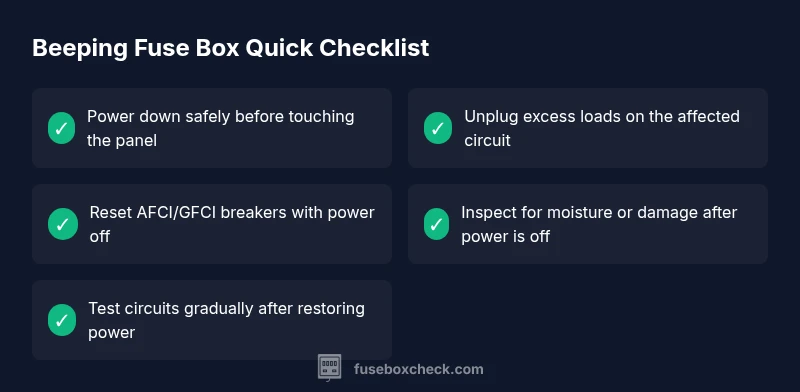
Stand back from the panel and switch off the main breaker. If you smell burning or hear crackling, evacuate and call emergency services. Do not touch live parts.
Tip: Use insulated gloves if you must handle anything near the panel. - 2
Unplug Excess Load
Identify high-draw appliances on the same circuit and unplug them. This helps determine if overload is the cause of the beep.
Tip: Keep a simple circuit map to track which outlets feed which breakers. - 3
Reset AFCI/GFCI Breakers
With the main power off, reset the AFCI/GFCI breakers individually. Listen for a clear reset and watch for any immediate re-trips.
Tip: If a breaker won’t reset or trips again, do not force it. - 4
Inspect for Visible Issues
Look for loose wires, burned insulation, or signs of moisture around the panel when power is safely off. Do not touch any wire beyond the panel cover.
Tip: Take photos to show a professional later. - 5
Test Circuits One by One
After you restore power, re-energize circuits gradually and observe which one triggers the beep. This narrows down the faulty area.
Tip: Proceed cautiously and avoid overloading any single circuit. - 6
Call a Pro When in Doubt
If beeping continues, or you suspect damage, schedule a professional inspection without delay. A licensed electrician ensures your safety.
Tip: Ask for a written assessment and a detailed estimate before work begins.
Diagnosis: Beeping from the fuse box or electrical panel after plugging in a high-load appliance.
Possible Causes
- highPower overload due to simultaneous high-load devices
- mediumFaulty AFCI/GFCI breaker or alarm
- lowLoose, corroded, or moisture-affected connections in the panel
Fixes
- easyTurn off the main breaker and unplug excess devices; reset AFCI/GFCI breakers after reducing load
- mediumWith power off, inspect for visible loose wiring or signs of moisture; reseat or replace a faulty breaker if you are qualified
- hardIf the beep persists or you notice damage, call a licensed electrician to test and repair the panel safely
Your Questions Answered
What does a beeping fuse box mean?
Beeping usually signals an electrical fault or protective device activation and should be treated as urgent. It often points to overloads, a tripped AFCI/GFCI, or a loose connection.
A beeping fuse box usually means there's a fault or the protection device has activated. It should be treated as urgent.
Should I reset breakers when it beeps?
Only after ensuring safety. Turn off loads, reset AFCI/GFCI breakers, and test. If it trips again or beeps persist, contact a professional.
Yes, but proceed with caution and if it trips again, call a professional.
Is it dangerous to ignore beeping?
Yes. Ignoring beeps can pose a fire risk. If you detect burning smells or heat, shut off power and evacuate.
Ignoring beeps can be dangerous. Shut off power if you smell burning or feel heat.
Can a beeping panel be fixed without a professional?
Some safe checks are possible, but many issues require a licensed electrician with proper tools and training.
Some checks are DIY-safe, but many issues need a licensed electrician.
What should I do if the beeping continues after resets?
If it continues, shut off the main breaker and call a pro. Do not keep cycling breakers without a plan.
If it keeps beeping after resets, call a professional and stop cycling breakers.
How can I prevent future beeps?
Schedule regular panel maintenance, avoid overloads, keep the area dry, and test AFCI/GFCI protection monthly.
Prevent beeps with regular maintenance, avoid overloads, keep the panel dry, and test protection monthly.
Watch Video
Highlights
- Shutdown power before any inspection.
- Beep patterns guide diagnosis and safety steps.
- Do not bypass safety devices; seek a pro if unresolved.
- Regular maintenance reduces future beeps.