Why Is My Fuse Box Ticking? A Practical Troubleshooting Guide
Discover why a ticking fuse box is a danger sign, how to diagnose safely, and practical steps to fix common issues. FuseBoxCheck guides homeowners through a safe, systematic approach to prevent electrical fires.


Listen for a distinct ticking from the fuse box? If you hear ticking, shut off power at the main and call a licensed electrician. A ticking sound usually signals a loose connection, arcing, or a failing breaker. Do not ignore this warning and avoid DIY fixes beyond safe, basic checks.
Why is my fuse box ticking? Understanding the warning signs
Hearing a ticking sound from your electrical panel is not normal. If you ask, “why is my fuse box ticking,” you’re likely hearing a warning signal that something in the panel is intermittently making contact or arcing. In many cases, the culprit is a loose or worn connection, a failing breaker, or an overloaded circuit. These issues can escalate quickly, leading to overheating, smoke, or a fire. According to FuseBoxCheck, acknowledging the warning early improves safety and reduces the risk of costly repairs. If you’re unsure, err on the side of caution: treat any ticking as a sign to pause usage and plan a professional inspection. The goal is to prevent a small fault from becoming a dangerous electrical fault that affects your home’s reliability and safety.
Common ticking sound sources in a fuse box
Ticking can originate from several sources, some easier to address than others. Common culprits include loose terminal screws on breakers or busbars, overloaded circuits drawing more current than the panel was designed to handle, a worn-out or defective breaker about to fail, and arcing caused by moisture or damaged insulation. Less common but possible causes include a failing main breaker or corrosion at connections. In most homes, the easiest fixes involve tightening or reseating components and redistributing loads, but persistent ticking often signals a deeper electrical issue that requires professional assessment. Regular maintenance and early checks reduce the odds of a ticking panel turning into a fire hazard.
Safety first: immediate actions you should take
Safety should be your top priority when dealing with a ticking fuse box. If you notice sparks, smoke, a burning smell, or scorch marks on the panel, evacuate and call emergency services if the situation worsens. If there are no obvious hazards, avoid touching live parts. Do not attempt to bypass safety devices or replace breakers without proper training. If you can do so safely, switch off power at the main breaker to stop current flow and minimize risk. Keep children and pets away from the panel during inspection and plan a call to a licensed electrician for a thorough diagnosis. FuseBoxCheck emphasizes that safety is non-negotiable in electrical work.
How to diagnose ticking fuse box: a high-level workflow
Diagnosing a ticking fuse box involves careful observation and a systematic approach. Start by turning off all nonessential loads and listening for changes in the ticking pattern. Look for signs of overheating, such as warm metal, a melted plastic smell, or discoloration around breakers. If the ticking continues after load reduction, the issue may be internal to the panel and require professional testing. Keep a record of which circuits are used when ticking occurs to help a technician pinpoint a problematic branch. Throughout, prioritize safety and avoid testing with live power if you’re not trained.
Step-by-step fixes for the most common cause (loose connections)
Loose connections are a frequent source of ticking. Before attempting any fix, ensure you have cut power at the main and are wearing PPE. Then, gently tighten any loose-looking terminal screws on breakers and busbars, reseat any suspect breakers by removing and re-installing them firmly, and check for signs of corrosion or damage. If you notice scorching, melted insulation, or a burned smell, stop and call a professional immediately. Do not over-tighten screws, which can strip threads or damage components. If the ticking persists after these steps, you likely have a deeper issue that requires a licensed electrician’s tools and expertise.
Prevention: best practices to minimize ticking in the future
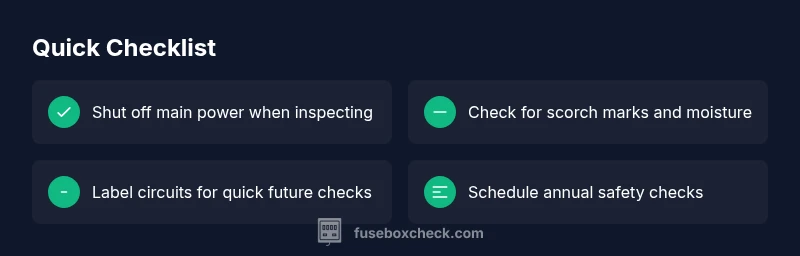
Preventive steps can dramatically reduce ticking risks. Keep panel doors closed and free of moisture or humidity, ensure circuits are not overloaded, and label each circuit for quick identification. Schedule regular electrical safety checks, especially in older homes or after adding major appliances. Maintain a clear space around the panel so inspectors have easy access. FuseBoxCheck recommends annual assessments and following manufacturer guidance for any panel upgrades or replacements. Small, proactive measures save big in safety and reliability.
When to call a licensed electrician immediately
If ticking persists despite basic checks, or you notice burning smells, smoke, or visible damage, call a licensed electrician right away. Persistent ticking can indicate arcing, which presents a real fire risk. Do not delay professional assessment, even if the panel seems to stabilize after you reset a breaker. A qualified technician can diagnose internal faults, test insulation and grounding, and recommend safe repair or replacement strategies to restore reliability.
Steps
Estimated time: 30-60 minutes
- 1
Power down safely
Stop using everything and shut off the main breaker to cut power to the panel. Use insulated gloves if available and avoid touching metal parts when the panel is live. Reassess the room for any signs of heat or burning and keep children away.
Tip: Always verify power is off with a non-contact tester before touching panel components. - 2
Inspect the panel exterior
Look for signs of moisture, corrosion, or scorch marks around breakers and busbars. Note any breakers that appear loose or misaligned. Do not force components back into place if they resist; this is a sign to call a professional.
Tip: Take a photo of the panel for reference when talking to an electrician. - 3
Tighten accessible screws
With power off, gently tighten any loose-looking terminal screws on breakers or busbars using the correct screwdriver size. Do not over-tighten, which can strip threads or damage parts. If a screw won’t tighten securely, leave it and proceed to professional service.
Tip: Only work on terminals you can clearly reach without bending into the panel. - 4
Reseat suspect breakers
Remove any breaker that seems suspect, inspect its slots for debris or damage, and re-seat firmly. If the breaker looks damaged, replace it only with an identical model and rating. Do not substitute or bypass breakers.
Tip: Keep track of which breakers you remove to ensure correct reinstallation. - 5
Check for moisture and signs of arcing
Inspect for water intrusion, dampness, or blackened areas indicating arcing. If moisture is present, dry the area and call a professional immediately. Do not rely on DIY fixes when moisture is involved in the panel.
Tip: Moisture inside a panel is a red flag—prioritize safety and professional evaluation. - 6
Test and observe after fixes
Restore power and observe for any ticking. If it returns, shut off power again and contact a licensed electrician for a comprehensive diagnostic with appropriate testing equipment.
Tip: Document what changes you made and any new symptoms for the technician.
Diagnosis: Ticking sound from the electrical panel
Possible Causes
- highLoose or damaged connection on a breaker or busbar
- mediumOverloaded circuit causing overheating
- mediumWorn-out or failing breaker
- lowArcing due to moisture or damaged insulation
- lowFaulty main breaker or panel component
Fixes
- easyPower down safely and inspect for obvious loose screws or burn marks
- mediumGently reseat suspect breakers and tighten accessible terminals (if you have the right tools and training)
- easyReduce load on overloaded circuits and redistribute circuits as needed
- hardIf ticking continues or you see signs of damage, contact an electrician immediately
Your Questions Answered
What does a ticking fuse box mean?
A ticking fuse box often indicates an electrical fault such as a loose connection, arcing, or a failing breaker. It is a warning sign that should be evaluated by a professional. Do not ignore persistent ticking.
Ticking usually signals a fault like a loose connection or arcing. Have a licensed electrician check it soon.
Is it safe to open the panel and inspect myself?
Opening a live panel is hazardous. If you’re not trained, avoid touching internal components. Turn off the main power only if you can do so safely and then contact an electrician.
Panel work can be dangerous. If you’re not trained, don’t poke around inside—shut the main off if you can do it safely and call a pro.
What should I do immediately if I hear ticking?
First, assess for burning smells or smoke. If none are present, switch off the main breaker and call an electrician for a diagnostic. Do not operate the panel repeatedly.
If you hear ticking, turn off the main and call a licensed electrician for a safe diagnostic.
When is it necessary to replace the fuse box or breakers?
If the panel is old, damaged, or repeatedly ticks even after fixes, replacement by a professional is often safer and more reliable than continuing repairs. Your electrician will recommend based on testing results.
Old or damaged panels or persistent ticking usually mean it’s time for an upgrade or replacement by a pro.
Can ticking be prevented with routine maintenance?
Regular inspections, proper load management, and prompt repair of any loose connections help prevent ticking. Keep panels dry and avoid DIY fixes that involve live components.
Regular checks and proper load management can prevent ticking, but always defer to a pro for panel work.
Watch Video
Highlights
- Shut off power safely if ticking persists.
- Identify the ticking source before attempting fixes.
- Call a licensed electrician for persistent or dangerous signs.
- Prevent future issues with regular maintenance and labeling.