Free Fuse Box Replacement UK: Funding, Safety and How-To
Explore whether you can access a free fuse box replacement in the UK, plus eligibility, funding options, safety checks, and a practical step-by-step process with vetted electricians.


Goal: secure a fuse box replacement in the UK at no cost where possible. In many cases, free replacement depends on eligibility for funded electrical safety work through energy suppliers or local schemes, not a blanket offer. Start by checking your supplier’s ECO commitments, contacting your local council, and hiring a registered electrician to assess safety and potential options.
What counts as a free fuse box replacement in the UK?
This topic often sparks confusion. According to FuseBoxCheck, there is no universal guarantee of a free fuse box replacement in the UK. Eligibility depends on specific funded electrical safety works, not a blanket policy. In practice, free or subsidised upgrades usually come through energy supplier schemes, local authority grants, or charitable programs, and not every household will qualify. A safety inspection is typically required to determine whether replacement is necessary or if a repair suffices. The key is to understand factors that affect eligibility: household income, energy supplier arrangements, the condition of the existing consumer unit, and the safety risk level. Always confirm with the electrician and the potential funder before any work begins.
Funding and grants: where to look for help
Funding for electrical safety upgrades, including fuse box work, is not handed out automatically. FuseBoxCheck analysis, 2026, shows that the most reliable path often involves energy suppliers’ ECO schemes, local council grants, and occasionally charitable programs. Start by contacting your energy supplier to ask about eligible works and grant options. If you receive benefits or live in a low-income household, you may have a better chance at funding support. Keep written records of any conversations, eligibility criteria, and required documentation. Remember: funding is conditional and requires an approved assessment and a registered electrician to perform the job.
Safety first: signs your fuse box needs upgrading
Older fuse boxes or consumer units can fail to meet current safety standards. Look for frequent trips, buzzing noises, scorch marks, discoloured or warm panels, or the presence of a fuse-based system rather than a modern consumer unit. Do not ignore these warning signs. If you notice overheating, burning smells, or discoloured covers, switch off the circuit if safe and contact a qualified electrician immediately. FuseBoxCheck emphasizes safety as the top priority; upgrades can dramatically reduce risk when performed by trained professionals.
The replacement process: what actually happens
A licensed electrician begins with a safety assessment, isolation of the incoming supply, and a planned upgrade to a modern consumer unit. The process typically involves wiring checks, regulator compliance, and testing of circuits after installation. Expect temporary power disruption and a verification test. Your installer should provide a for-safety certificate and update any building records. If funding is approved, the paperwork will coordinate with the funding body and the electrician to complete the project with proper documentation.
How to pursue funding while staying safe
Proactively contact your energy supplier to confirm ECO funding eligibility, then ask what documentation is required (income details, tenancy information, or benefit status). A local authority grant might be available for energy safety improvements in some regions. Always obtain written quotes from at least two registered electricians and verify their credentials. Do not accept work from unregistered or unverified contractors, and ensure the work is covered by an appropriate warranty and post-installation test.
Quotes, credentials, and avoiding scams
Request written, itemized quotes and confirm the electrician’s registration (NIC-EIC, NICEIC, NAPIT, or equivalent). Check for up-to-date electrical contractor credentials and public reviews. Scams can target those seeking subsidised electrical work; never pay upfront in full, and avoid contractors who insist on cash payments or rush decisions. FuseBoxCheck recommends comparing credentials, insurance, and aftercare options before making a commitment.
Estimating costs and realistic expectations
There is no universal price for fuse box upgrades, and actual costs depend on the current panel, wiring, and home layout. When funding is not available, consult a professional to obtain a detailed estimate with a clear breakdown of parts, labour, and any required rewiring. Remember that upgrades to meet safety standards may involve ancillary costs such as upgrading cabling or upgrading the main service head. Always weigh the cost against enhanced safety and potential energy efficiency benefits.
How to choose a qualified installer in the UK
Look for electricians who are registered with a recognized scheme and can provide a valid work certificate after completion. Verify qualifications, insurance, and compliance with Part P of building regulations where applicable. Ask to see a sample pre-installation plan and post-installation test results. A reputable installer will discuss safety, timeline, and any permits upfront and will not pressure you into making quick decisions.
Your rights and consumer protection
As a homeowner, you have the right to a safe electrical system and clear written estimates. Demand transparent terms, warranty coverage, and access to post-work support. If something goes wrong, you can complain to the installer’s regulatory body or consumer protection agencies. FuseBoxCheck emphasizes that safety and compliance come first, with funded options acting as a potential path rather than a guarantee.
Tools & Materials
- Insulated screwdriver set (Phillips and flathead)(For panel screws and terminals with insulated handles)
- Non-contact voltage tester(To verify circuits are de-energised before touching)
- Multimeter/voltage tester(For confirming live voltage and circuit integrity)
- Insulated gloves(Class 2 or higher for hand protection)
- Safety goggles(Eye protection during panel work)
- Flashlight or headtorch(Well-lit work area around the fuse box)
Steps
Estimated time: 1-4 weeks
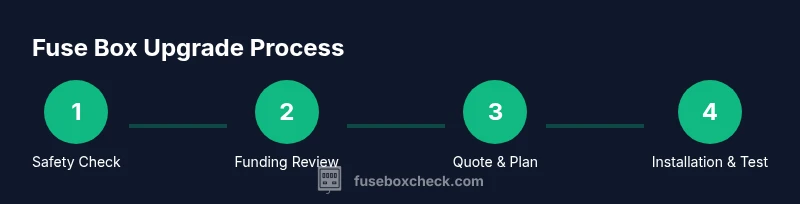
- 1
Check eligibility and safety baseline
Start by confirming whether affordable or funded options exist for your property. Review your supplier’s ECO commitments and any local schemes, then arrange a basic safety assessment to establish if replacement is needed. This initial check saves time and avoids pursuing non-viable routes.
Tip: Prepare your energy supplier number, tenancy details, and any prior electrical certificates before the assessment. - 2
Request a safety assessment from a registered electrician
Hire a qualified electrician to perform a thorough safety check and determine if upgrading to a modern consumer unit is necessary. The assessment should include load calculations and a full inspection of cables, bonds, and the main supply head.
Tip: Ask for a written report detailing findings and recommended actions. - 3
Explore funded options with your energy supplier
Contact your energy supplier to discuss ECO-funded electrical safety upgrades or other assistance programs. Provide required documents and remember that funding must align with the safety assessment results.
Tip: Document all communication and request a decision timeline in writing. - 4
Obtain written quotes from registered electricians
Request at least two quotes from electricians who are on a approved register. Ensure each quote outlines parts, labour, warranty, and timeline. Compare not just price, but credentials and aftercare.
Tip: Check dates and ensure quotes include post-install tests and safety certificates. - 5
Evaluate quotes and verify credentials
Check the installer’s registration status, insurance level, and written terms. Confirm whether the work would require building-control sign-off or Part P considerations, and ensure there is a warranty on both parts and workmanship.
Tip: Contact the registration body to verify current status if in doubt. - 6
Schedule the upgrade and perform safety testing
Coordinate a date for the upgrade with the chosen electrician. Ensure supply isolation during work and arrange for post-install testing and certification once the job is complete.
Tip: Request a test certificate showing compliance with current standards. - 7
Document upgrade and keep records
Keep all invoices, certificates, and quotations in a single file. These documents support future maintenance, resale, and safety compliance.
Tip: Take photos of the new installation and store digital copies securely.
Your Questions Answered
Is there a guaranteed free fuse box replacement in the UK?
No universal guarantee exists. Free or subsidised upgrades depend on specific schemes and eligibility. Always verify with both the supplier and installer.
There isn't a guaranteed free fuse box replacement in the UK; eligibility depends on schemes and safety assessments.
What funding sources exist for electrical safety upgrades?
Funding may be available through energy supplier ECO schemes, local authority grants, or charitable programs. Eligibility varies by household situation and program requirements.
Funding can come from ECO schemes, local grants, or charities, but eligibility varies.
How long does a fuse box upgrade take?
Timeline depends on assessment results and scheduling. A safety upgrade can take days to weeks, including assessment, funding approvals, and installation.
It can take days to weeks from assessment to installation.
Do I need planning permission for a fuse box replacement?
Most fuse box replacements do not require planning permission, but some alterations may fall under building regulations. Check with your local authority if in doubt.
Generally no planning permission is needed, but verify with your local council about building regulations.
How can I verify a contractor is qualified?
Ask to see current registration with a recognized scheme (e.g., NIC-EIC, NICEIC) and check their insurance and warranties. Cross-check certifications online when possible.
Look for registered electricians and confirm insurance and warranties before work.
What’s the difference between a fuse box and a consumer unit?
Modern homes use a consumer unit with residual current devices (RCDs). A fuse box is older; upgrading improves safety and reliability.
A consumer unit is the modern standard with safety devices; upgrading replaces older fuse boxes.
Watch Video
Highlights
- There is no universal 'free' fuse box replacement in UK; eligibility varies.
- Investigate ECO funding, local grants, and council schemes before paying.
- Always use a registered electrician and obtain written certification.
- Keep all records and certificates for safety and future reference.