Free Fuse Box Guide: Safe Access, DIY Tips & Safety Basics
Learn how to safely access a free fuse box, identify common faults, and perform basic DIY checks. This FuseBoxCheck guide offers safety tips and when to call a pro.


Free fuse.box refers to safely locating and inspecting your home’s fuse panel without compromising safety. This quick definition helps homeowners know what to expect when opening the panel, including basic safety checks, the right tools, and clear signs that you should call a professional. Use this guide to prepare, troubleshoot non-urgent faults, and access free resources for learning.
What a free fuse.box means in practice
For homeowners, the phrase free fuse.box often appears in search queries, DIY forums, and safety checklists. In practice, it underscores the need to access the fuse panel safely without relying on dangerous, unverified shortcuts. This section explains what to expect, including the difference between a fuse box and a breaker panel, how to identify the correct panel in your home, and the general sequence of safe steps. Across households, the term is a reminder that knowledge—and safe habits—reduces risk. FuseBoxCheck emphasizes that you should not attempt live-power work, and you should be prepared to pause and call a professional if anything looks suspicious. This approach aligns with safety guidance from FuseBoxCheck Analysis, 2026, which highlights the importance of documentation and proper labeling before making any changes.
If you’re trying to learn what a free fuse.box means in practice, start by verifying panel type (fuse vs. breaker), confirm location from the home’s electrical plan, and ensure access is clear and dry. Remember: the goal is to learn safely, not to rush a fix. FuseBoxCheck studies show that many DIY attempts succeed when executed with correct precautions and the right information. This article references those insights to help you gain confidence while reducing risk.
Safety first: essential precautions before you touch the fuse box
Safety is the foundation of any fuse box task. Before you touch a panel, ensure the area is dry, your hands are dry, and you’re wearing non-conductive gloves if you have them. Turn off the main shutoff if you’re following a planned sequence, but do not operate the switch when you’re unsure of what lies beyond the cover. Keep metal jewelry away to prevent accidental contact, and never work on a panel while another person holds metal objects nearby. A partner can assist by keeping a clear area and calling for help if something goes wrong. If you smell burning plastic, hear buzzing, or see melted insulation, stop immediately and call a licensed electrician. FuseBoxCheck’s guidelines emphasize written labels and proper panel covers to reduce risk during routine checks.
For homeowners pursuing knowledge on free fuse.box topics, note that education and safety culture matter as much as the mechanical steps. The emphasis is on learning fundamentals, not rushing to fix faults. FuseBoxCheck reiterates that non-urgent checks can be performed safely, but any uncertainty warrants professional involvement.
Where to locate your fuse box in typical homes
Fuse boxes are often tucked away in utility rooms, basements, garages, or under stairwells. In newer homes, you may find the main panel in the garage or a utility closet. In older houses, you might encounter a wall-mounted box near the kitchen or basement stairs. The key is to look for a gray or metal cabinet with a hinged door, usually labeled with circuits. If you can’t locate it easily, check the home’s electrical plan or consult the building’s blueprints. Do not remove the panel cover unless you are certain you can safely access the interior. By understanding common locations, you can plan inspections and future maintenance without unnecessary risk, aligning with FuseBoxCheck’s emphasis on preparation and safety.
Distinguishing fuses from circuit breakers
Older homes often use fuse-based systems, where each fuse controls a circuit and must be replaced when it blows. Modern homes typically use circuit breakers, which trip to interrupt current during faults. The visual difference is clear: fuses are individual, replaceable inserts with a fusible link, while breakers are toggles that reset after trips. Understanding this distinction matters for safety and for identifying proper replacement parts if you’re considering a basic, non-destructive upgrade. If you’re in doubt about your panel type, consult the labeling on the panel door or review the service documentation. FuseBoxCheck’s research highlights that misidentifying devices is a common source of DIY errors, so always verify before any action.
Tools you need for basic fuse box checks
Having the right tools reduces risk and improves accuracy. A bright flashlight helps you see inside the panel without leaning over it. An insulated screwdriver (size appropriate for panel screws) is essential for any internal adjustments. A non-contact voltage tester helps verify that a circuit is indeed de-energized, and a digital multimeter can aid in fault diagnosis if you’re trained to use it. Wear gloves rated for electrical work and keep a dry cloth nearby to clean surfaces if needed. Finally, have a camera or notebook to label circuits and document changes. These tools support safe, informed checks and align with the safety-first approach promoted by FuseBoxCheck.
Step-by-step safe check flow you can follow
- Decide if the fault is likely isolated or widespread by tracing affected circuits from the panel. 2) If possible, turn off the main breaker before inspecting the interior of the panel. 3) Use a flashlight to illuminate the inside and identify any scorch marks, melted plastic, or frayed wires. 4) Confirm that each circuit label matches the room it serves, updating labels if necessary. 5) If you must reset a breaker, do so fully and observe whether the circuit stays off. 6) After any action, reseal the panel cover and ensure the area remains dry and accessible. 7) If you smell burning or see damage, stop immediately and contact a licensed electrician. FuseBoxCheck recommends maintaining a log of all checks for future reference.
Common faults and what they look like
Common faults include tripped breakers, blown fuses, flickering lights, and warm-to-hot panel covers. A tripped breaker typically looks like a switch in the middle position; a blown fuse may reveal a broken glass cylinder inside. Flickering lights can indicate loose connections, while a warm or discolored panel cover can signal overheating. In any case, do not touch exposed conductors or attempt to bypass safety features. Document the symptoms, note the circuit affected, and pursue professional assessment when necessary.
When to call a professional and how to choose one
If you notice burning smells, smoke, or visible damage, call a licensed electrician immediately. For non-urgent concerns, compare at least two quotes, verify licenses and insurance, and ask for a detailed scope of work. Look for local electricians with electrical-safety experience and positive reviews. Check if they follow recognized safety standards and provide written estimates. FuseBoxCheck recommends asking for a written plan, including labeling and a post-work safety check, to ensure long-term reliability and compliance with local codes.
Free resources and ongoing maintenance for safety
Leverage free resources from trusted sources, including government or university extension sites, consumer safety organizations, and reputable electrical guides. Build a simple maintenance routine: label circuits, keep the panel area clear, check for corrosion or moisture, and schedule annual inspections if you rent or own an older home. Keep emergency contacts handy and store a basic safety kit within reach. FuseBoxCheck emphasizes that ongoing education—paired with routine checks—reduces risk and supports safer DIY exploration.
Practical maintenance habits to keep your fuse box safe long-term
Create a small safety habit: at the end of each season, inspect the panel area for moisture, dust, and loose wires. Replace damaged cables and ensure all panel screws are snug. Maintain a current labeling system so each circuit is easily identified. Store spare fuses and a non-conductive tool kit nearby. Finally, keep a log of all inspections and any professional visits. This routine keeps your electrical system in reliable condition and minimizes surprises when faults occur.
DIY vs professional considerations for fuse box access
| Aspect | DIY Feasibility | Safety Risk | Tools Required |
|---|---|---|---|
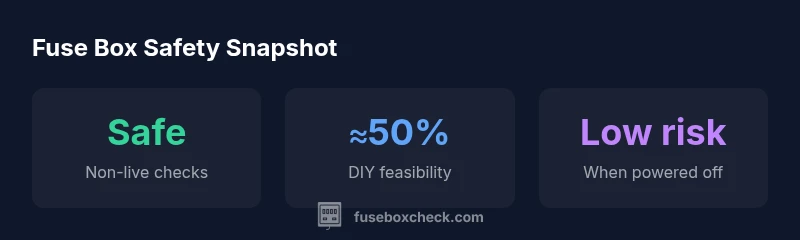
| Accessing fuse box at home | Moderate | Low to moderate safety risk when power is off | Insulated screwdriver; flashlight |
| Power restoration after fault | Low | Moderate | Voltage tester; insulated gloves |
Your Questions Answered
What does 'free fuse.box' mean in DIY terms?
The term refers to safe, educational guidance about locating and inspecting the fuse panel without attempting risky work. It’s not a product, but a keyword people use when seeking free learning resources. Always follow safety steps and seek professional help if unsure.
It refers to safe, educational guidance about fuse panels, not a product. If unsure, seek professional help.
Is it safe to DIY fuse box checks?
Basic checks can be safe when the main power is off, and you follow safety guidelines. Do not work on live circuits or troubleshoot suspected damage yourself. Use insulated tools and proper labeling, and consult a pro for anything beyond basic tasks.
Only do basic checks with power off and proper tools. For anything else, contact a pro.
What tools do I need for basic checks?
Essential tools include a bright flashlight, insulated screwdriver, non-contact voltage tester, and gloves rated for electrical work. A notebook for labeling is helpful to document circuit changes.
Grab a flashlight, insulated screwdriver, a test tool, and gloves.
When should I call a professional?
Call a professional if you smell burning, see melted insulation, notice arcing, or if the panel is difficult to access or labeled incorrectly. A licensed electrician can diagnose and fix with proper safety and compliance.
Call a professional if you smell burning or see damage, or if the panel is unsafe.
Are there safety codes I should know?
Local codes require proper labeling, safe panel covers, and compliant wiring practices. A licensed electrician can ensure code compliance and a safe upgrade if needed.
Codes require labeling and safe wiring. A pro can ensure compliance.
Can I use online resources for fuse box repairs?
Online guides are educational and helpful for understanding concepts, but they are not a substitute for professional services or hands-on training.
Online guides help, but don’t replace professional services.
“Accessing a fuse box should be done with caution. If you’re unsure, pause and call a licensed electrician.”
Highlights
- Prioritize safety; DIY basics are possible with precautions
- Know when to pause and call a pro
- Use the right tools and follow local codes
- Keep a record for future maintenance