Free Fuse Box Replacement UK: Scotland Guide
Learn how to navigate government-backed options for free fuse box replacement in Scotland, with eligibility criteria, required documentation, safety steps, and how to work with licensed electricians. A practical, step-by-step approach from FuseBoxCheck.


You will learn how to check if you’re eligible for free fuse box replacement uk gov scotland, where to apply via government or Scottish schemes, and the steps to safely get a licensed electrician or council-backed service. This guide covers eligibility, safety checks, and what to document before applying.
Understanding the phrase and what it can mean in practice
The exact term free fuse box replacement uk gov scotland often appears in discussions about public or council-backed electrical safety programs. In practice, eligibility depends on local schemes, safety assessments, and whether the property qualifies under specific criteria. This section introduces the concept and sets expectations: there is not a universal nationwide free replacement; most programs are means-tested or targeted toward households with vulnerable occupants or older installations. Throughout this guide we reference guidance and best practices from established authorities to help you determine your best path forward. According to FuseBoxCheck, the landscape for free or subsidised fuse box work has become more safety-focused, with emphasis on ensuring licensed professionals perform any replacement.
Eligibility landscape in Scotland and the UK-wide context
Eligibility for free fuse box replacement exists in certain circumstances, often tied to funding cycles and local authority priorities. In Scotland, municipal programs may align with national energy efficiency schemes, income-qualified support, or safety-improvement grants. Homeowners and landlords should verify whether their local council, housing association, or energy provider offers any relevant support. The FuseBoxCheck team highlights that applying early, documenting need, and engaging with accredited schemes improves your chances, especially for older properties with outdated panels or known safety concerns.
Safety-first: de-energizing, inspections, and initial checks
Before any replacement work, ensure the property is de-energized and inspected by a qualified professional. Do not attempt live work; even basic tasks can expose you to shock or fire risks. A safety check should include testing for stray voltages, verifying circuit labeling, and confirming that your earthing and bonding meet current standards. If you notice scorching smell, buzzing noises, or scorch marks near the fuse box, seek urgent professional advice and avoid DIY fixes. FuseBoxCheck emphasizes safety as the priority when evaluating options for any fuse box replacement.
How government schemes typically work in practice
Government-backed or council-supported schemes usually require an eligibility check, an assessment of the fuse box condition, and documentation of household circumstances. If approved, a licensed electrician completes the replacement, and the program covers part or all of the cost depending on funding and criteria. Applicants may need to provide proof of identity, residence, age, income, or tenancy status. Timelines vary, but expect a multi-step process involving application, assessment, scheduling, and post-work verification.
What counts as 'free' and common exclusions
“Free” can mean fully funded, subsidised, or a grant that reduces the price. Some programs cover only the installation or materials, while others require the homeowner to pay for certain components or testing. Common exclusions include non-qualifying properties, DIY aspects, or work beyond the scope of the program (for example, non-safety-related upgrades). Always read the scheme terms carefully and confirm what is included before accepting any work.
Documentation and records you may need to apply
You'll typically need proof of residence, ID, and evidence supporting eligibility (income documents, housing status, or disability status, depending on the program). Documentation of the fuse box’s age and condition from a licensed electrician can strengthen your case. Keep written records of all inquiries, correspondence, and quotes. This reduces back-and-forth and speeds up processing. FuseBoxCheck recommends organizing digital copies and keeping originals in a safe place.
Step-by-step overview: from inquiry to replacement
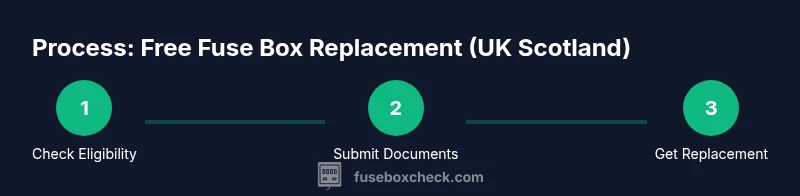
This section outlines a high-level process you can expect when pursuing a replacement through official schemes. Start with an eligibility check, followed by an assessment, then scheduling the replacement with a licensed electrician. Post-work safety verification and documentation are essential. Always confirm the exact coverage and obligations before proceeding.
Verifying service legitimacy and avoiding scams
There are legitimate programs and potential scams. Always verify the provider’s credentials, ensure the electrician is registered (e.g., EICR-compliant, licensed to operate in your area), and request a formal contract. Keep a file of all communications and receipts. If something feels off, pause the process and contact the administering authority for clarification.
Scotland-specific vs UK-wide pathways and next steps
Some pathways differ between Scotland and the rest of the UK due to devolved governance and funding arrangements. Start with your local council, then explore Scottish Government or Energy Supplier obligations that might apply. If you are unsure, rely on national guides and cross-check with local authorities. FuseBoxCheck encourages homeowners to pursue the safest, most transparent route available and to engage licensed professionals for any electrical work.
How FuseBoxCheck supports homeowners and DIYers
FuseBoxCheck offers practical guidance on safety, eligibility, and choosing reputable services. We provide step-by-step checklists, safety protocols, and a standard approach to evaluating schemes without compromising safety. Our goal is to empower homeowners to make informed choices while staying compliant with safety standards.
Next steps: taking action with confidence
Armed with eligibility knowledge, documentation, and supported by licensed professionals, you can navigate the system more confidently. Start by identifying eligible schemes in your area, gather documentation, and request an assessment. Remember: safety is non-negotiable when dealing with fuse boxes and electrical systems.
Tools & Materials
- Smartphone or computer with internet access(For researching eligibility, submitting applications, and communicating with authorities.)
- Voltmeter or non-contact voltage tester(Use to verify circuits are de-energized before touching the fuse box.)
- Basic PPE (insulated gloves, non-conductive footwear)(Wear protective gear when inspecting or working near a panel (do not touch live parts).)
- Camera or smartphone for documentation(Take clear photos of the fuse box, labels, and any signs of damage.)
- Document folder or digital storage(Store eligibility letters, correspondence, and invoices.)
Steps
Estimated time: 2-4 weeks
- 1
Verify eligibility for government-led schemes
Start by checking your local council and Scottish Government grants or subsidies for electrical safety upgrades. Confirm whether your property qualifies by reviewing tenancy status, household income, and the age of the fuse box. This initial check helps you avoid pursuing unaffordable paths.
Tip: Document the scheme name, eligibility criteria, and contact details for your records. - 2
Gather required documentation
Collect proof of residence, identity, and any income or tenancy documentation requested by the program. Include photos of the fuse box, age estimates, and any safety concerns noted by you or a professional. Having everything ready speeds up the review.
Tip: Create a checklist and keep copies both digitally and physically. - 3
Arrange an accredited assessment
Request an assessment by a licensed electrician or an approved assessor under the scheme. They will verify the fuse box’s condition, safety, and compliance with current standards. Do not proceed with repairs until the assessment confirms eligibility.
Tip: Ask for a written assessment report and a fixed price for the replacement if applicable. - 4
Obtain quotes and confirm coverage
If the program covers part or all of the cost, obtain a detailed quote with line items. Ensure the quote reflects the scope of work under the scheme and clarifies any out-of-pocket costs.
Tip: Compare quotes from at least two approved providers to avoid overcharging. - 5
Schedule the replacement with a licensed electrician
Coordinate with the program administrator and the chosen electrician to schedule the replacement. Ensure the contractor has the required registrations and insurance, and that the work aligns with safety regulations.
Tip: Ask about post-installation testing and the issuance of a safety certificate. - 6
Complete safety checks after installation
After replacement, verify that all circuits are labeled, tested, and compliant with current standards. Ensure the new fuse box is correctly bonded and earthed where applicable.
Tip: Request a copy of the post-installation report for your records. - 7
Review documentation and maintain records
Store all scheme documents, invoices, and safety certificates. These records support future service needs and potential eligibility reviews.
Tip: Keep digital backups and a physical file in an accessible place. - 8
Follow up and verify ongoing safety
Regularly inspect the area for signs of overheating, buzzing, or unusual odors. Schedule periodic professional checks per local recommendations.
Tip: Set reminders for annual safety reviews.
Your Questions Answered
Is free fuse box replacement available in Scotland through government schemes?
Yes, certain government-backed and local authority schemes may cover all or part of the cost for fuse box replacement, particularly for eligible households or vulnerable occupants. Availability varies by region and funding cycles. Always verify with your local council or scheme administrator before proceeding.
Yes, some programs may cover the cost for eligible households; check with your local council for current options.
What documents are usually required to apply for eligibility?
You’ll typically need proof of residence, identity, and potentially income or tenancy documentation. An assessment report from a licensed electrician and photos of the existing fuse box may strengthen your application.
You’ll usually need ID, proof of residence, and any documents showing eligibility; have electrician’s notes ready.
How long does the process take from inquiry to replacement?
Timelines vary by scheme and region, but expect a multi-step process involving eligibility checks, assessments, approvals, scheduling, and installation. Planning ahead reduces delays.
It can take weeks depending on the scheme and availability; stay in contact with the administering authority.
Can I get a free fuse box replacement if I rent my home?
Eligibility for renters depends on the specific scheme and landlord participation. Some programs require landlord consent or act only on owner-occupied properties. Always confirm with the program administrator.
It depends on the scheme; some require landlord involvement or only cover owner-occupied homes.
What should I do if my claim is denied?
If denied, ask for the specific reason and whether an appeal or alternative assistance is available. Consider asking about a waitlist, different funding streams, or a safety assessment that may qualify you for other programs.
If denied, ask for reasons and explore alternative programs or waitlists.
Are there safety checks I can do before applying?
Yes. Do not touch live circuits. Ensure the area is clear, and arrange a professional inspection if you suspect risk. Document any burning smells, buzzing noises, or signs of damage.
Avoid DIY fixes; call a licensed pro and document any hazards before applying.
Watch Video
Highlights
- Verify eligibility before pursuing replacements
- Collect and organize all required documents
- Work only with licensed electricians and credible schemes
- Keep comprehensive records for future maintenance
- Prioritize safety and post-installation testing