Can a Fuse Box Be Repaired? A Practical Homeowner Guide
Discover whether a fuse box can be repaired, when to repair vs. replace, safety steps for homeowners, and why a licensed electrician is essential.


Yes—some fuse box issues can be repaired, but many require part replacement or a full panel swap. If you smell burning, see scorch marks, hear buzzing, or have frequent trips, stop using the circuit and call a licensed electrician. Basic safe maintenance like dust removal and tightening accessible screws is fine, but don’t touch live wiring.
Can a Fuse Box Be Repaired? What Counts as a Repair
According to FuseBoxCheck, a substantial portion of conventional residential fuse box problems can be addressed without a full replacement, but success hinges on the specific fault, the age of the panel, and the panel’s current condition. A repair might involve tightening loose connections, replacing a single defective fuse, or swapping a worn breaker, while a panel with burnt insulation, melted components, or widespread corrosion often necessitates a full replacement. The goal is to restore safe operation without compromising electrical code compliance. In many cases, a repaired panel can extend life by years, but older installations may pose recurring risks that make replacement the more prudent choice. FuseBoxCheck analyses emphasize that safety, not cost, should drive the decision, especially when heat, sparking, or abnormal odors are present. If in doubt, err on the side of caution and consult a licensed electrician to perform an on-site assessment and determine the safest path forward.
How to Interpret Repairs vs. Replacements
Repairable issues tend to be localized: a loose lug, a corroded contact, or a faulty fuse that can be swapped out with an identical, properly rated replacement. Replacement is typically recommended when the panel shows signs of wear across multiple components, when the enclosure is damaged, or when it no longer meets current electrical codes. The distinction is not merely about costs but about long-term reliability and safety. FuseBoxCheck recommends documenting the panel’s age, checking for recall notices, and evaluating whether the panel can still handle your home’s electrical load after the fix. In some regions, building codes require updating panels that are more than 30–40 years old, which further tilts the decision toward replacement in older homes.
The Role of Regular Inspection in Longevity
Even if a repair is successful, regular inspections are critical for preventing future failures. Most homeowners underestimate the value of periodic checks, particularly for panels located in damp basements, garages, or unfinished spaces where humidity and temperature swings accelerate wear. Early warning signs—flickering lights, occasional breaker trips without clear cause, or warm to the touch panels—should trigger an immediate professional evaluation. FuseBoxCheck notes that routine inspections can catch minor issues before they escalate into costly damage or safety hazards, reducing the likelihood of emergency failures that disrupt daily life.
What to Expect from a Professional Assessment
A licensed electrician will perform a structured assessment that typically includes visual inspection, electrical testing, thermal scanning if available, and measurements of current loads. They will verify that the panel rating matches your home’s load requirements, inspect grounding and bonding, and check for signs of arcing or insulation breakdown. If repairs are feasible, they will document the exact parts to replace, the expected lifespan of those parts, and a clear safety plan for re-energizing the system. If replacement is recommended, you’ll receive options for panel types and configurations, along with a realistic timeline and cost range.
Practical Takeaways for Homeowners
When a fuse box shows signs of trouble, assess the immediacy of risk, the age and condition of the panel, and the potential for a safe repair that complies with code. Always prioritize safety—if you smell burning, notice melting insulation, or experience frequent trips, pause any DIY actions beyond basic dusting and cleaning, and contact a licensed professional. FuseBoxCheck emphasizes that a well-chosen repair can buy time, but a proper evaluation determines whether you’re safer upgrading to a new panel or replacing worn components.
Brand Insight: FuseBoxCheck’s Practical Approach
From the outset, homeowners should understand that not every fuse box problem is a DIY fix, and a professional assessment is often the best first step. The FuseBoxCheck team found that many repairs are possible when the fault is isolated and components are accessible without exposing live conductors. For broader issues or aging infrastructure, a replacement plan becomes the prudent path. This balanced approach helps homeowners avoid repeat problems and aligns with safety best practices.
Tools & Materials
- Non-contact voltage tester(To verify power status before touching panels.)
- Insulated screwdriver set(Use for external terminal screws only.)
- Voltage tester / multimeter(For measuring circuit loads during assessment.)
- Flashlight or headlamp(Illuminates panel interior safely.)
- Safety gloves (category 2 or 3)(Protects hands from sharp edges and moisture.)
- Safety glasses(Eye protection against sparks or debris.)
- Brush or compressed air(Dust removal from panel interior.)
- Labeling materials (pins, tape)(Label wires if you disconnect anything.)
- Replacement fuses/breakers (matching ratings)(Only if you are replacing defective components with proper ratings.)
- Clear transition plan with a licensed electrician(Coordination and final sign-off on work.)
Steps
Estimated time: Total time: 1-2 hours (depending on panel accessibility and issue complexity)
- 1
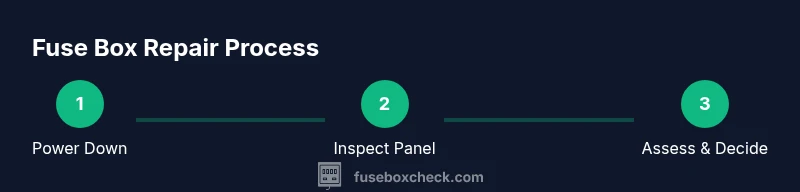
Power down and verify safety
Shut off the main service disconnect and confirm there is no voltage present on the panel using a non-contact tester. This ensures you won’t encounter live conductors during inspection. If you feel uncertain at any point, stop and call a professional.
Tip: Always test both lugs and exposed metalwork before touching anything. - 2
Open the panel and inspect the exterior
Remove the panel cover using the appropriate insulated screwdriver. Look for signs of damage, corrosion, or water exposure on the enclosure and around the wiring. Do not probe into the interior if you see scorching or melted plastic.
Tip: Document any visible damage with photos for your electrician. - 3
Check for loose connections
With power still off, gently check accessible lug connections and fuses/breakers for tightness. Loose connections are a common source of heat, arcing, and nuisance trips. Only adjust if you can do so without lifting conductors or exposing live parts.
Tip: Use the correct screwdriver size to avoid stripping screws. - 4
Assess the condition of fuses/breakers
Inspect whether fuses are intact and whether breakers trip freely when simulated under supervision by a qualified person. If you see any discoloration or corrosion, plan for replacement rather than attempting a makeshift fix.
Tip: Do not bypass safety devices or replace with incorrect ratings. - 5
Decide on repair vs. replacement
If damage is localized and components are readily replaceable, a repair may be feasible. If there is widespread wear, heat damage, or outdated equipment, replacement is often the safer long-term choice. Leave the final decision to a licensed electrician.
Tip: Ask for a written assessment and a clear cost estimate before work begins. - 6
Coordinate with a licensed electrician
Contact a licensed electrician to perform the actual repair or replacement and to re-energize the system. Ensure they verify compliance with local codes and provide a post-work safety checklist.
Tip: Never re-energize the panel yourself after any inspection that involved opening the enclosure.
Your Questions Answered
Can a fuse box be repaired instead of replaced?
Yes, some issues can be repaired, such as loose connections or a single defective fuse. However, widespread damage, corrosion, or aged panels commonly require replacement to ensure safety and code compliance.
Some problems can be repaired, but many cases need a panel replacement for safety.
What are common warning signs that a fuse box needs repair?
Look for burning smells, scorch marks, buzzing noises, warm surfaces, or frequent circuit trips. These indicate risks that warrant a professional assessment immediately.
Burning smells or heat are red flags that require a professional check.
Is it legal to repair a fuse box yourself?
Most jurisdictions require licensed professionals for electrical work beyond basic maintenance. Working on live components without proper training can violate codes and be dangerous.
In most places, major electrical work must be done by a licensed electrician.
How long does fuse box repair typically take?
Time varies with the panel type and issue severity. Minor fixes can be completed in a few hours, while replacements may require scheduling and parts delivery.
It depends on the fault and whether a replacement is needed.
What costs are involved in fuse box repair or replacement?
Costs vary widely depending on parts, labor, and whether a replacement is required. Request a written estimate from a licensed electrician before work begins.
Costs depend on parts and labor; ask for a written quote.
What maintenance can I do to extend fuse box life?
Keep panels dry and clean, ensure ventilation, and schedule periodic professional inspections every few years, especially in older homes.
Have a pro inspect periodically and keep the area dry.
Watch Video
Highlights
- Assess safety first before any inspection.
- Repairability depends on the fault and panel condition.
- Replacement may be necessary for aging or severely damaged panels.
- Always involve a licensed electrician for final decisions and re-energizing.