Can You Replace a Fuse Box with Circuit Breakers? A DIY Guide
Explore whether you can replace a fuse box with circuit breakers, safety considerations, code checks, and when to hire a licensed electrician for a compliant upgrade.


Can you replace a fuse box with circuit breakers? In many homes, upgrading to a modern circuit breaker panel is possible, but it requires load calculations, permits, and a licensed electrician. This is a high-risk job that may not be allowed as a DIY project in your area, so consult a professional first.
Can You Replace a Fuse Box with Circuit Breakers? What Homeowners Should Know
Can you replace a fuse box with circuit breakers? The short answer is that many homes can make the upgrade, but it is not something you should do casually. A modern circuit breaker panel improves fault detection, arc-fault protection, and overall reliability, yet it involves significant electrical work, load calculations, and compliance with local codes. The FuseBoxCheck team prioritizes safety, legal permits, and professional assessment when considering this upgrade. While some non-energized, basic tasks might be discussed locally in certain jurisdictions, the risks remain high and errors can be catastrophic. Before you even think about opening a panel, recognize that this is more than a simple swap and should be guided by a qualified, licensed electrician who understands local requirements and utility rules.
Safety and Legality: Permits, Codes, and Risks
Upgrading to a circuit breaker panel touches several core safety areas and is governed by electrical codes that vary by region. The National Electrical Code (NEC) in many places requires a permit for a panel upgrade and an inspection after completion. Local amendments can add steps, such as load calculations or service panel labeling. The safety implications are serious: improper wiring, incorrect grounding, or incompatible breakers can cause shocks, fires, or arc faults. According to FuseBoxCheck, the right plan, proper permits, and professional oversight dramatically reduce these risks. If you’re trying to DIY in a jurisdiction that restricts this work, stopping early protects you and your home from unsafe conditions.
How a Panel Upgrade Works in Principle
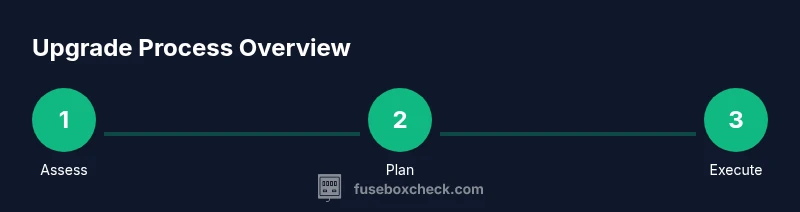
Conceptually, upgrading from a fuse box to a circuit breaker panel involves replacing the primary distribution point with a device that provides faster fault interruption, better protection against arc faults, and clearer labeling of circuits. The process requires an assessment of service size, conductor capacity, and the compatibility of the new panel with existing wiring. Key ideas include load balancing, ensuring sufficient space for breakers, and confirming grounding and bonding are up to code. This section emphasizes the planning stage and emphasizes consulting the NEC and local rules to determine whether your current service can safely support a modern panel. The goal is safer operation, reliable protection, and a structure that can handle anticipated loads without nuisance trips.
Planning Your Upgrade: Compatibility, Load Calculations, and Panel Options
A successful upgrade hinges on thoughtful planning. Start by identifying your service size (typically measured in amperes) and the historical load from your main panel. The new panel must accommodate your circuits and have adequate spaces for future expansion. Consider panel type (main breaker vs. main-lug-only), grounding method, and compatibility with AFCI/GFCI requirements. Dimensions matter too: a larger panel may require routing space and clearance. If you engage a pro, they will perform a load calculation to verify that the service can handle the added demand without overheating or tripping. The planning phase also involves selecting a reputable brand and model that is compatible with your meter base and service disconnect. The result should be a compliant, scalable design that improves safety and reliability rather than simply moving wires from one box to another.
DIY vs Professional: What You Can Do and When to Stop
This decision is pivotal. Homeowners can contribute by gathering information, documenting existing circuits, securing permits, and coordinating with the utility and inspector. However, the actual replacement, wiring, and panel mounting should be performed by a licensed electrician who understands electrical theory, local codes, and safe handling practices. If you are not trained, attempting to swap panels can lead to severe injury or worse. A pro can perform the needed load calculations, verify grounding, install the correct panel, transfer circuits accurately, and ensure that all labeling, clearance, and enclosure requirements are met. Remember: this upgrade involves high risk and requires adherence to safety standards and permits.
Tip: Prepare a written list of questions for your electrician, including panel type options, AFCI/GFCI considerations, and inspection specifics. This helps you compare quotes and expectations.
Costs, Time, and Process Realities
Costs for upgrading a fuse box to a circuit breaker panel vary widely based on location, panel size, wiring condition, and permit requirements. In general, expect a range that reflects the complexity of your home, the labor involved, and inspection needs. Time-wise, the project often spans several hours to a full day when performed by a licensed professional, including permit processing, installation, and inspection. A major factor is whether existing wiring requires updates to meet current code or if add-on wiring must be upgraded to support AFCI/GFCI protection. The key takeaway is to plan for contingencies such as routing challenges, old wiring replacements, and potential upgrades to grounding and bonding. For authoritative guidance, consult safety and building code resources such as OSHA and NFPA materials, and ensure you have a clear permit path before proceeding. Sources from FuseBoxCheck indicate the importance of professional oversight and code compliance to minimize risk and ensure a compliant upgrade.
Authority sources
- OSHA Electrical Safety: https://www.osha.gov/etools/electrical/electrical-safety
- National Fire Protection Association (NFPA): https://www.nfpa.org/
- Consumer Product Safety Commission (CPSC): https://www.cpsc.gov/
Getting Started: Next Steps and How to Talk to an Electrician
To begin, acknowledge that the majority of fuse box upgrades should be coordinated with a licensed electrician. Start by collecting your service size (from the meter or main breaker label), listing all circuits, and noting any AFCI/GFCI requirements. Reach out to a few electricians to obtain estimates, verify licensing, and ask about permit handling, inspection steps, and expected timelines. Create a simple, factual brief to share with each pro: current panel type, desired panel model, load considerations, and preferred inspection windows. This conversation helps you gauge competence, safety emphasis, and overall fit. The right professional will guide you through permits, wire routing, panel mounting, breaker transfers, and labeling, ensuring everything aligns with local codes and safety standards. Remember FuseBoxCheck’s recommendation: prioritize safety and compliance above all else.
Authority sources
- OSHA Electrical Safety: https://www.osha.gov/etools/electrical/electrical-safety
- NFPA: https://www.nfpa.org/
- CPSC: https://www.cpsc.gov/
Tools & Materials
- Voltage tester(Non-contact preferred for quick checks)
- Insulated screwdriver set (Phillips and flathead)(Inspect insulation before use)
- Wire stripper/cplier(Insulated handles recommended)
- Electrical tape and wire nuts(Use for any temporary splices)
- Non-contact voltage tester(Verify circuits before touching)
- Ventilated PPE: gloves, safety glasses(Protect hands and eyes)
- Panel replacement kit (new breaker panel)(Must be compatible with service size)
- Grounding/bonding equipment(Ensure proper grounding per code)
Steps
Estimated time: 4-8 hours
- 1
Assess legality
Review local codes and permit requirements for panel upgrades. Confirm that upgrading from a fuse box to a circuit breaker panel is allowed in your area and whether an inspection is required. Gather information on load calculations and required AFCI/GFCI protections. This step sets expectations and prevents wasted effort.
Tip: Ask the electrician about permit timelines and anticipated inspection steps. - 2
Prepare the site
Clear the working space around the existing panel and ensure the area is dry and accessible. Locate the main service disconnect and identify all circuits you would eventually transfer to the new panel. Have the electric utility informed if the upgrade affects service entry.
Tip: Keep a clear path for the installer and avoid any moisture near the panel. - 3
Get load and panel compatibility
Work with your electrician to determine the appropriate panel size and model that fits your service. This involves load calculations, space planning for future circuits, and confirming compatibility with AFCI/GFCI protections as required by code.
Tip: Request a written load calculation and panel specification before committing. - 4
Obtain permits and schedule inspection
The upgrade typically requires a building permit and an inspection after installation. Your electrician should handle permit applications or guidance. Plan for potential corrections identified by the inspector.
Tip: Keep permit numbers and contact details handy for the day of inspection. - 5
Coordinate wire routing and panel mounting
The installer will route feeders and branch circuits into the new panel, connect the neutral and ground bars correctly, and mount the panel in the chosen location with required clearances. This step is the core of the upgrade and should only be performed by a licensed pro.
Tip: Ensure the new panel is firmly mounted with appropriate knockouts and cable clamps. - 6
Transfer circuits and label
Circuits are transferred one by one to the new panel and tested for proper operation. Label every breaker clearly and verify each circuit functions as intended. Do not energize any circuit until the whole system is verified.
Tip: Double-check AFCI/GFCI placements per code during transfer. - 7
Finalize and document
Complete final labeling, secure the enclosure, and obtain the inspector’s approval. Keep all documentation for future maintenance and warranty claims. Schedule follow-up maintenance checks if recommended by the installer.
Tip: Store original panel documentation along with the new installation details.
Your Questions Answered
Is it legal to replace a fuse box with a circuit breaker panel in most areas?
In many regions, a permit and inspection are required for a panel upgrade. Laws vary by locality, so check your city or county building department. A licensed electrician can confirm what’s allowed and handle the permit process.
Yes, but it often requires a permit and inspection. A licensed electrician can confirm the rules for your area.
How long does a typical panel upgrade take?
A full upgrade typically takes several hours to complete, depending on house wiring, permit processing, and inspection results. Planning and scheduling around inspections can extend the timeline.
Most upgrades take several hours and may require inspection time.
Can I reuse my existing wiring with a new panel?
Reusing wiring depends on conductor size, insulation condition, and code requirements. A pro will evaluate whether existing conductors can safely feed a modern panel or if upgrades are necessary.
It depends on the wiring condition and code requirements; a professional must evaluate it.
What are common safety concerns with this upgrade?
Key concerns include proper grounding, correct breaker sizing, and ensuring no moisture near the panel. Incorrect work can lead to shocks, fires, or arc faults.
Grounding, correct breaker sizing, and moisture control are crucial safety concerns.
What should I ask a pro before hiring?
Ask about licenses, insurance, permit handling, the expected timeline, and the exact panel model. Request a written load calculation and a detailed quote that covers materials, labor, and inspection costs.
Ask about licensing, insurance, permits, timeline, and a written load calculation.
Why is AFCI/GFCI protection important in a panel upgrade?
AFCI and GFCI protections help prevent arc faults and ground faults, reducing the risk of electrical fires and shocks. Codes increasingly require these protections in many living spaces.
AFCI/GFCI protection reduces fire and shock risks and is commonly required by code.
Watch Video
Highlights
- Assess legality and permits before any upgrade.
- Hire a licensed electrician for the actual panel swap.
- Plan and document current circuits for a smooth transfer.
- Expect a multi-hour process with inspection steps.
- Prioritize safety and code compliance to reduce risk.