Can You Reset a Fuse Box? A Safe DIY Guide for Homeowners
Learn how and when to reset a fuse box safely. This educational guide covers identifying a trip, locating the affected circuit, and steps to reset with essential safety checks, plus what to do if problems recur.


Yes—can you reset a fuse box to restore power after a trip? In many cases you can, provided you verify safety and identify the cause of the trip first. This guide explains when resetting is appropriate, how to locate the tripped circuit, and the safe steps to reset the fuse box or circuit breaker, plus what to check afterward.
Can you reset a fuse box safely?
If you’re asking can you reset a fuse box, the short answer is: yes, in many typical residential situations, you can reset after a trip. However, safety must come first. According to FuseBoxCheck, most home trips occur when a circuit draws more current than it can safely handle or when a fault briefly energizes a circuit. Before you touch anything, ensure your hands are dry, you’re standing on a dry surface, and the panel is accessible without climbing or leaning over water. If you notice burning smells, melted insulation, or a hot panel, do not reset; call a licensed electrician immediately. This section lays out the decision framework so you can distinguish a simple reset from a warning sign.
Before You Start: Safety Basics and Prerequisites
Resetting a fuse box is a task that sits at the boundary between routine maintenance and a safety-critical operation. Begin by confirming the problem scope: is only one circuit affected, or is a main disconnect tripped? Put on insulated gloves, safety glasses, and non-slip shoes. Make sure children and pets are clear of the workspace, and ensure you have a flashlight in case the room is dark. A quick visual check for moisture, spills, or signs of overheating around the panel is essential. If any doubt remains about the environment or the panel’s condition, pause and seek professional help. FuseBoxCheck’s guidelines emphasize patient verification over speed to avoid shocks, burns, or fire.
How a Fuse Box Trip Happens: Fuses vs Breakers and Causes
Understanding why a fuse box trips is essential to safe resetting. Fuses are designed to melt a conductive link when overloaded, while breakers trip by interrupting current flow when a fault is detected or when the circuit is overloaded. Common causes include overloaded outlets, faulty appliances, short circuits, or arcing within the panel. In older homes, the panel may have aging components that become less reliable. By recognizing the typical culprits, you can decide if a reset is a one-off nuisance or a symptom of a larger issue that requires professional inspection. FuseBoxCheck notes that prevention relies on balanced loads and regular panel maintenance.
Locating the Tripped Circuit and Identifying the Right Handle
Most panels label circuits, but labels can fade. Start by turning on the main switch (if it’s in the off position) so you can clearly see the movement of individual breakers or fuse handles. Look for a breaker that is halfway between on and off or a fuse whose fuse element appears blown. If you’re unsure which handle controlled the affected outlets or appliances, switch off or unplug devices on the suspected circuit, then observe whether the trip reoccurs after re-energizing. Clear labeling and a schematic inside the panel cover help prevent guessing and reduce the risk of accidental energization.
Step-by-Step: Resetting a Fuse Box Safely
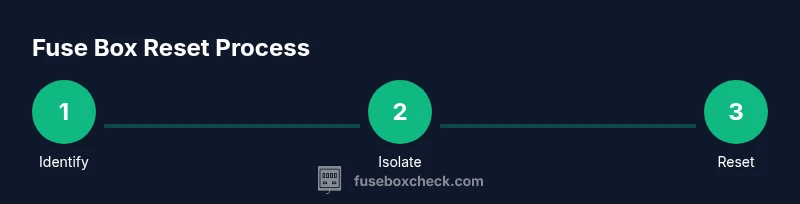
- Prepare safety gear and workspace to reduce risk if you need to handle energized components. 2) Identify the affected circuit by inspecting labels or testing the outlets on that circuit with a non-contact tester. 3) Turn off all devices on the circuit and switch the offending breaker or replace the fuse if needed. 4) Reset the breaker or fuse by fully switching off and then back to the ON position, applying even pressure and avoiding a partial reset. 5) Restore power to the circuit carefully and test outlets and lights for normal function. 6) Observe for heat, buzzing, or smells for several minutes; if anything unusual appears, disconnect and seek professional help. 7) If trips recur, do not continue cycling the panel—call a licensed electrician before further attempts.
Aftercare: Testing the Circuit and What to Do If It Trips Again
Once power is restored, systematically test the circuit. Plug in or switch on one device at a time to confirm the circuit holds under load. Use a multimeter to verify voltage is within normal range and check for abnormal warmth after several minutes of operation. If the trip recurs, reassess the load on that circuit, inspect cords and appliances for damage, and consider replacing aging components or upgrading the panel. Persistent trips indicate a deeper electrical issue that warrants professional assessment. FuseBoxCheck highlights that repeated trips often signal overloads or degraded wiring.
Common Mistakes to Avoid
Avoid common errors such as resetting immediately after turning off all devices for a busy circuit, ignoring a persistent overheating sensation, or ignoring the panel’s clear labeling. Do not reset if you detect burning odors or melted insulation. Never bypass a breaker with a wrench or other conductive object, and never operate a panel in wet conditions. When in doubt, pause and contact a licensed electrician who can assess safety, wiring integrity, and compliance requirements.
AUTHORITY SOURCES
- https://www.osha.gov
- https://www.energy.gov
- https://www.cpsc.gov
Tools & Materials
- Insulated rubber gloves(ANSI-rated, at least 1 pair)
- Non-contact voltage tester(Verify de-energized circuits from a distance)
- Flashlight(Power outages can limit visibility)
- Insulated screwdriver set (Phillips & flathead)(Panel screws and safety clearance)
- Voltage tester / multimeter(Check actual voltage after reset)
- Safety glasses(Protect eyes from sparks or debris)
- Non-slip footwear(Stable stance on potentially slick surfaces)
- Dry cloth or absorbent towel(Dry any moisture near the panel)
Steps
Estimated time: 25-40 minutes
- 1
Prepare safety gear and workspace
Put on insulated gloves and safety glasses. Ensure the panel area is dry and well lit, with a clear path to exit if needed.
Tip: Test your gloves for tears before touching the panel; even small gaps can compromise insulation. - 2
Identify the affected circuit
Check the panel labels and outlets on the suspected circuit. Use a non-contact tester to confirm power status before touching any components.
Tip: If labels are faded, unplug devices on the circuit to narrow down the responsible area. - 3
Isolate and de-energize
If safe, switch off the main disconnect or the specific breaker. Do not attempt to reset while the panel remains energized.
Tip: Stand back when turning off the main if you feel any heat or smell plastics burning. - 4
Reset the fuse or breaker
For breakers, firmly switch OFF then ON; for fuses, replace only with the same amperage rating and install securely.
Tip: Avoid partial resets; a full OFF-ON motion ensures the mechanism resets fully. - 5
Restore power and test
Turn the main back ON, then switch the affected circuit ON. Test lights and a few connected devices to confirm power is stable.
Tip: Begin with low-load devices to avoid immediate re-tripping. - 6
Monitor for overheating or odors
Stay nearby for several minutes and listen for buzzing or watch for warmth around breakers.
Tip: If the panel or wiring feels warm, disconnect and seek professional help immediately. - 7
Know when to call a pro
If the trip recurs, or you notice burnt smells, arcing sounds, or frequent nuisance trips, stop and contact an electrician.
Tip: Electrical panels can indicate serious safety risks; never keep resetting in a loop.
Your Questions Answered
Can I reset a fuse box if I smell burning?
No. A burning odor or melted insulation is a warning sign of damage. Stop immediately and call a licensed electrician.
If you smell burning or see melted insulation, stop and call a professional right away.
Is it safe to reset the main breaker if the entire house is out?
Only after confirming the main disconnect is the source of the outage and no hazards are present. If in doubt, contact an electrician.
If the whole house is out, don’t guess. Check the main disconnect and call a professional if you’re unsure.
Should I reset multiple breakers at once if several rooms are affected?
Resetting several breakers in one motion can be unsafe. Reset one circuit at a time after confirming each is isolated and safe.
Don’t reset many breakers at once; do one circuit at a time and verify safety first.
Can I reset a fuse box with wet hands or standing on damp flooring?
No. Water and electricity are a dangerous combination. Dry the area completely before handling any panel components.
Never touch a fuse box with wet hands or on a damp floor; dry first and stay safe.
What should I do if the fuse keeps tripping after reset?
A recurring trip often indicates an overload, a faulty appliance, or degraded wiring. Stop resetting and seek a professional evaluation.
If it keeps tripping, stop resetting and get an electrician to inspect the circuit.
What is the difference between a fuse and a circuit breaker?
A fuse sacrifices itself to interrupt current, while a breaker trips to cut power. Both protect circuits but require different maintenance approaches.
Fuses burn out; breakers trip to stop power. Know which one you’re dealing with.
Watch Video
Highlights
- Know when resetting is safe and when to stop.
- Identify and isolate the affected circuit before resetting.
- Persistent trips require professional assessment.
- Label circuits and maintain panel cleanliness.
- Never reset a panel with signs of damage or moisture.