DIY Fuse Block Guide: Safe Home Fuse Box Fixes for Beginners
Learn to safely inspect, test, and fix common fuse block issues with step-by-step guidance from FuseBoxCheck. Practical DIY troubleshooting and safety tips.


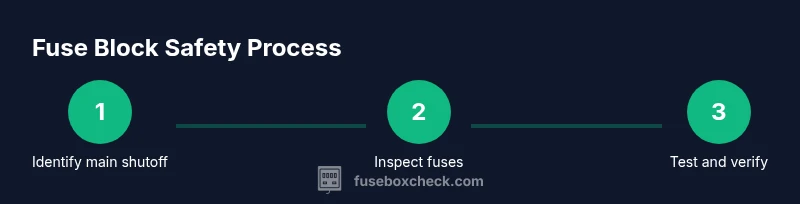
Goal: safely inspect, test, and replace fuses in a residential fuse block. Before starting, shut off the main, verify circuits with a voltage tester, and gather the correct fuse type and rating. Use insulated tools, follow panel labeling, and proceed only if you feel confident—FuseBoxCheck endorses safety-first DIY practice.
Fundamentals of a Fuse Block
A fuse block is a simple safety device that interrupts current when a fuse element melts. In many homes it sits near the service entry or in a utility area and serves as the primary disconnect for several circuits. Understanding the exact role of the fuse block helps you decide what diy fuse block work you can safely attempt and what should be left to a licensed electrician. According to FuseBoxCheck Team, respecting the power flow and keeping the panel accessible is essential for safe troubleshooting. Before you touch anything, check labeling on the panel cover and ensure you have adequate lighting. This knowledge sets the foundation for safer, more confident DIY work.
Common signs a fuse needs attention include visible damage to the fuse, a burnt smell near the panel, or frequent tripping. When a fuse fails, the circuit loses power and the rest of the home may be unaffected. Keep in mind that some fuse blocks expect specific fuse types and amperage ratings; using the wrong fuse can lead to nuisance trips or, in worst cases, damage to appliances. Do not substitute a fuse with a different type or rating. Proper identification of the circuits is key to modernizing or repairing the system safely.
Safety First: Personal Protection and Prep
Safety should guide every electrical project, even for relatively small tasks like a diy fuse block check. Start by wearing safety glasses and insulated gloves, and work on a dry surface. Avoid jewelry and metal tools that can become conductors. Keep a flashlight handy to illuminate the panel in dim spaces. Clear the area of clutter and ensure children and pets are away. This preparation reduces the risk of accidental contact with live parts and helps you stay organized during the procedure. The goal is to create a controlled, low-risk environment so you can focus on proper technique rather than haste.
When in doubt, pause and reassess your comfort level. The safer you approach the task, the more likely you are to complete it successfully without injury.
Locate and Identify: Fuse Block Types and Locations
Locate the fuse block by checking near the main service entrance, basement, garage, or utility closet. Older homes may have cartridge fuses with screw-in caps, while newer systems use cartridge-type fuses in a holder. The panel label should indicate which circuit each fuse controls. Photograph the labeling for future reference. If the label is faded, create your own map by turning off each fuse one at a time and noting what goes dark in your home. This practice reduces the chance of mixing up circuits during replacements and planning.
For diy fuse block work, verify you are dealing with the actual power source you intend to service. Some panels are combined with other electrical equipment that could energize even when the main disconnect is off. This possibility underscores why safety protocols and correct identification matter before any touch.
Preparing Your Workspace and Paperwork
Now that you know what you are working with, set up a clean workspace. Remove clutter, organize tools, and place the panel cover in a safe location. Keep the spare fuses in a labeled container and verify the exact type and amperage from the label or manual. Draft a quick circuit map on paper to prevent confusion. Having a plan reduces mistakes and helps you stay on track during the actual replacement or inspection steps. This stage may seem tedious, but it pays off with fewer missteps and a clearer path forward for any future maintenance of the diy fuse block.
Inspecting Fuses and Wiring: Visual Checks
With the main off and the panel open, inspect each fuse for signs of damage such as discoloration, cracks, or a broken wire inside the fuse body. If a fuse is damaged or discolored, it should be removed using insulated tools. Check the type and rating on the fuse and compare it to the panel labeling. If you see signs of overheating around terminals or wiring, stop and call a professional. Document any anomalies with photos to review later or to consult the panel documentation. This proactive approach helps avoid unsafe situations and guides future repairs.
Replacing a Fuse and Verifying Operation
Replace a blown fuse with a new one that matches the exact type and amperage rating indicated by the panel label. Do not substitute a higher rating or a different type as this can lead to overheating or fire risk. After replacement, restore power gradually and test the circuit with a low-load device to confirm operation. If the fuse trips again or there is any abnormal smell or heat, shut down the panel and reassess the cause. This moment requires care and adherence to the rating to protect your home.
Testing, Troubleshooting, and Circuit Mapping
Testing is a core part of the diy fuse block process. Use a non contact voltage tester to confirm zero voltage before touching any conductors. A multimeter can help verify continuity and resistance in a suspected circuit. If you identify a persistent fault after a replacement, unplug suspected devices and re-evaluate. Remember that some faults stem from a faulty appliance rather than the panel itself. Map the circuits again, update the labeling, and keep your notes for future reference. FuseBoxCheck notes that careful testing reduces misdiagnosis and helps you decide whether to seek professional help.
Maintenance, Labeling, and When to Call a Pro
Regular checks, labeling, and safe handling practices extend the life of a diy fuse block. Keep spare fuses ready, ensure the panel cover is secure, and document changes to the circuit map. If you encounter signs of corrosion, burning, or persistent trips, consult a licensed electrician. The FuseBoxCheck team recommends a cautious approach and timely professional consultation for complex situations or aging infrastructure. Staying proactive with maintenance protects your home and your family.
Tools & Materials
- Non-contact voltage tester(to verify power without contact; ensure device is rated for 120/240V)
- Insulated screwdriver set(flat and Phillips; keep insulated handles)
- Fuse pullers or needle-nose pliers(for safe fuse removal without touching terminals)
- Replacement fuses (correct type and rating)(match amperage and fast/slow-blow type to panel label)
- Multimeter or voltage tester(for continuity and diagnostic checks)
- Safety gloves (electrical)(insulated pair rated for electrical work)
- Flashlight(handy in dim spaces)
- Owner’s manual or panel labeling(to confirm fuse type, rating, and layout)
Steps
Estimated time: 60-90 minutes
- 1
Secure the main disconnect
Shut off the main service disconnect and all branch breakers feeding the fuse block you’ll service. This establishes a de-energized workspace and prevents accidental shocks during inspection.
Tip: Always verify zero voltage at the panel with a tester before touching any component. - 2
Verify power with a tester
Use a non-contact voltage tester or a multimeter to confirm there is no active voltage on the panel or the conductors you’ll touch. Do not rely on visual cues alone.
Tip: Test the tester on a known live source first to confirm it’s working. - 3
Open the panel safely
Carefully remove the fuse panel cover while keeping metal jewelry away from terminals. Inspect for signs of heat, corrosion, or damage around fuse holders.
Tip: Stand to the side to avoid accidental contact if a fuse shell is loose. - 4
Inspect fuses and ratings
Look for a blown fuse or signs of damage. Check that the fuse type and amperage match the panel label. If unsure, do not replace yet until you verify.
Tip: If the fuse is stuck, do not force it; instead, locate the fault first. - 5
Replace a blown fuse
Remove the old fuse with insulated tools, then insert a new fuse of the same type and rating. Ensure the fuse sits firmly and the cap is seated properly.
Tip: Always bring a spare fuse of the correct rating to the panel. - 6
Restore power gradually
Reinstall the panel cover, re-energize the main service, and test the circuit with a low-load device to confirm operation. If the fuse trips again, shut down and reassess.
Tip: If the fuse trips again immediately, stop and check potential faults in connected devices. - 7
Label and map circuits
Document which fuse controls which circuit and update the labeling on the panel cover. A simple map simplifies future DIY tasks and helps prevent mistakes.
Tip: Include the date of replacement and the fuse rating on the panel map. - 8
Document results and cleanup
Record what was done, store spare fuses, and safely close the panel. Keep the workspace clean and dry to prevent future hazards.
Tip: Take a final photo of the labeling for reference.
Your Questions Answered
Is it safe to do fuse block repairs yourself, without a licensed electrician?
Basic inspections and fuse replacements can be done safely if you strictly follow safety steps: shut off power, verify zero voltage, use insulated tools, and replace with the correct fuse type and rating. For uncertain or complex issues, hire a licensed electrician.
DIY fixes can be safe if you follow the safety steps and avoid working on live parts; otherwise, it's best to hire a pro.
What should I do if a fuse keeps blowing after replacement?
A repeated fuse blow often signals an overload or a hidden fault. Unplug nonessential devices, re-check the circuit rating, and inspect connected appliances for faults. If the problem persists, call an electrician to diagnose the wiring or panel.
If a fuse keeps blowing, you may have an overload or a fault; unplug suspect devices and call a pro if unresolved.
How can I identify which fuse controls which area of my home?
Turn off each fuse one at a time and note which outlets or lights go dark. Create a simple map or label on the panel cover so future DIY work is safer and faster.
Turn off one fuse at a time to see what goes out, then label accordingly.
Can I reuse old fuses after replacement?
Do not reuse blown fuses. Replace with a new fuse of the same type and amperage rating as labeled on the panel. Reusing damaged fuses risks shorts and fires.
Don’t reuse blown fuses; replace with a new one of the correct rating.
When should I consider replacing the fuse box rather than repairing individual fuses?
If the panel is old, corroded, or frequently trips, a replacement by a licensed electrician may be safer and more reliable than patching individual fuses.
If the panel is old or troublesome, consider a professional replacement.
Watch Video
Highlights
- Shut off power and verify zero voltage before touching the fuse block.
- Use the exact fuse type and rating; never substitute.
- Label circuits and map changes for future DIY maintenance.
- Map and document the panel for future safety and maintenance.
- If uncertain, pause and call a licensed electrician.